
Get all your news in one place.
100's of premium titles.
One app.
Start reading
The Conversation
The Conversation
Environment
Chris Wright, Fellow in Atmospheric Science, Program on Climate Change, University of Washington

The world regulated sulfur in ship fuels − and the lightning stopped

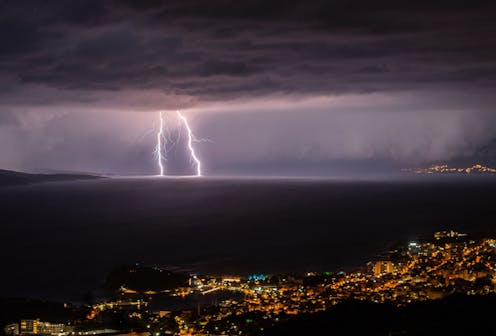
Lightning strikes the Mediterranean Sea. Matko Begovic/PIXSELL via Xinhua, via Getty Images

If you look at a map of lightning near the Port of Singapore, you’ll notice an odd streak of intense lightning activity right over the busiest shipping lane in the world. As it turns out, the lightning really is responding to the ships, or rather the tiny particles they emit.

Using data from a global lightning detection network, my colleagues and I have been studying how exhaust plumes from ships are associated with an increase in the frequency of lightning.

Sign up to read this article
Read news from 100's of titles, curated specifically for you.
Already a member? Sign in here
Related Stories
Top stories on inkl right now
One subscription that gives you access to news from hundreds of sites
Already a member? Sign in here
Our Picks
Fourteen days free
Download the app
One app. One membership.
100+ trusted global sources.







