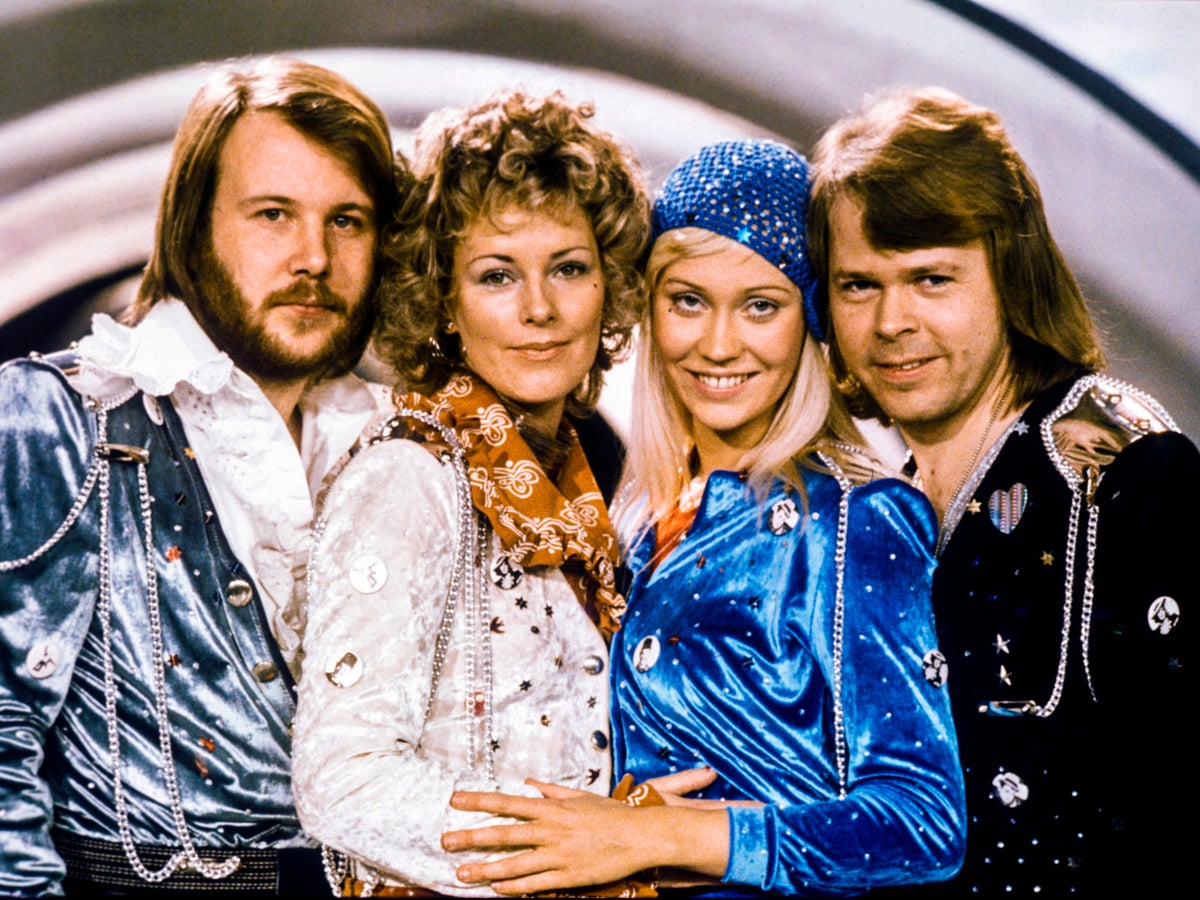
My my – for “Waterloo”, Napoleon was conductor. With one hand tucked into his military blazer, and bicorne hat tugged down over voluminous sideburns, Sven-Olof Walldoff took to the podium at the Brighton Dome on 6 April 1974, struck up his orchestra into a rousing glam swing and was instantly upstaged by two glamorous Swedes bounding down an onstage ramp, wielding silver microphones and radiant in Seventies satin. The dolled-up, dickie-bowed audience, there to politely applaud Europe’s cheesiest musical fripperies, suddenly had front row seats for a pop revolution.
When Abba first burst onto the international stage at the 1974 Eurovision Song Contest, they were clearly brimming with douze-points energy. Centre-stage, Agnetha Fältskog and Anni-Frid Lyngstad beamed their way through this virulently catchy tale of a relationship crushed as if beneath the stampeding hooves of Wellington’s cavalry; Benny Andersson pounded a grand piano in flowing Regency sleeves; while Björn Ulvaeus bobbed cheerily away on a guitar resembling an exploding glitter bomb. Even against such imposing competition as Olivia Newton-John – performing the United Kingdom’s entry, “Long Live Love” – Abba’s “Waterloo” was destined to be all-conquering. What couldn’t be foretold, though, was that it would launch the cavalry charge of a 200-million-selling pop phenomenon, and begin decades of Scandinavian pop music supremacy.