Welcome back to another edition of My Take 5, your weekly wrap of international news. This week we are covering the slow crumbling of the US-Iran ceasefire, the reimposition of US naval blockade on Iran, protests in Ukraine over firing of the defence minister, China’s missile test in the South Pacific, and US delisting Syria as a state sponsor of terror. So let’s get to it:
Get breaking news anytime, anywhere. Download the TOI app now!
US-Iran ceasefire crumbles:
Tensions again rose in the Persian Gulf this past week after Iran reportedly attacked tankers –belonging to Qatar, Kuwait and Saudi Arabia – and US retaliated with strikes against Iranian targets in cities along the Gulf. Iran, in turn, targeted US-linked assets in Bahrain, Kuwait and Qatar, eliciting condemnation from those countries. Plus, on his trip for the Nato summit in Ankara last week, Trump said that the MoU inked with Iran is over. In fact, the temporary licence that US had granted for Iranian oil sales has now been cancelled by Washington.
Iran, meanwhile, remains defiant. It is accusing the US of going back on the MoU. It also just held a marathon funeral for its slain leader, Ayatollah Khamenei, who was killed on the first day of the Israel-US attack on Iran back in February. In relation to Persian Gulf shipping, Iran continues to insist that it has sovereignty over the critical waterway, including the Strait of Hormuz, which it is determined to control. As reported earlier, Tehran wants to control commercial shipping through the area along with Oman, and charge tolls. But that is wholly unacceptable to US and the Gulf Arab countries.
Taken together, it’s has been clear that last month’s MoU was simply a stopgap arrangement. Negotiations were going nowhere and the two sides were talking past each other. This is because fundamental differences between the two remain undiluted. Iran is defiant on Hormuz and its nuclear programme, and US is clear there can’t be any permanent deal without addressing these two issues. And both can’t appear to look weak.
But it remains to be seen if Iran is ready for a return to full-scale war after being battered in the first round. Trump too is on thin ice, given how unpopular the war has been for Americans. Plus, energy prices are ticking up again, and the last thing global economies, including India, want is for a return to high oil prices. But political ego, both in Tehran and Washington, combined with Israel’s readiness to ‘finish the job’, appears to be reigniting the Persian Gulf conflict.
US reimposes naval blockade on Iran:
Subsequent to the latest exchange of strikes, US has reimposed its naval blockade of Iranian shipping and ports. Trump even announced his own Hormuz toll for shipping – including those for US allies – as compensation for US military guiding vessels through the volatile strait. But, thankfully, he walked back that idea within 24 hours.
So, as US and Iran resume strikes – Tehran has again put Gulf states hosting US bases in its crosshairs – this has now become a war of attrition. And wars of attrition last a very long time. But this also might be the only way the US can get a favourable exit. For, the start-stop negotiations with Iran showed that the Iranian moderate politicians are more inclined to make a deal, but the hardliners and the Iranian IRGC are willing to continue fighting. This is because the latter feel that fighting is the only way to ensure the survival of the Iranian regime. Conversely, if the Iranian moderates are allowed to prevail, the regime as we know it – sans a clear temporal and spiritual leader at the moment with Mojtaba Khamenei nowhere to be seen and believed to be badly injured – could unravel very soon.
So, it all boils down to how long can Iran, and US allies in the Gulf, take the punishment. Iran is badly battered. It has faced economic losses worth hundreds of billions of dollars, and it is running out of missiles and launchers. The Gulf Arabs are again having to face Iranian attacks, but have relatively more resilient economies and are also quietly militarily responding against Iran. Trump’s biggest worry is political with the war hugely unpopular in America, and may cost him the mid-term polls.
So, it’s a question of who will blink first.
Protests in Ukraine:
Ukrainians took to the streets for the third straight day to protest against President Volodymyr Zelenskyy’s decision to sack the country’s defence minister Mykhailo Fedorov. Zelenskyy announced a cabinet reshuffle, and Fedorov’s dismissal was part of the process. Only, the young defence minister did show results. In the six months he was in charge, he was able to work with Elon Musk to deny illegal access for Russians to Starlink satellite internet, which the Russians were piggybacking on to sharpen the precision of their strikes against Ukraine. Fedorov also ramped up Ukraine’s drone production and the supply of tactical combat drones to frontline troops. He was able to enhance Ukraine’s medium-range strikes, wreaking havoc on Russia’s supply lines.
So, why sack Fedorov? He was doing a good job and the Ukrainian armed forces were able to seize the momentum in certain directions, especially Crimea. But reports suggest that Fedorov and Ukraine army chief Syrskyi did not get along, and were at loggerheads over reforms in the military. Fedorov was pushing for reforming the Ukrainian armed forces root and branch to make them more high-tech, nimble and sophisticated. And that would require doing away with the military’s old Soviet command and control structures, including the way procurement was done. Fedorov after all had championed the ‘Army of Drones’ progamme that gamifies drone kills, rewarding Ukrainian drone units that take out the most number of Russian assets.
Syrskyi, however, is old school and was, reportedly, resisting the changes that Fedorov was pushing. The disagreements between the two were known for quite some time. Coming back to the protests, the people are demanding Fedorov be reinstated as defence minister not because of who he is but because of his ideas. For, they are clear that this war is not just about defending Ukraine but also about casting aside old ways of thinking, Soviet systems, the legacy of nepotism and corruption – everything that Russia represents – in favour of transparency, democracy, responsive systems and accountability.
But what is important to note is that despite Ukraine being in the midst of war with emergency provisions, Ukrainians are coming out in thousands and protesting right outside the President’s office. This is unimaginable in Russia where any minor sign of protest is snuffed out within seconds. This is the difference between Ukraine and Russia, between a people who believe in rights, dignity, democracy and a European future, and a Russian state that remains autocratic, Soviet in essence and, apparently, war hungry.
China’s missile test in South Pacific:
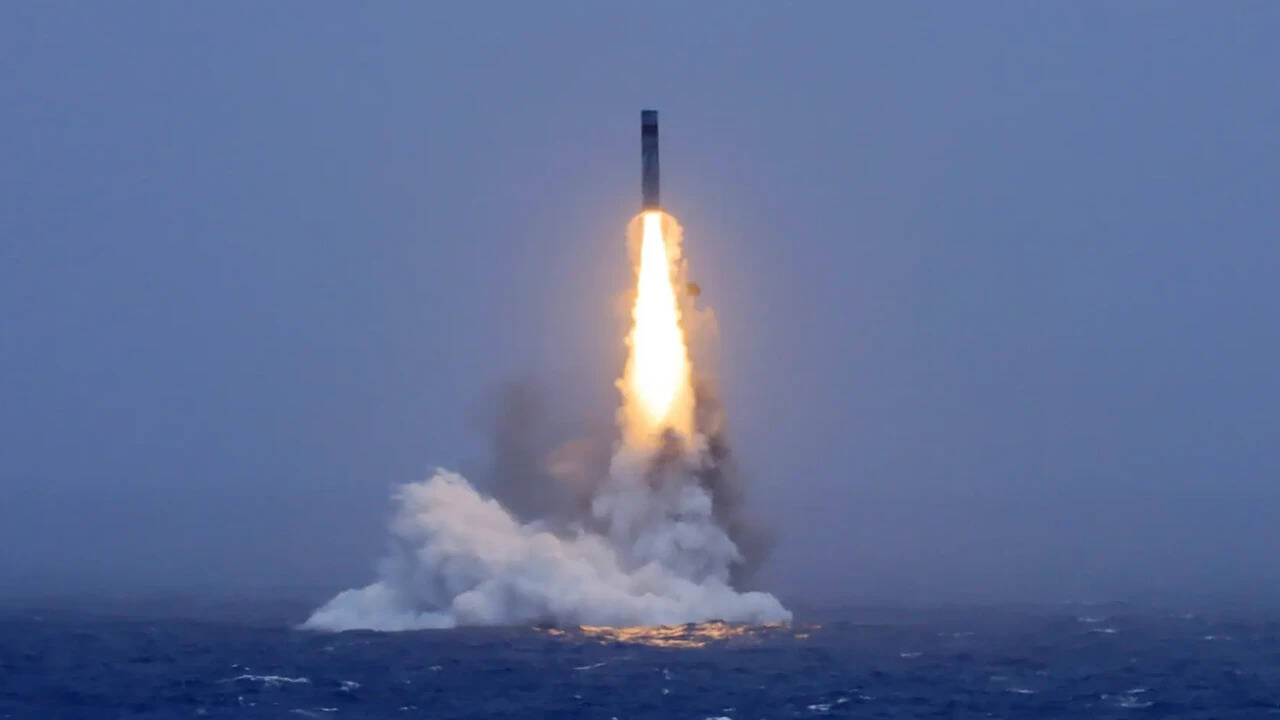
Beijing flexed its military might in the South Pacific last week, conducting a ballistic missile test from a nuclear-powered submarine. China had conducted a similar test in the region two years ago. But this time the missile landed in the South Pacific Nuclear Free Zone, established by the 1986 Rarotonga Accord. China itself has ratified the protocols to the accord, which seeks to create a nuclear-free zone and prevent nuclear threats against signatories with territories in the region.
So, China’s latest test naturally alarmed regional countries, including Australia, New Zealand and Japan. But China’s real target with the test is US. After all, Beijing wants to demonstrate its growing nuclear triad, and expanding nuclear submarine fleet. It wants to show that it can militarily operate anywhere in the Pacific and possesses credible second-strike nuclear capabilities.
For US and allies in the region concerned about growing Chinese military belligerence, the only option is closer military cooperation of the kind seen earlier this year with the Balikatan exercises in the Philippines, which saw participation by multiple countries. China’s military rise needs balancing precisely because there is no telling what dynamics will guide an increasingly authoritarian and revisionist Beijing.
Syria removed from terror sponsor list:
In a big step for Syria, US has decided to remove the country from the state sponsors of terror list in which it had been included since 1979. This exemplifies two things. First, that US-Syria relations have undergone a sea-change since the fall of Bashar al-Assad in December 2024. New Syrian leader al-Sharaa has convinced Washington that Syria is on a new path and will not harbour terror groups against any country. Second, it also shows a big strategic victory for US. Removing the terror designation will provide a huge fillip to Syria’s economy with investments and trade pouring in.
This in turn will bring Syria closer to US economically. And that would mean Syria will slowly drift towards the US strategic umbrella, away from Russia and China. Note that Syria remained quiet during the US-Israel war against Iran. Taken together, both Damascus and Washington are scripting a new chapter in their ties that will profoundly impact the Middle East. Turkey will be watching all of this with some seriousness.
Stay updated with the latest news on Times of India. Get all the trending City News, India News, Business News, and Sports News. For Entertainment News, TV News, and Lifestyle Tips, visit Etimes.