After a short break, welcome back to another edition of My Take 5, your weekly round-up of top international news. This week, we are covering the scheduled Iran-US ceasefire talks in Pakistan, the Orthodox Easter ceasefire in the Russia-Ukraine war, Moldova's pullout from the Russia-led Commonwealth of Independent States, Taiwanese KMT chairwoman Cheng Li-wun's trip to China, and Mali's de-recognition of the Sahrawi Arab Democratic Republic. So let's get to it:
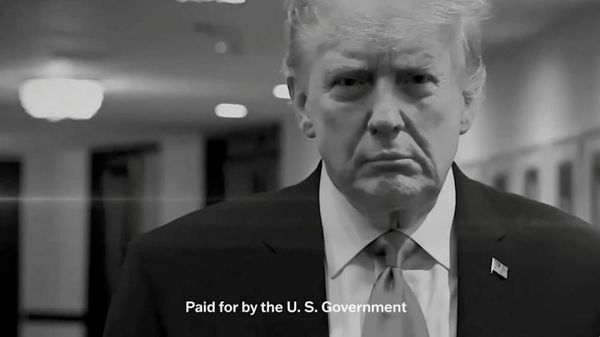
Iran war ceasefire and talks: With the US and Iran agreeing to a two-week ceasefire to allow for negotiations to end the Iran war, all eyes are now on Islamabad. Pakistan has emerged as the mediator between the US and Iran, passing messages between the two sides and engaging with other regional players such as Egypt and Turkey to create an opening for negotiations. Both Tehran and Washington have acknowledged Islamabad’s role, giving it due credit. After all, the war was threatening to reach a whole new level of catastrophe with Trump threatening to target Iranian civilian infrastructure and bomb the country to the stone age. Iran, meanwhile, remained defiant and had practically shut the Strait of Hormuz, causing much global economic pain through rising energy prices.

As soon as the ceasefire was announced and accepted by both sides, the entire world breathed a collective sigh of relief. But within 24 hours, a dark cloud began gathering again. Thanks to Israel, which, while accepting the ceasefire, has said that it doesn’t apply to its operations in Lebanon. And to prove a point, it carried out a massive bombardment of Lebanese targets, killing more than 250 people, on Wednesday. This then prompted Iran to protest and immediately close the Hormuz. Tehran’s reading of the ceasefire is that it includes Lebanon. But Israel, and now the US, insist it doesn’t.
So, even before the scheduled talks take place in Islamabad, things are not looking good. In any case, the US and Iran are wide apart on their demands. The US wants unconditional opening up of Hormuz, limits on Iran’s missile programme, and no nuclear enrichment whatsoever for Tehran. Iran, on the other hand, wants the US to vacate its military bases from the Middle East, pay reparations for the war, and recognise Iranian sovereignty over Hormuz. These are incompatible demands. And if there is no trust going into negotiations, can talks really yield results?
Plus, Israel is clearly unhappy about the ceasefire. It believes that stopping the war is akin to snatching defeat from the jaws of victory. And with its Lebanon operations, it risks undermining the ceasefire anyway. So, the talks look dicey. But the world needs this war to stop. Fingers crossed it does.
Russia-Ukraine Orthodox Easter ceasefire: Putin has declared a 32-hour ceasefire for the Orthodox Easter holidays this weekend. Last year, too, Putin had declared a similar unilateral Easter ceasefire. But both sides accused each other of violating it. In any case, it did nothing to reduce the overall temperature of the war.
Interestingly, Zelenskyy this year had been pitching the idea of an Easter ceasefire for weeks via US mediators. But Russia did not respond to this for last weekend’s Easter, observed according to Roman Catholic tradition. In fact, on that Easter Day, Russia escalated its aggression against Ukraine, something Zelenskyy had highlighted. But now Russia announces an Orthodox Easter ceasefire. The difference is subtle but critical. In order to get away from Russian influence following Moscow’s launch of the full-scale invasion of Ukraine in 2022, Kyiv has increasingly aligned with Western Christian traditions. For example, in 2023, it officially moved its primary Christmas celebration to December 25 from the Orthodox Christmas date of January 7.
This hasn’t pleased Moscow one bit. And Putin’s apparent insistence on an Orthodox Easter ceasefire exposes Russia’s real fears and motivations for this war – a Ukraine that is free and independent of Russian influence and Moscow’s strategic orbit. This is what the war is about. Not Nato or the West, as Putin likes to claim. The idea that Ukraine should be free from Moscow’s clutches and aligned more with Europe – as the vast majority of Ukrainians want – is unacceptable to Putin. That’s why he started this war, not just in 2022, but way back in 2014.
Moldova to leave CIS: And it’s not just Ukraine that wants to run as far away as possible from Russia. Moldova just withdrew from the Russia-led Commonwealth of Independent States (CIS) that was founded after the breakup of the Soviet Union. Georgia withdrew from the organisation after Russia’s invasion of that country in 2008. Ukraine wound up its CIS membership by 2018 following Russia’s initiation of war in 2014.
Moldova, like Ukraine, wants to be part of the EU. That tells you much about how former Soviet Republics, or former Warsaw Pact countries, view Russia. Nobody trusts it.
Taiwan’s KMT leader visits China: Taiwan’s opposition KMT chairwoman Cheng Li-wun embarked on a trip to China on the invitation of the Chinese Communist Party. She met Xi Jinping and reiterated faith in the so-called 1992 Consensus – a tacit understanding between the two sides of the Taiwan Strait that there is ‘One China’, but each side is free to interpret this differently. This completely ignores the fact that China, especially under Xi, has changed the definition of the 1992 Consensus and only highlights the ‘One China principle’. There is no room for a Taiwanese interpretation.
So, Cheng, like other KMT leaders before her, is barking up the wrong tree here. China is not interested in anything other than a total reunification of Taiwan, with force if necessary. And China’s repeated aggressive military drills around Taiwan in recent years should be ample proof of this. Plus, KMT is going against the majority opinion in Taiwan – most want status quo, hardly anyone wants reunification, and a growing number wants independence. And after Russia’s full-scale invasion of Ukraine, KMT should be helping Taiwan’s DPP government to shore up Taiwanese military and defence preparedness against a potential Chinese attack, not bury its head in the sand.
Mali withdraws SADR recognition: In another big win for Morocco, Mali has withdrawn its recognition of the separatist group Polisario’s Sahrawi Arab Democratic Republic, propped up by Algeria. SADR is an artificial construct that was created to undermine Moroccan sovereignty over its southern Sahara provinces. However, in recent years, a growing list of countries has de-recognised SADR and moved to Morocco’s position on the Moroccan Sahara issue. This includes the US and France, among others.
Given growing international support for Rabat, it’s only a matter of time before the Moroccan Sahara issue is settled for good in Morocco’s favour.