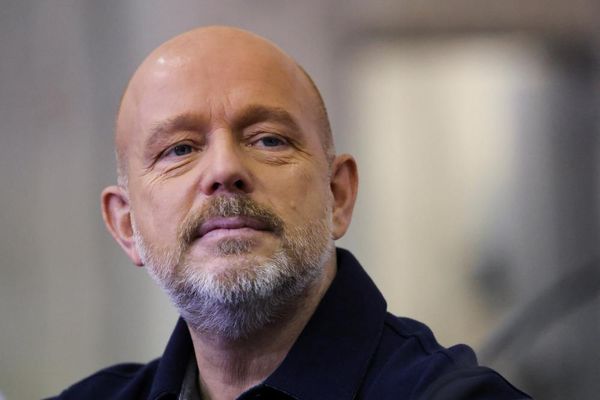
Canberrans, according to Saul Eslake, are overtaxed and underserviced by a big-spending ACT government that does not pay enough attention to where the money will come from.
A long history of Labor, and Labor and the Greens governments, dreaming big while not worrying enough about the "ways and means" needed to fund major projects such as the light rail is a recurrent theme in both the interim report on ACT finances he handed down in February and this week's final report.
Mr Eslake was commissioned by the ACT Legislative Assembly to examine the territory's financial sustainability as part of a push by the Greens and the ACT Liberals to force the government's hand on financial transparency.
His findings carry significant weight in that as a Tasmanian and an economist with a national profile and a long history of scrutinising public sector expenditure, he does not have an axe to grind.
This combination of expertise and independence lends his findings a weight that is difficult for all sides to ignore.
His report vindicates many of the criticisms levelled at the Barr and Barr-Rattenbury governments by former chief minister Jon Stanhope.
A recurrent theme in the reports is that while the territory government is more than happy to spend over and above what is coming in the door year-on-year it doesn't deliver bang-for-the-buck.
While per capita spending on health and education is above the national average the outcomes do not reflect the additional expenditure.
Mr Eslake's final report concluded the government spent more and more on delivering services and infrastructure without raising sufficient revenue to cover the cost.
This, as anybody who has ever tried to balance a household budget or bring a credit card back under control knows, is a recipe for disaster. While there is a limit how long an individual can spend more than they make before forced into bankruptcy, governments have an ace up their sleeve. It's not their debt and it's not their money.
Chief Minister Andrew Barr, who became treasurer in July 2011 and held that portfolio until November 2024 before gifting what some see as a poisoned chalice to Chris Steele, cannot evade responsibility. It has not always been a case of "ever thus".
Under Kate Carnell and Jon Stanhope surpluses significantly outnumbered deficits to the extent the territory's outstanding debt was paid by the mid-2000s.
This changed after Mr Barr became treasurer with regular structural operating deficits, increased spending on infrastructure, and a current territory debt of $11.05 billion. This is expected to increase to $13.82 billion by 2028-29.
According to Mr Eslake the ACT now has one of the weakest budget positions in the country with net debt on track to approach 20 per cent of gross territory product in the 2026-27 reporting year.
While it is true that some countries, such as the United States, can live with a permanent debt that has been growing by leaps and bounds for 190 years (it was last debt free in 1835) the ACT's pockets are nowhere near as deep as Uncle Sam's.
Mr Eslake's prescription includes lowering the payroll tax threshold and increasing gambling taxes. There is the potential to make savings in the health sector and more should be done to recover the cost of treating out-of-territory patients in Canberra hospitals from their home jurisdictions.
While some of these options are sure to be unpalatable to the government, the longer the delay, the harsher the treatment will need to be.