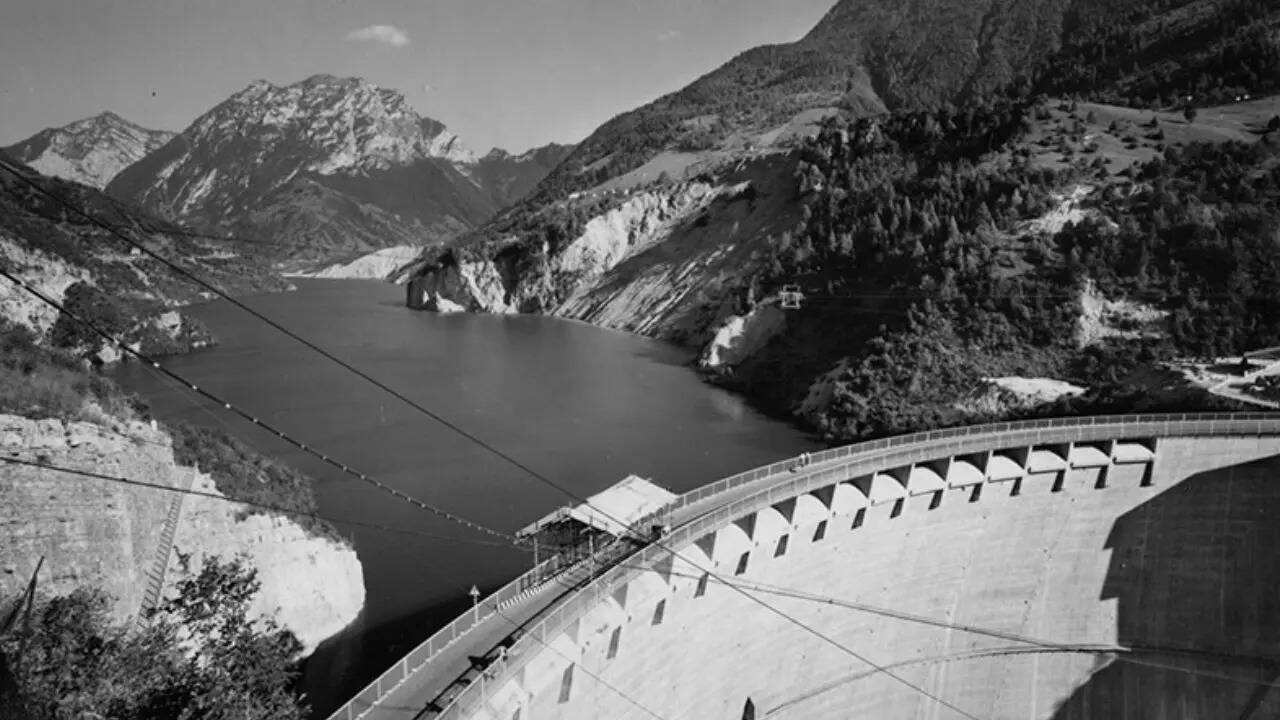
On October 9, 1963, a colossal engineering marvel became a monument to human overconfidence. High in the Italian Alps, the Vajont Dam- then the world’s tallest- withstood the unthinkable: a massive 260 million-cubic-meter landslide from Monte Toc. In just 45 seconds, the mountain collapsed into the reservoir, displacing a 50-million-cubic-meter wall of water.
This 250-meter megatsunami surged over the dam’s crest, hurtling into the valley below with the force of two Hiroshima bombs. According to the Association of State Dam Safety Officials (ASDSO), the town of Longarone was erased in minutes, claiming nearly 2,000 lives. Despite visible geological warnings, the pursuit of progress ignored the mountain’s fragility, leaving behind a dry reservoir and a chilling lesson in environmental hubris. Today, the dam remains a haunting, silent sentinel, its intact arch standing as a stark reminder that engineering skills cannot always override the catastrophic power of geological instability.