Get all your news in one place.
100’s of premium titles.
One app.
Start reading
Creative Bloq
Creative Bloq
Technology
Ian Dean

The visual effects behind Apple TV’s The Lost Bus explained

The Lost Bus VFX.

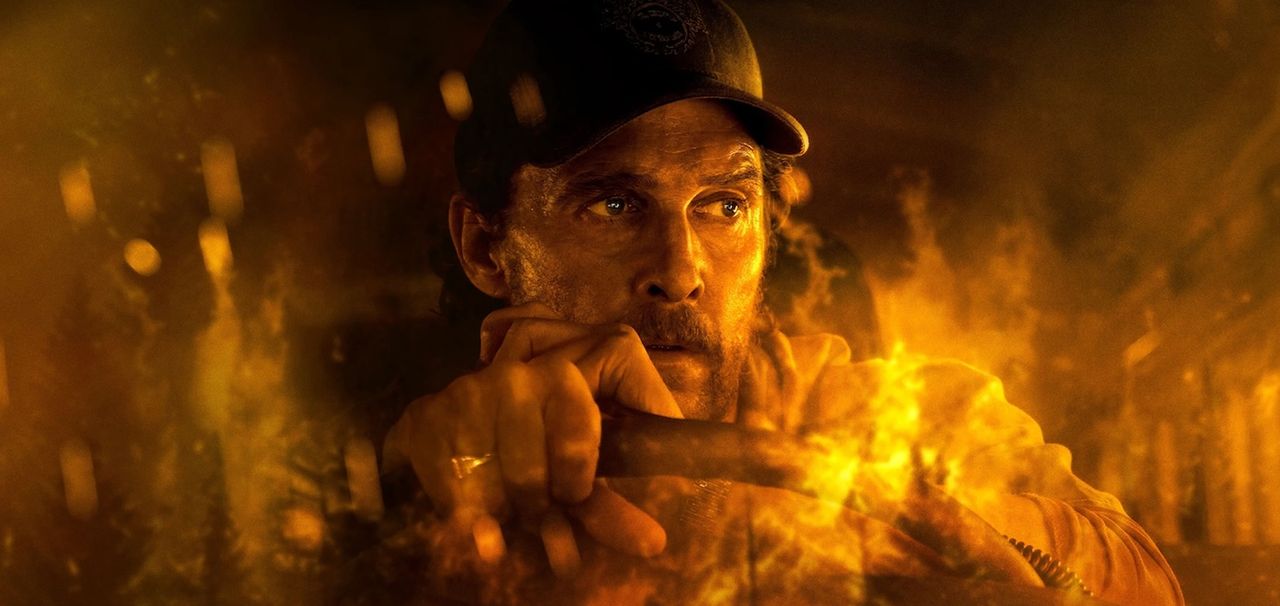
The disaster movie genre is a toughie to land. The need to present high spectacle anchored in human drama is a mix that's hard to get right. Apple TV's The Lost Bus walks a tightrope, partly due to deft VFX that bring to life the real-life story of a school bus's race to escape the worst wildfire in California history. Getting this right is another example of blockbuster VFX you’re not meant to see.
• Get a free trial of Apple TV

Outpost VFX was tasked with some of The Lost Bus’s most demanding moments, sequences that needed to feel visceral and uncontrolled, yet remain readable and grounded in reality. According to VFX Supervisor John McLaren, the workload naturally clustered around two major pillars of the film.

“The big sequence for Outpost was the trailer park sequence, which took up in the region of between 100 and 120 shots,” he says. “Our second big sequence was the final sequence of the film, where we see the destruction left behind by the wildfires.”

Between those bookends sat a steady run of atmospheric enhancement work: towering smoke plumes, drifting clouds, added vehicles, trees bending under pressure, and debris pushed relentlessly through the frame. Some shots required heavy intervention; others, a lighter touch. As McLaren puts it, sometimes it was about “just enhancing things, adding more smoke, making shots feel windier.”

(Image credit: Apple TV / Outpost VFX)

Working with wind

That sense of wind is one of the film’s defining characteristics. It’s ever-present, driving the fires and the panic, and it requires careful coordination across sequences. In the trailer park, the visual effects team had to work with what had already been established practically.

“In the trailer park sequence, we were a little bit governed by the SFX wind that was in there because that'd be blowing the smoke as well,” McLaren explains. “So we kind of stuck to their direction, which generally worked quite well.”

Continuity wasn’t always straightforward. Wind direction could shift between shots, and swirling turbulence added another layer of complexity. The enclosed nature of the trailer park actually amplified this effect. “The trailer park was quite a contained area, so once you get inside it and the wind starts blowing, you can get smaller, almost tornado-like swirls where the wind is rebounding off of all of the objects in there.”

That meant augmenting practical elements with CG where necessary, replacing static foliage with animated versions, and threading dust and debris through the scene. For the most prominent elements, direction came straight from the top. “For the closest-to-camera stuff, Charlie [Noble, Overall VFX Supervisor] would direct it,” says McLaren, noting that artistic licence was sometimes applied when the camera became more dynamic.

(Image credit: Apple TV / Outpost VFX)

Building jeopardy shot by shot

The trailer park sequence itself was a puzzle box of escalating danger. The bus’s route, its dead ends, and the walls of fire it encounters all had to be carefully planned.

“We had an idea of the direction the bus was travelling in and where it would be travelling,” McLaren says. “Then in between it was all about Kevin driving into these dead ends and the dead ends were large fires, basically.”

Set scans and reference material helped anchor that movement, but the challenge increased when the bus left the physical set entirely. A director-led decision placed the action in an empty car park, shifting the burden to VFX to create the environment from scratch.

“This became challenging because we found we were filling more in with visual effects, adding more smoke, adding more environment,” he says. Counterintuitively, that freedom often paid off. “It gave us an empty canvas to start putting in trailers and other elements… in some ways, some of those shots were more successful than the ones when we were confined to the set.”

The key was escalation. Fires multiply, embers intensify, and the pressure steadily ramps up. To manage that, the team broke the sequence down methodically. “We just broke the whole sequence down into these blocks and then even smaller blocks,” McLaren explains. Each section was categorised by ember intensity – light, medium, heavy, intense – and colour-coded so artists always knew the emotional temperature they were working in.

Blocking came first, much like an animation pass. Temp fires and embers were reviewed as a whole before detail was layered in. “It was very much like animation blocking,” he says.

(Image credit: Apple TV / Outpost VFX)

Thinking holistically

With around 120 shots in play, consistency became less about perfecting individual frames and more about maintaining flow across the entire sequence.

“You get so used to looking at one shot and looping that one shot in its own,” McLaren admits, “but then in that sequence… we had to always be conscious of the whole picture.”

The aim was momentum. The sequence should feel breathless until release. “It just becomes a kind of ‘hold your breath until the end’ scenario,” he says. Achieving that meant constantly stepping back from the micro details and reassessing the broader rhythm.

Embers proved particularly tricky. Their movement needed to respect wind direction without becoming uniform or predictable. “Embers don't always travel in a single direction based on prevailing winds,” McLaren notes. They’re affected by turbulence, other fires, and gravity. The solution was varied: different ember types with distinct behaviours, from floaty, leaf-like fragments to sparks that scatter, tumble, and skid along the ground.

(Image credit: Apple TV / Outpost VFX)

Grounded in reality

Reference was central to selling the destruction. With the film rooted in real events, material was abundant. “There's so much stuff from the California Fire Department, lots of befores and afters,” says McLaren. Dashcam footage from people escaping the 2018 fires proved especially influential, shaping the look and motion of smoke and embers.

Production also captured bespoke reference: light beams, smoke interacting with headlights, and windscreen reflections. All of it fed into a cohesive visual language. Real footage even made its way into the final cut, something McLaren only noticed on first viewing. “The second time I watched it, I didn't really clock it at all,” he says. “It felt like it was all quite integral.”

Smoke dominates The Lost Bus, but it never flattens the image. That was a conscious choice. “They always wanted it to feel claustrophobic, but they always wanted it to feel like it had depth, too,” McLaren explains.

Silhouettes, profiles, and backlighting became essential tools. Buildings and trees were shaped against smoke layers, with hints of firelight behind them to suggest space beyond the haze. “Let's make it feel like there's more to it than just this layer of smoke,” McLaren recalls Charlie Noble saying. Compositing was pushed hard to preserve that sense of depth and forward motion.

(Image credit: Apple TV / Outpost VFX)

Camera movement and collaboration

Director Paul Greengrass's preference for handheld camerawork brought its own considerations. Matchmoving was eased by detailed camera data from the set, but motion blur became a balancing act. “You've got motion blur from the embers moving, and then you’ve got motion blur from the camera moving as well,” says McLaren. The challenge was to ensure effects remained readable without compromising realism.

Throughout it all, collaboration defined the experience. “Brilliant,” McLaren says of working with the client-side team. Despite the scale of responsibility, feedback was clear and focused. More importantly, it was rooted in storytelling. “It wasn't just about making these gorgeous effects – it felt like they were both truly invested in the story.”

Visit the Outpost VFX Lost Bus website for more on how Apple TV's movie was made. Inspired? Explore tools and techniques similar to those used on The Lost Bus: 14 must-have resources for VFX artists.

Sign up to read this article
Read news from 100’s of titles, curated specifically for you.
Already a member? Sign in here
Related Stories
Top stories on inkl right now
One subscription that gives you access to news from hundreds of sites
Already a member? Sign in here
Our Picks
Fourteen days free
Download the app
One app. One membership.
100+ trusted global sources.