
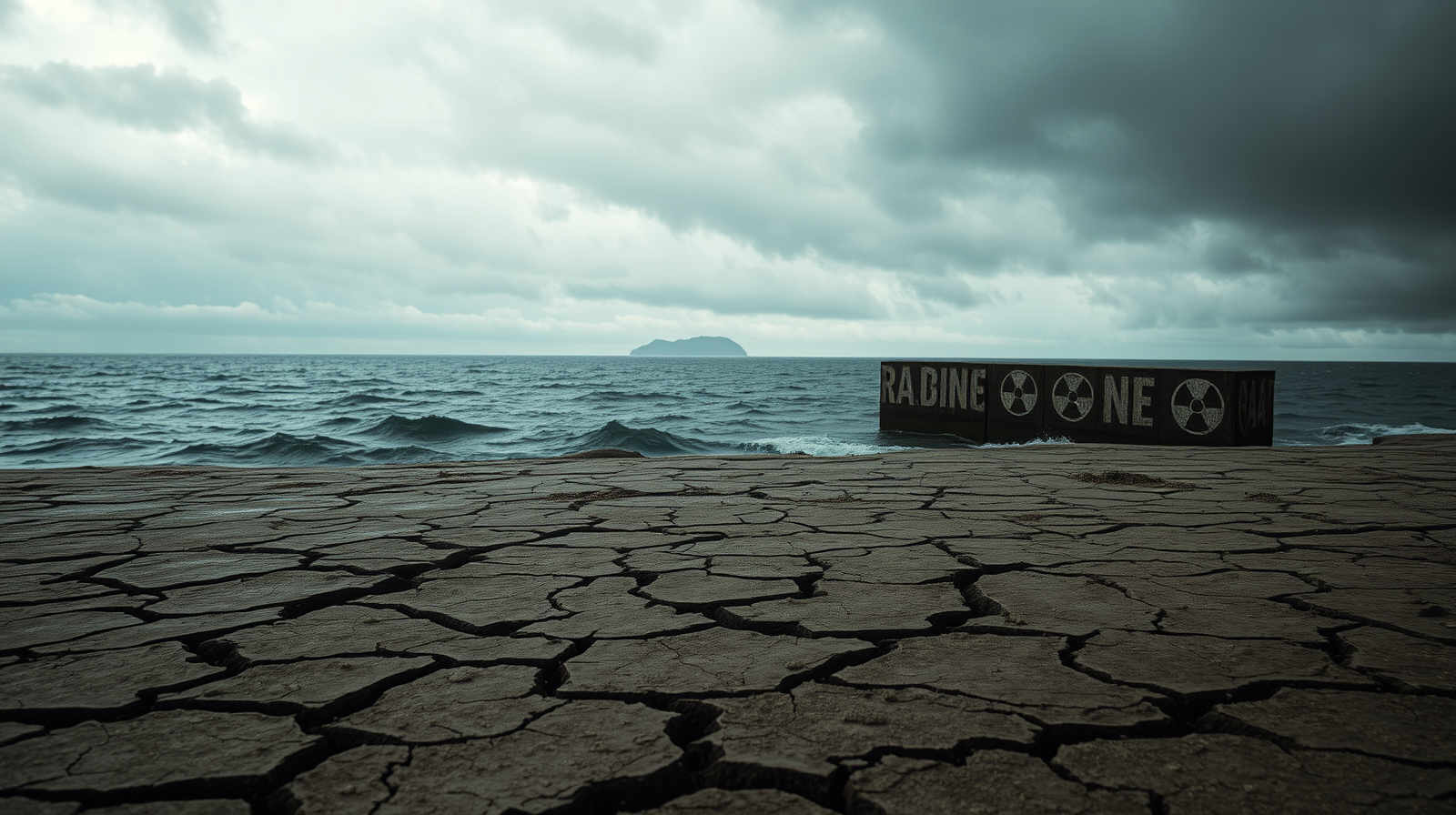
On a remote island in the Marshall Islands, a concrete dome built more than four decades ago holds roughly 85,000 cubic metres of radioactive waste left over from the United States' Cold War-era nuclear testing programme. Known officially as Runit Dome and locally as The Tomb, the structure was built between 1977 and 1980 to seal off contaminated soil and debris from 43 nuclear weapons tests carried out by the US military across Enewetak Atoll between 1948 and 1958. The dome's concrete cap sits directly above a blast crater that was never lined underneath, and rising sea levels are now pushing seawater further into contact with the waste inside, prompting the US Congress to order a formal government study into the risks the site poses as the climate continues to change. What makes Runit Dome such an unsettling case study is the mismatch in timescales, a Cold War fix built for a world that assumed stable coastlines, now facing conditions its 1980 engineers had no real way of predicting.
Get breaking news anytime, anywhere. Download the TOI app now!












