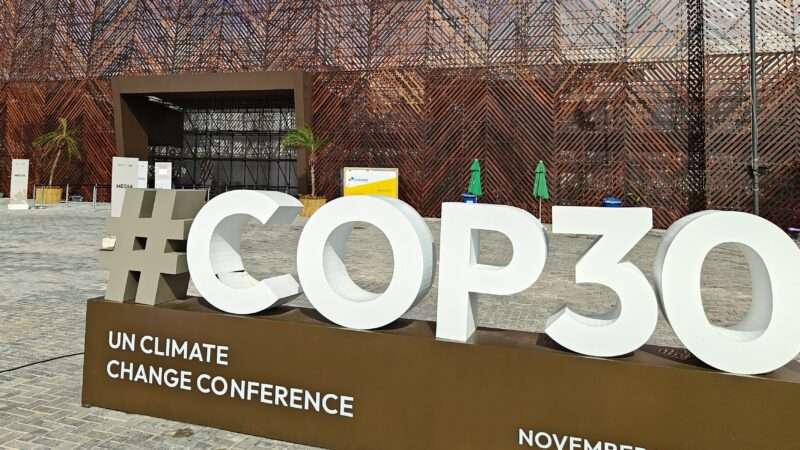
The United Nations' 30th Conference of the Parties (COP30) to the U.N. Framework Convention on Climate Change (UNFCCC) stuttered to its end in Belem, Brazil, over the weekend. From the point of view of climate activists and poor countries demanding that rich countries supply them with hundreds of billions of dollars in climate change handouts, COP30 was largely a bust. In addition, the chief activist goal for a commitment to a roadmap to phase out fossil fuels by a date certain was nowhere to be seen in the conference's final Global Mutirão decision.
COP30 convened 10 years after the adoption of the Paris Agreement on Climate Change, in which signatory countries committed to "holding the increase in the global average temperature to well below 2°C above pre-industrial levels and pursuing efforts to limit the temperature increase to 1.5°C above pre-industrial levels." In pursuit of that goal, signatories were supposed to increase their commitments in their Nationally Determined Contributions (NDC) to cut their emissions of greenhouse gases, chiefly carbon dioxide from burning coal, oil, and natural gas, which are contributing to the rise in global average temperatures.