The announcement on 17 January that Washington will impose punitive tariffs of 10% to 25% on eight European allies – unless they facilitate the “complete and total purchase” of Greenland – is likely to be the death knell of the post-1945 transatlantic order. By linking the territorial sovereignty of a Nato ally to trade access, the US has transitioned from Europe’s security guarantor to a 19th-century imperial rent-seeker.
This is a moment of profound rupture. For decades, the western world believed that raw imperialism had been relegated to the past among advanced industrial powers. Even China, for all its assertiveness, largely couches its ambitions in the language of revanchism – the “reclaiming” of lost territory. Washington’s current demand for Greenland, by contrast, is a throwback to the age of the 1884 Berlin conference: a transaction of land and people driven by a might makes right worldview.
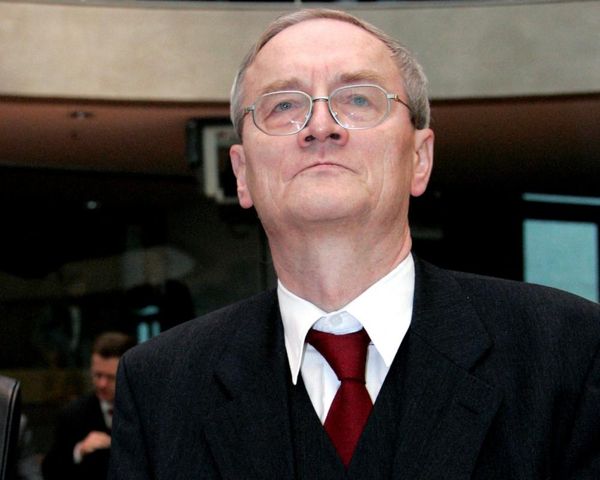
To be sure, this act of raw aggression faces pushback within the US. Senator Thom Tillis has rightly criticized the coercive effort and public polling shows that while a segment of the Republican party favor a purchase, only 8% of Americans support the use of force to acquire the territory. But Europe must realize it is dealing with a president drunk on executive power, undeterred by congressional dissent or a skeptical public that he views as malleable and more concerned with the cost of living and culture wars than Arctic sovereignty.
The strain is already intense for Europe. Trump’s pressure is designed to expose EU fault lines and sow internal division by forcing member states to prioritize different existential threats and divergent interests. Denmark has a near-existential interest in preventing this annexation. France and Germany have an interest in demonstrating EU cohesion, yet risk seeing their vital access to US export markets severed.
The most tragic tension, however, is on the eastern flank. Poland and the Baltic states view Russian aggression as an immediate, physical threat that only American boots and missiles can deter. To maintain that shield, they will want to stay silent on Greenland. Yet Trump’s policy presents them with an impossible paradox: the very coercion being used to force a deal on Greenland undermines the logic of the security guarantee itself. What responsible sovereign power in Warsaw or Tallinn can put stock in the word of an ally that uses the threat of abandonment to compel the sale of a neighbor’s territory?
Brussels is already reaching for its most powerful defensive tool: the Anti-Coercion Instrument (ACI). This “trade bazooka”, designed to bypass national vetos through qualified majority voting, allows a range of EU retaliation. But firing it against Washington would be a major escalation – and probably irreversible. For the eastern flank, activating the instrument risks acting on a suicide pact; for Paris and Berlin, failing to activate it could be the end of European sovereignty.
In the face of this trauma, the traditional European habit will be to try to weather the storm. There is a deep-seated institutional hope in Brussels and Berlin that this is a temporary aberration – that if Europe simply absorbs the tariffs and waits until 2028, transatlantic relations will return to “normal”.
This reflex must be actively resisted. The wait and see approach is no longer a strategy. It is a recipe for perpetual vassalage. The Greenland crisis is not just bad weather. It is a structural shift. European leaders must use this crisis as the necessary political catalyst to further the continent’s own sovereign defenses.
To survive, Europe must overcome the bureaucratic and nationalistic resistance that has long stalled defense integration. It must seize on this crisis to force recalcitrant national defense industries into irreversible cooperation. To fund this, leaders need to break long-standing taboos to re-energize the continent’s economy through a radical mix of immigration, economic liberalism and wise industrial policy that boosts Europe into the first tier of technological powers.
Doing so will generate turmoil by challenging entrenched interests on both the left and the right. The urgency of the mid-21st century will not permit a gradual approach. Producing the financial resources for an independent defense will take years; every month spent debating is a month lost. The choice is no longer between the status quo and integration. It is between a painful European rebirth or a slow descent into a world where the EU collapses internally, its security is in tatters and it becomes a target for expansion in Moscow.
Christopher S Chivvis is a senior fellow at the Carnegie Endowment for International Peace and former US national intelligence officer for Europe