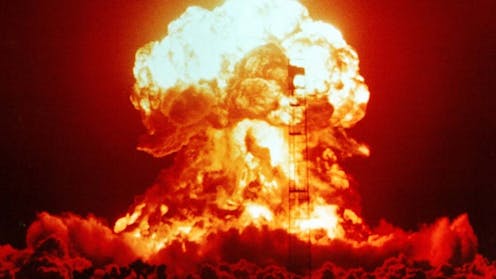
In August 1945 the United States dropped atomic bombs on the Japanese cities of Hiroshima and Nagasaki, killing more than 200,000 people, overwhelmingly civilians. Eighty years on from this slaughter – which the then US army commander and later president Dwight D. Eisenhower called “completely unnecessary” – is an apt time to ask how the world has changed since Japan’s skies lit up with atomic fire.
Many in the military as well as academics and nuclear theorists argue that a “third nuclear age” has begun. By this they mean that a new and different set of nuclear threats are emerging which fundamentally challenge the existing tenets of nuclear “deterrence”. The response, some argue, is to invest heavily in our nuclear weapons systems to secure ourselves against this new age of uncertainty.