
Get all your news in one place.
100's of premium titles.
One app.
Start reading
The National (Scotland)
Sport
Graeme McGarry

The Tartan Army hopeful who turned down Mourinho and learned from the legends

Brondby captain Luis Binks has played with and for some of the biggest names in football, but his greatest honour would be to represent Scotland. (Image: Matthew Johnston)

He may not be a household name in Scotland - not yet anyway - but Luis Binks has worked with enough of them in his short career to leave no doubts over the pedigree of his football schooling.

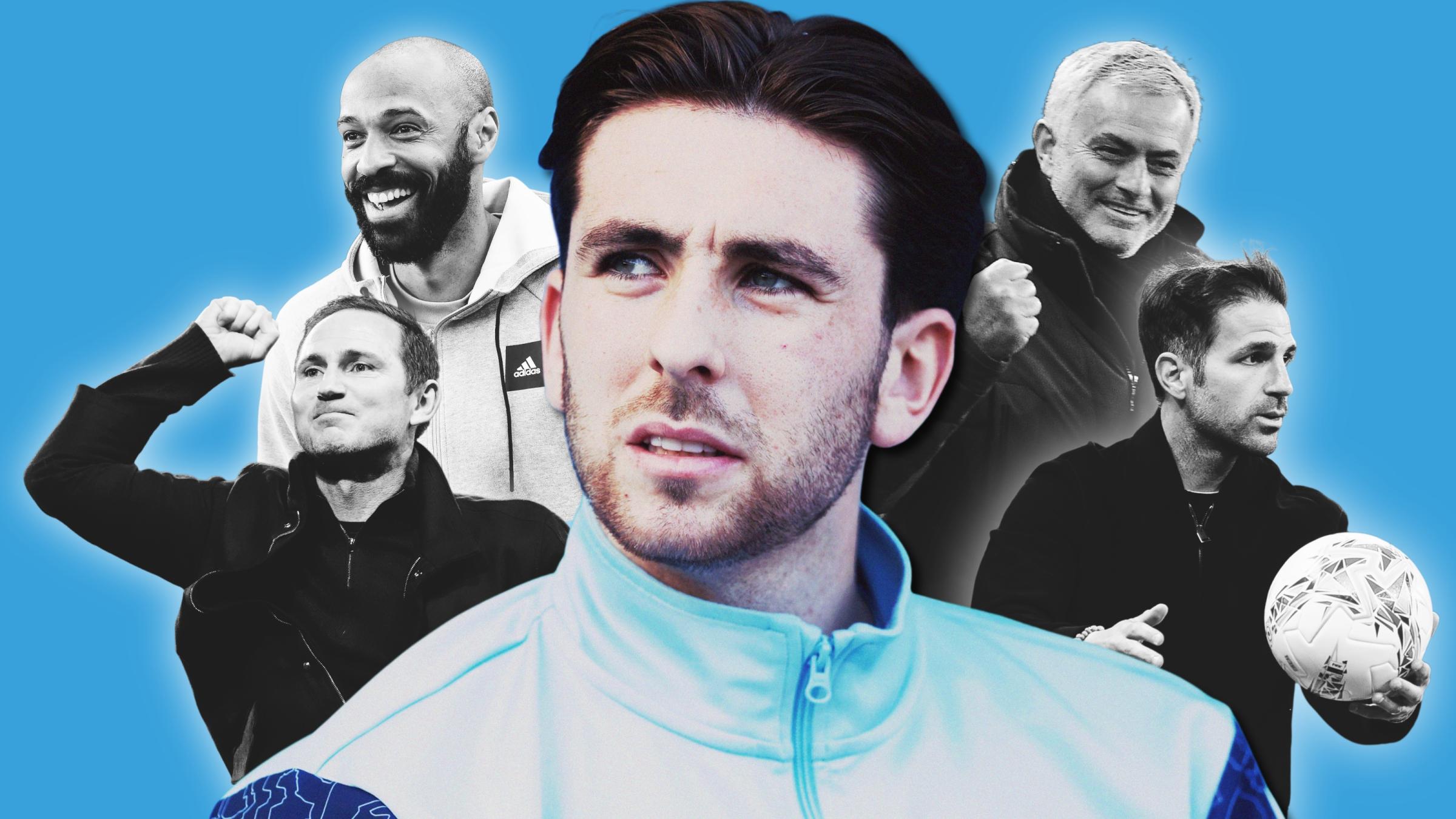
The 24-year-old central defender, who has just been named the Brondby captain, has been brought up in the game - and managed by - some of the biggest names in modern football, and he has his sights firmly set on now making quite the name for himself.

What’s more, he would love to do that in a Scotland jersey.

Born and raised in Gillingham, the accent may be more Southeast England than East Lothian, where he used to visit his grandad Richard in Dunbar during the school holidays, but Binks has made it clear for some time now that he is more than open to throwing in his lot with the Scottish cause.

Many young players like him who may have represented both Scotland and England in their youth football days have hedged their bets, leaving the Tartan Army wondering if it was only because they didn’t quite reach the level to be considered for the Three Lions that they came crawling back to Hampden late in their careers. Which perhaps explains why Binks, with it all still ahead of him, is so open, so early, about his desire to represent Scotland.

There is much though that Scottish football fans won’t know about a man who hopes he can help solve what has long been a problem area for the national side, and it all starts in North London.

"I went in at Spurs when I was six, went through all the age groups and moved there when I left school at 16,” Binks said.

“I did my scholarship there. I was playing with the reserves and the under-23s at that time. Tottenham was the grounding of me and made me the player I am because everything that was embedded in me there, I still carry with me now, whether it be on the pitch or off the pitch.

(Image: Michael Zemanek/BPI / Shutterstock)

“The academy manager at the time, John McDermott, was brilliant for me and it was the best place for me to grow up. He's not there anymore, he's at the FA. He brought through a lot of players at the time, even before me, like the Harry Kane era.

“Everyone says the same thing about him: very tough, but it was tough love. You only realise that looking back on it now because when you're in it, you're thinking he's this and that, but he was good for me."

At that stage, the young Binks was living the dream, playing every day in a world-class environment alongside some world-class players. However, after a couple of years, that wasn’t enough.

Binks isn’t the type to sit on the sidelines and be happy to simply have a lucrative contract at any club, no matter how prestigious, which meant he had to muster the courage to speak to, and turn down, a ‘special’ manager.

"I was quite young in terms of knowing that I wanted to go and play first-team football,” he said.

“A lot of the boys at that time would wait until they were 21 or 22 to go on their first loan. I never wanted to get caught in that cycle of playing 23s football when I'm 21 or 22 because I thought if you do that, then you’ve missed the boat.

“I was 17 going on 18 and Jose Mourinho was the manager at the time. I was training with the first team under him, and he pushed me more into the first team than Mauricio Pochettino did. That made it a bit more difficult to say I want to leave.

“I remember I got offered my pro contract and I went in one day and said I want to leave. The academy manager was like, ‘Okay, we'll get Mourinho in here’. I ended up having a meeting with my dad, uncle, Mourinho, and all the coaches.

“He was saying, ‘You'll be with me this year, you'll play some cup games, you'll come on a pre-season tour’. But I saw that if a club like Tottenham gets offered a chance to sign a 50 or 60-million-pound centre-back, they're going to do it. Me being an 18-year-old, it's hard to compete with that having played no games.

“I just thought, I want to go and play as many games as I can at a young age. I think that gives me the best chance to go on and have the best career I could have.

"It was very difficult to say no to a manager like him. The centre-backs he was mentioning that he had working with him, like Ledley King at the time, I was thinking, ‘Maybe if I stay here and learn from someone like that, it could be good for me’.

“But in the back of my head, I always had the thought that if he gets the chance to go and buy a 60-million-pound experienced centre-half, he's going to do it. And just as I left, they did bring in a few centre-backs. That made my decision a bit firmer.

“I was proud that I did take that step to leave."

Binks has noted that a debate over youth development is currently raging in Scotland – plus ca change – and there is an onus on maximising first-team game-time for young players.

While he understands the temptation for young Scottish players to make the move to big clubs in England at an early age, as so many have in recent years, his tuppence-worth is that the majority of them would be better served staying put.

"More now than ever, there are scouts everywhere,” he said.

“It doesn't matter where you're playing, you could be playing on the moon and you're going to get that move if you're playing and you’re good enough.

(Image: Colorsport / Shutterstock)

“My advice to a boy breaking through in Scotland now would be to stay where you are, even if it is at a lower-end club in the Scottish Prem. If a big club in England comes in for you and you make that move, you're just going to be one of a number.

“My advice would be to play as many games as you can, get that experience in a men's environment. You learn so much on a daily basis as well as the games. It can only stand you in good stead if you're playing men's games at a young age to then go on.

“You see so many boys signing for Chelsea on long contracts, for instance, but they're coming from places where they probably would have played. They go into Chelsea and they're not playing and then you get forgotten about.

“My advice would always be no matter what club it is, just play. With all the data and stats, you're always going to get found out if you're good enough."

The news that Binks was intending to leave Tottenham certainly alerted scouts all over Europe and beyond, as it turned out, as his next stop would be an unconventional one for a British player of such tender years.

"I ended up going to Montreal,” he said.

“I knew they had the connection with Bologna in Italy, so it was sold to me that if you do well, the first opportunity we will sell you back to Bologna.

“That was always the plan. The MLS is a league people associate with retirement, but it's a great league if you're coming through and want to play games. I personally wouldn't want to spend my prime years there because I feel like Europe is the place you want to be. But it's a great league to go and learn and when you get the chance to go and learn from someone like Thierry Henry, who was the manager there at the time, it's quite hard to say no.

“I met him in London before I signed and he laid out the plan, the project that he wanted to do in Montreal. He said I was part of that and to hear that from him was quite hard to pass up.”

Even the best-laid plans can go awry, though, and the arrival of the COVID pandemic meant that Binks was confined to a hotel. So too, though, was Henry, and a considerably nicer one, at that.

An invitation to join his manager there followed, and subsequently, an opportunity to discuss the game at length with one of the finest footballers of his generation.

“They shut one of the hotels just for Henry,” he said.

“He said, do you want to come and stay in my one, because his hotel was a bit better!

“I stayed there with him, and I remember going down for runs in the morning and he'd just be sat in the reception. When I'd come back, I'd spend four or five hours just picking his brains. It was just me and him.

“He was away from home, I was away from home. I'd spend four or five hours just picking his brains about who was the best defender you played with, against, why, what didn't you like coming up against, just trying to learn everything.

"There are people who watch football and then there are people that watch football like him. His attention to detail was probably a bit advanced for where Montreal were at the time because he's trying to get full-backs rolling inside and he's played with Dani Alves and full-backs like this. You're at Montreal with a full back who's just come out of college, so it was different.

(Image: Richard Lee / Shutterstock)

“But the way he sees football, you see it now on the telly, the detail he goes into is excellent. He’s played with top centre-backs and against top centre-backs so you can always learn so much.

“When you're around these people every day, you think it's normal. It's only when you come out of it that you're like, he gave me this knowledge, and you can draw on those experiences.”

Soon, the roadmap for the young Binks would be back on course, and he did indeed arrive at Bologna after impressing in MLS. There, a friendship with Scotland full-back Aaron Hickey would blossom that had been seeded way back when they turned out together in the Victory Shield for their country, and he would find a manager in Serbian icon Sinisa Mihajlovic who was prepared to give him a chance in one of Europe’s major leagues.

"I was young, I must have been 19 or 20 at the time,” he said.

“I didn't really have any expectations. I was like, I'll come here, try and do well in pre-season. If they want to loan me out, at least I'm back in Europe. I went in there pretty open-minded.

“I had quite a good pre-season. The manager grew to like me from the start. Then I was in the squad and made my debut that season. My benchmark was always to play 15 games, whether you're coming on or you're starting some. That's what I did, I hit 15.

“To be starting games in Serie A at that age, especially as a centre-back, because everyone knows Italian centre-backs are normally quite old and experienced, to get 15 games at that age in that league was quite a proud moment for me. That's what I set out to do.

"With Aaron being Scottish and me being there as well, we grew close to each other being two of the only ones who spoke English. We lived not far from each other, we used to travel in together, we shared rooms with each other because we were the same age, same background. Me and him were close.

“Marko Arnautovic was in there, too, and I'm a West Ham fan so it was great to have played with him. I kept that quiet when I was at Spurs!”

Having met his target of playing 15 games, though, Binks – typically – wanted more. And the next summer, he pushed for a loan deal in order to play week-in, week-out, which saw him coming into the orbit of yet another Arsenal legend; this time, on the field.

"Bologna didn't really want me to go on loan, but again it was me saying I want to go and play football,” he said.

“The manager said that's fine, but before you go on loan, you've got to sign a new contract. It was good for me to go on loan and it was good for me to sign a new contract with Bologna because they were a club on the up at the time as well.

“Como came in and I knew there was that British influence there with Dennis Wise, who was president. Mark Birch, who also played, was one of the coaches there.

“I heard Cesc Fabregas was signing as well. Me and Cesc have the same agent, so I heard he was signing. When I heard he was going there, I thought they're quite serious and they want to do big things bringing in a name like that.

“I knew it would be a chance for me to play games and learn a bit more about the Italian way. That's what happened, I played most of the games there that season and we just missed out on the playoffs.

“To play with a player like Cesc, it was incredible. It's no surprise what he's gone on to do as a manager because he was already transitioning into that. He was doing his badges, and he was a bit like Henry, just obsessed. It’s no surprise how well he's done in his first few years."

Tragically, Binks’ mentor back at Bologna, Mihajlovic, would lose a long battle with leukaemia in late 2022. The impact to Binks’ career was of course secondary to the loss of the man himself, and such a legendary figure, but it was profound, nonetheless.

(Image: Kieran McManus / Shutterstock)

“I had quite a good connection with him because he gave me my chance,” he said.

“I just enjoyed working for him. It was really sad when he passed away.

“There was a big change at the club, and a new manager came in and new directors came in. It was a bit of an overhaul, and I was forced out of there.

“I think if the old manager was there and the old directors, I would have stayed and who knows what would have happened. It was them trying to bring their own people in, so I had to move on.

“I always had in the back of my head that I wanted to one day play in England, having grown up there. I always wanted to look back at the end of my career and say I have played in England. It sounds silly, but when you're driving up and down the motorway, you can say, 'I've played at that ground, I've played against them.'

“So, when the chance to move to Coventry came about, I jumped at it. They'd just lost the playoff final that year to Luton. Again, it was a club on the up, so I thought it was a good time to get in there.

Mark Robins signed me on loan and then the following year signed me permanently."

While there, Binks was part of one of the most controversial matches in recent years, when a heroic Coventry fightback against Manchester United in the FA Cup semi-final at Wembley was thwarted in heartbreaking fashion.

The Sky Blues thought they had bagged a winning goal during stoppage time at the end of extra time, only for the strike to be disallowed after a VAR intervention for the tightest of offside calls, before they went on to lose the penalty shootout.

"I was on the bench,” he recalled.

“I came on at 60 minutes and we were 3-0 down.

“Robins said go on, enjoy it. I come on and then it went 3-1. Then a cross came in and I was at the back post and put it back across. Aaron Wan-Bissaka handballed it, so I appealed for a penalty. I didn't really think we were going to get it, but we did. 3-2. Then you start thinking 'Oh, here we go.' It was around the time where United were a bit flimsy. You could feel it on the pitch.

“Then it went 3-3 and you saw their fans clearing out. I think if we played that game five more minutes we would have won, because we scored to make it 4-3 with about 30 seconds to go, before it was ruled out. I honestly think if we'd have had two, three, four, five minutes more, we would have scored again and just won the game because you could see they were just deflated.

“When it goes to penalties, it's a lottery and anything can happen. Sadly, we lost on pens, but it was great to be involved in a big game like that and show we could compete.”

Binks would then have a brush with yet another huge name in football as Frank Lampard replaced Robins in the Coventry dugout, but while this collaboration with yet another storied name didn’t quite go the way that he hoped, he looks back on his time in the West Midlands as another fruitful experience.

“The last year before I left, we got to the playoff semi-final, so we were always there or thereabouts,” he said.

“Frank Lampard came in in that second year around Christmas time. From then on, I was in and out. I'd play a couple of games, come out for one, play a couple, come out for two. It was always a bit stop-start.

“As I’ve said, I've always been that player that wants to play. When I'm not playing, I'm not happy. I'm not one of them players who's just happy to sit there, pick their money up, and go home. I want to look back and feel like I've earned my career and earned what I have.

“When this move came about to Brondby, I thought, ‘I've been abroad before, I'll go and do it again’. Going abroad didn't faze me."

Even still, and taking into account the size of the club he was joining, a move to the Danish Superliga last summer from a team on the cusp of promotion to the English Premier League raised a few eyebrows. But Binks believes his decision has been more than vindicated.

Manager Thomas Norgaard handed him the armband in the close season, and in these early knockings of the campaign, they sit atop the standings with Copenhagen and Midtjylland tucked in behind.

(Image: Lindsey Parnaby / Shutterstock)

“There were a few other options which were probably more attractive leagues or in a bigger league,” he said.

“There were other clubs where I could have gone where people would have gone 'that's a big club,' but I want to play. I want to know that I'm going there to play.

“The faith that Brondby showed and the resilience to keep pushing to get the deal done made me think they're actually wanting me 100%. If they're doing all this to try and get me in, then I must be a big part of what they want to do.

“I know it wasn't an easy deal because Coventry were not really playing ball at the start, so for them to have not just gone away and tried to move on to someone else was what attracted me initially.

“It's a big club. My family told me about it how in the '80s and '90s you’d always hear about Brondby. When you walk around the club, you can see photos on the wall of them playing against Barcelona, Arsenal, Man Utd in European competitions. Names like Peter Schmeichel, Michael Laudrup have all come through this club. There are some big names that have played for them.

"So, to be made captain was a real honour. I think I've always had those leadership qualities. Going back to my early days at Tottenham, I was always the captain at 16s and 18s.

“When you go into senior football, you start from the bottom because you don't have much experience. You're the young boy, so you don't really speak up as much. When you're playing, it becomes easier to voice your opinion and have a real voice in the changing room.

“At times when I wasn't playing at Coventry or Bologna where I'm the young foreign kid, I'm not going to speak up and start voicing my opinion because there's boys in there that have got ten times the experience.

“I think I'm at an age now, 24, and played in a few different leagues and countries where people will listen when I talk because it's coming from a bit of experience. I have developed that, but I have always had a leadership in me."

You might imagine then that a young Scottish centre-back with such a CV would have been in and around the national team squad at the very least, given the dearth of emerging options in that area, but Binks has somewhat puzzlingly been given no signs that he is even under consideration, never mind being given a sniff of a call-up.

“I didn't speak to Steve Clarke when he was the manager,” he said.

“They had the squad that got them to the tournament. I never expected him to disrupt that because at the end of the day, they got them to where they needed to be. For me to come in and be the new boy, I didn't expect that because they deserved to go and try to take them far in the tournament.

“I feel there's a pathway now though because there's a few aging players, in my position especially. That manager's now left, so there's a new manager coming in and we'll see what he wants to go with.

“There are guys like Grant Hanley who have had a great international career, a great club career, but it's natural they get older and then it's time for the younger boys to take over. If I'm one of them, I'd be very privileged and proud to play for Scotland.

“Hopefully, there will be a call-up one day. I've just got to keep playing well here and everything will take care of itself.

“I think this league here is very underrated. I think it's only since I've been in it, I've understood it more. From the outside people could think it's just Denmark, but I honestly think it's one of the better leagues in Europe. You only need to look at what sort of players come out of this league and how many young players are going into the top five leagues, especially Germany.

“The stadiums, the attendances they get are also brilliant. I don't think that's a reason that should stop me from playing for the national team. I've just got to do well and then hopefully whoever the new manager is sees something in me that he can use.

“Even when I was at Bologna, Aaron was going away with Scotland, the 21s at the time, and I was saying 'I'd love to come.' I think there was a perception that I didn't want to go and I was hanging out for something else, but it was never that.

“I always knew I wanted to play for Scotland.”

Of course, there will be sceptics, though as the likes of Don Hutchinson through to Scott McTominay have found, a few good performances and a clear desire to give their all for the dark blue jersey can soon overcome any mumps and moans about a player’s accent.

Binks, if given the chance, intends to do just that, having felt at home in Scotland ever since he was first called upon to represent the national side eight years ago, and before that, when he was spending so many happy days in Dunbar.

“I know there'll always be people voicing their opinions and saying, 'Oh, you grew up in England' and whatnot,” he said.

“But people sometimes don't see the background and sometimes you can feel more affiliated to your Scottish side than the English side. Although I grew up in England, I do feel very in touch with my Scottish family and my Scottish side.

“When I came up here to play, I enjoyed it from day one. I did have that feeling, they’ll be thinking 'He’s the English boy.' They could think I'm an outsider and I don't sound Scottish.

“But I got on so well with everyone and that's why I wanted to keep going back and playing for Scotland because it was like you were playing with your mates. They were so down to earth and just normal boys of your age. I enjoyed it so much and they made me feel welcome. There was never no feeling of me being an outsider.

"It was sometimes difficult because I played for a club who were in England, so they would prefer for me to have gone with England. That did happen once where I got called up to both and it was taken out of my hands because they said, 'You'll go with England' because there was connections there with the coaches and people who were calling me up.

“But if it was down solely to me, I would have chosen Scotland, because it was down-to-earth boys who you just felt like you were playing with your mates. It wasn't a competition of 'I play for this club, I'm doing this, I'm doing that.' It was just, ‘We're all here pulling in the same direction to one day hopefully make it and play for the first team’.

“You saw the buzz that was around Scotland at the World Cup. I know it didn't go the way that everyone would have hoped, but with what the fans made of it and how everyone took to them, it creates a good buzz around the national side.

“If you can go and do something with your country, qualifying for a tournament or to go far in a tournament, it would mean so much. To be a part of that would be something special."

Your move, Scotland.

Sign up to read this article
Read news from 100's of titles, curated specifically for you.
Already a member? Sign in here
Related Stories
Top stories on inkl right now
One subscription that gives you access to news from hundreds of sites
Already a member? Sign in here
Our Picks
Fourteen days free
Download the app
One app. One membership.
100+ trusted global sources.







