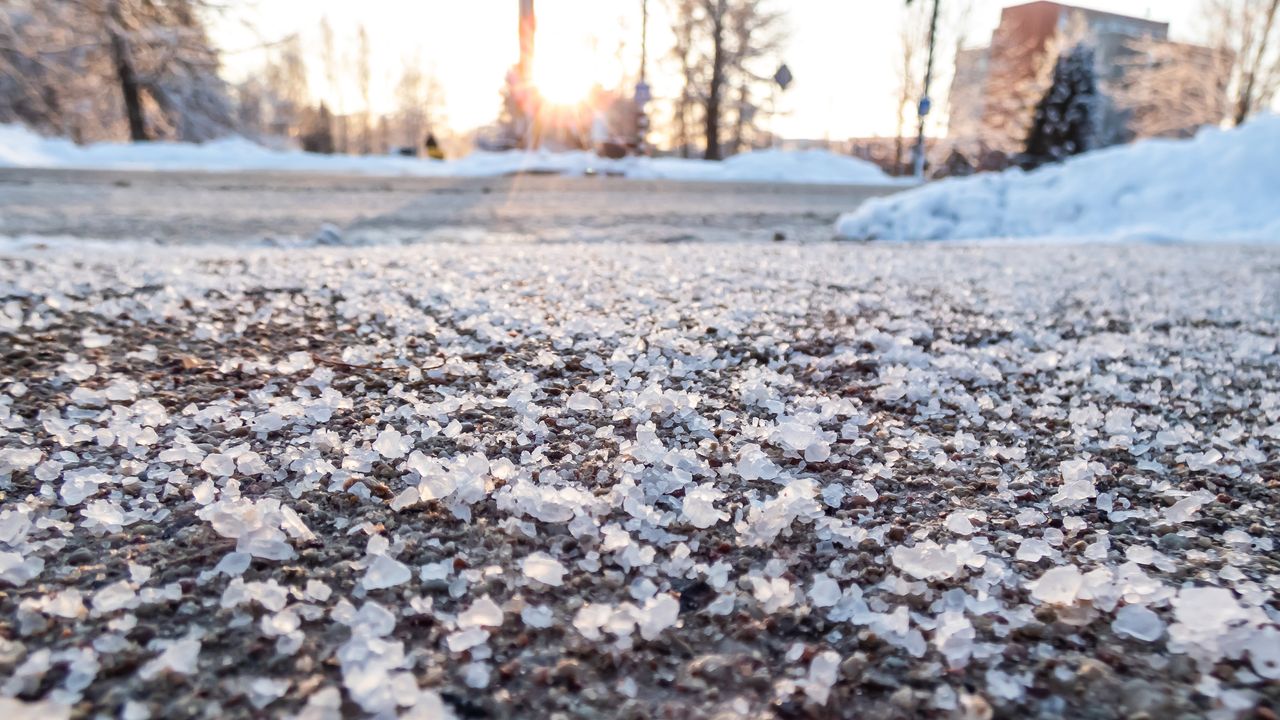
As the cold weather hits and our driveways become some sort of compilation tape of funniest home videos as we slip around on the ice, it's tempting to grab the salt and chuck it everywhere to avoid any further falls – but that's not the right way to deal with it.
While you may think that the more salt you use the better, it's actually a pretty bad way of dealing with the wintery conditions. In fact, more salt won't actually dissolve the ice or snow any better or faster.
Instead you'll end up with an unnecessary excess and an extra cleaning job that, if not cleared up properly, could potentially harm the environment and those around you. Here's why you should hold back on using too much salt to de-ice your driveway.
You're using too much salt
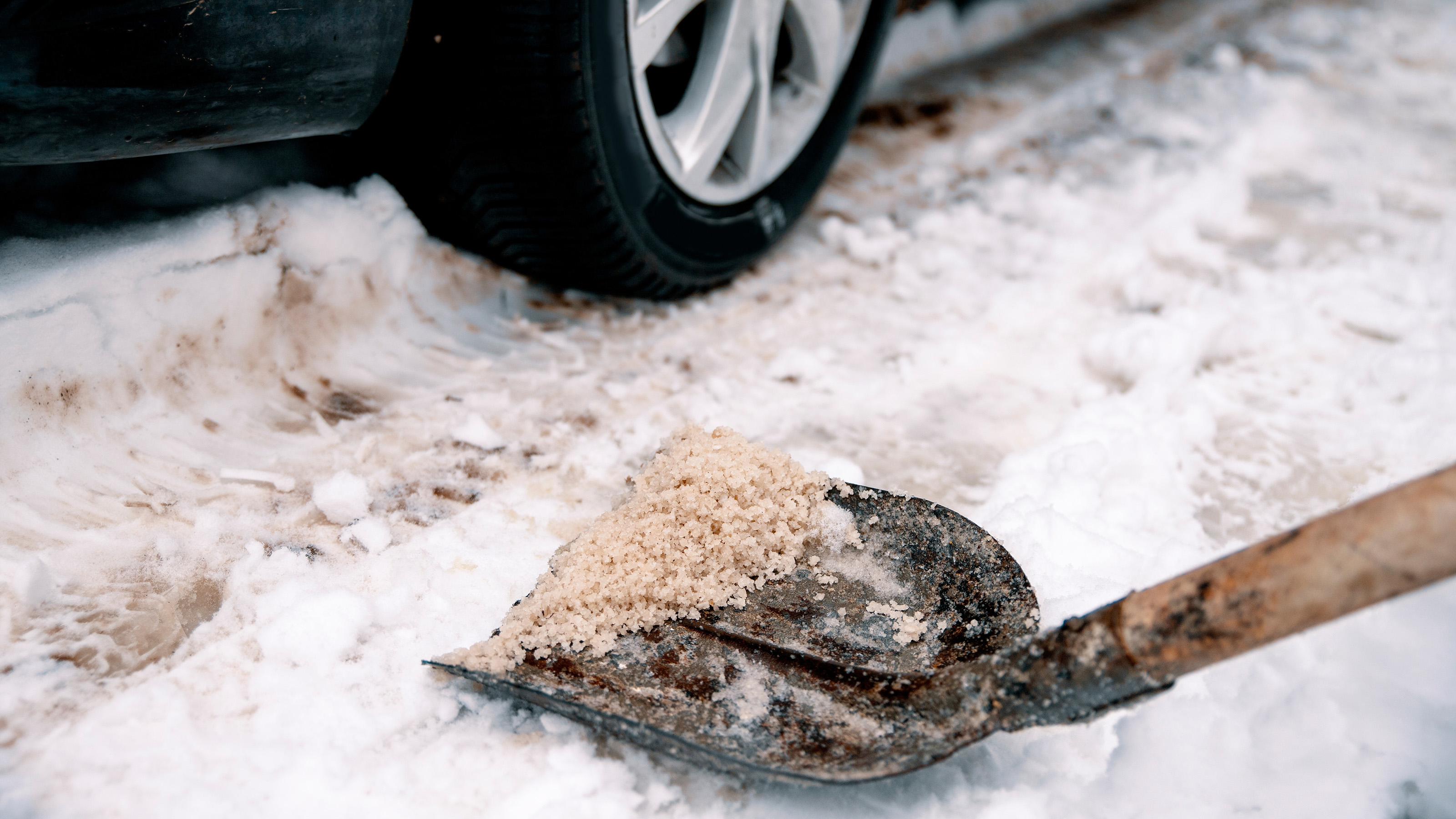
The salt we use to de-ice our driveways is not the same regular table salt that we often season our food with – and that's a pretty important point. De-icing salt, also known as road, rock or grit salt, is a much purer mix of sodium chloride designed specifically for melting ice and not for consumption.
You'll probably ask the question: 'Can I use table salt to de-ice a driveway?' And while you can, it's certainly not as effective. The problem with the salt we use to de-ice our driveways though is that if you use too much, it won't be doing any extra job and will instead end up causing problems.
And that's why initiatives like the Salt Smart focus on teaching everyone that their excessive use of salt to de-ice driveways is actually having a knock on effect on many parts of our lives.
Too much salt affects the environment by seeping into the local river, water sources and soil and rusts infrastructure by corroding both vehicles and buildings.
It also damages vegetation with high salt content, as well as causing harm to pets by burning the pads of their feet which then becomes ingested when they lick their paws to clean them. This can cause sickness and in some cases even death.
How to do it the right way
As Salt Smart explains: "Rock salt, or sodium chloride, works by lowering the freezing point of water, causing ice to melt even when the temperature is below water’s normal freezing point of 32 degrees.
"For the salt to work, a heat source is needed. The heat source can be air temperature above 15 degrees Fahrenheit, heat from the sun or friction from car tires driving over the salt and ice."
So, using too much salt should be avoided, but how do you make sure you're using the right amount? Well, by becoming 'Salt Smart' with four easy steps:
- Shovel first: Clear all snow from your driveways and sidewalks before it turns into ice
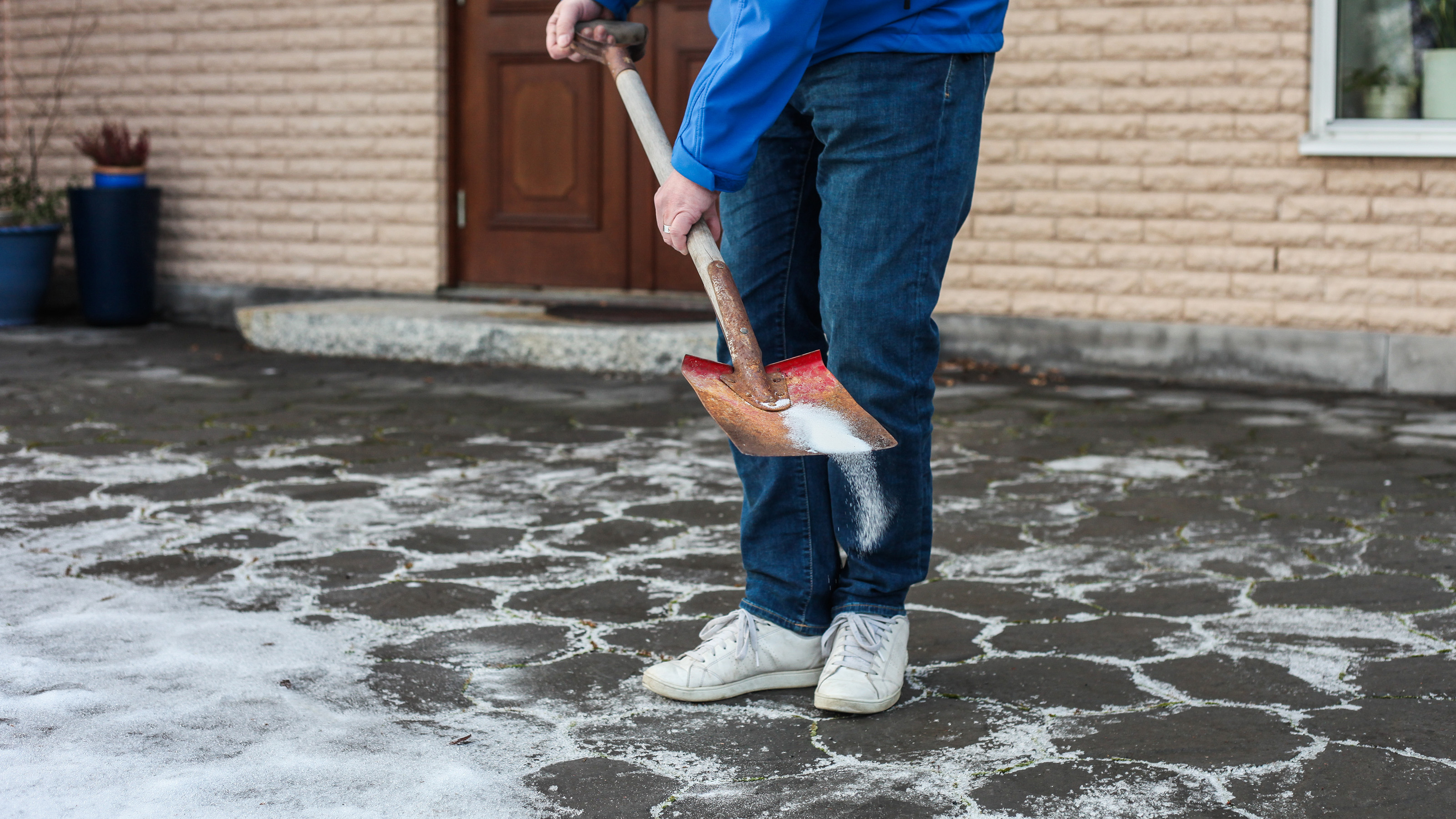
- Use less salt: You only need a 12 oz. coffee mug worth of salt to cover 500 sq ft of driveway or about 10 sidewalk squares
- Spread: Make sure the salt you do use is spread evenly and not left in clumps to stagnate
- Switch: If the temperature drops below 15 degrees, the salt won't be able to work. At this point, you should be using a deicer specifically formulated for these colder temperatures

Follow Tom's Guide on Google News and add us as a preferred source to get our up-to-date news, analysis, and reviews in your feeds.