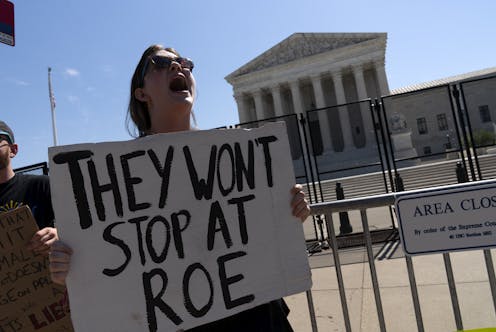
It is a central principle of law: Courts, including the Supreme Court, are supposed to follow earlier decisions – precedent – to resolve current disputes. But on rare occasions, Supreme Court justices conclude that one of the court’s past constitutional precedents has to go, so they overrule it. This is exactly what happened in Dobbs v. Jackson Women’s Health Organization, when the court overturned Roe v. Wade, the 1973 ruling recognizing a constitutional right to abortion.
For years the court had been building up a theory of precedent reversal that would justify overturning Roe, among other precedents it did not like, and the draft opinion leaked in early 2022 foreshadowed this decision.