Get all your news in one place.
100's of premium titles.
One app.
Start reading
Fit & Well
Fit & Well
Health
Maddy Biddulph

The strength training move everyone should learn and how to do it properly

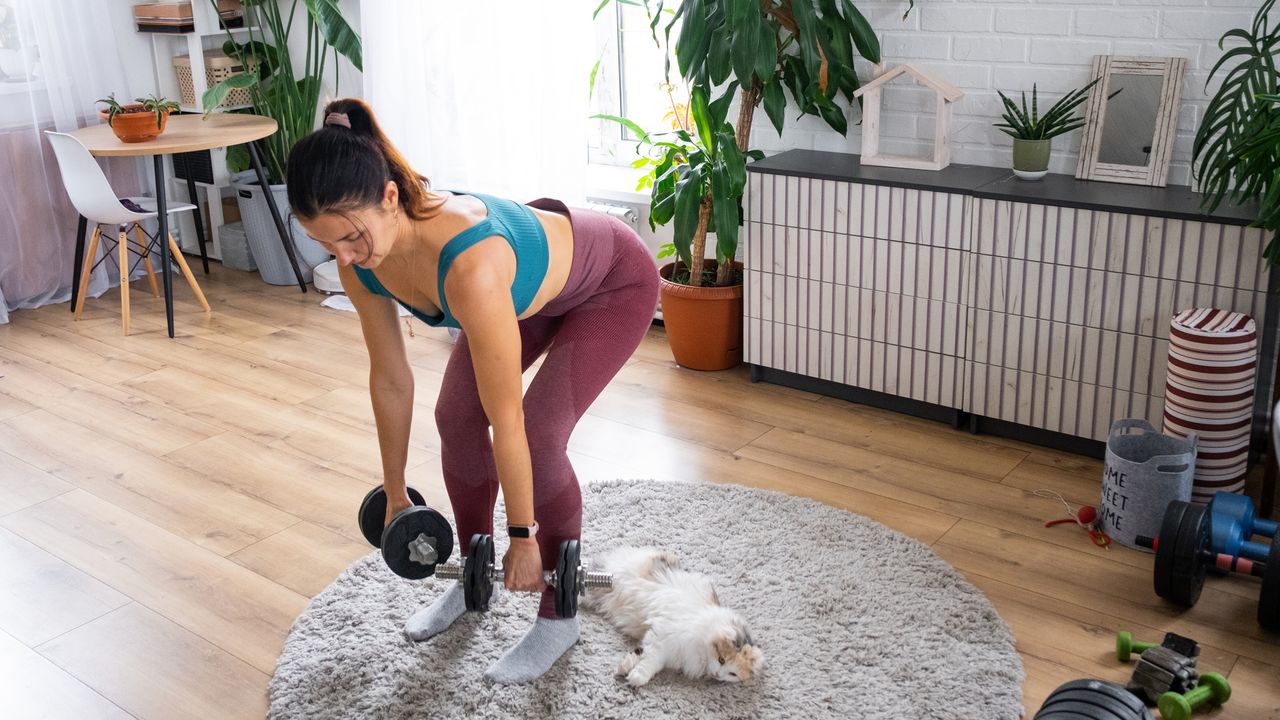
Woman exercising using dumbbells in a domestic setting.

If you want an exercise that trains your glutes, hamstrings, quads, core, lower back and even your grip, the deadlift is hard to beat. It’s a highly effective, full-body move—but for beginners, it can feel intimidating, especially since proper technique is essential.

Ben LaNeve, an NSCA-certified strength and conditioning specialist and personal training lead at Life Time Annapolis, suggests starting with the dumbbell deadlift instead.

“You don’t need a barbell. You don’t need a weight rack. You don’t need a garage gym that looks like it belongs on YouTube,” he tells Fit&Well. “A pair of dumbbells and a few square feet of space will do just fine.” That makes it especially good for people who are new to strength training or if you’re working out at home.

One of the biggest benefits of the deadlift—dumbbell or otherwise—is how effectively it strengthens the posterior chain—the muscles along the back of your body. Building strength here can improve athletic performance, particularly for activities like running.

Additionally, LaNeve says, “this exercise improves core and bracing strength for squats and other lifts.”

The move also teaches what he names the most important movement pattern in strength training: the hip hinge. And it’s not just needed in the gym.

“Instead of squatting down or rounding your back to pick things up, you learn to push your hips back, brace your core and drive through your glutes. That’s how you safely lift a suitcase, a heavy box or your kid off the floor,” he says.

“And because the weight is free rather than fixed like a barbell or resistance machine, it makes your stabilizing muscles stronger. This helps improve balance and coordination while reinforcing proper lifting mechanics.

“By mimicking picking objects up safely it can help reduce the risk of lower-back pain when lifting things in real life.”

The irony is that people often avoid deadlifts because they worry about hurting their back. But when done correctly, deadlifts actually make your back more resilient because they strengthen the erector spinae—a group of muscles along both sides of the spine—the deep core stabilizers that act as a supportive corset around your middle, and the glutes, the large muscles in your butt that reduce stress on the lower back.

“This single move trains your glutes, hamstrings, quads, core, back and grip all at once,” LaNeve says. “For beginners, that’s a huge return on investment. More muscle working means more strength built and faster progress.”

For those just starting out, dumbbells are especially beginner-friendly. They’re easier to control than a barbell and allow you to focus on mastering the movement.

“Start light and master the hinge,” LaNeve advises. “Then add weight gradually.”

How to do a dumbbell deadlift

  • Stand with your feet hip-width apart, a slight bend in your knees, holding dumbbells in front of your thighs with your palms facing you.
  • Engage your core.
  • Hinge forward from your hips, pushing your butt back, to lower the dumbbells down your legs—keeping your back straight and shoulders pinned back throughout.
  • Pause when the dumbbells reach mid-shin level or when you feel a stretch in your hamstrings (in the back of your thighs).
  • Push through your heels and drive your hips forward, squeezing your glutes, to return to standing.

To make it easier: Use light dumbbells or just your bodyweight to master the move first and to warm up before adding weight.

Trainer tips

  • Keep your shoulders pulled slightly back and down.
  • Maintain a neutral spine—imagine holding a straight line from head to tailbone.
  • Keep the weights close to you throughout the move, tracking along your legs and shins.
  • Engage your core, tightening it like you’re about to be poked in the stomach.
  • Avoid rounding your back or locking your knees.
  • If you feel the move mostly in your lower back, you might be rounding your back or not engaging your glutes or core enough.
Sign up to read this article
Read news from 100's of titles, curated specifically for you.
Already a member? Sign in here
Related Stories
Top stories on inkl right now
One subscription that gives you access to news from hundreds of sites
Already a member? Sign in here
Our Picks
Fourteen days free
Download the app
One app. One membership.
100+ trusted global sources.