
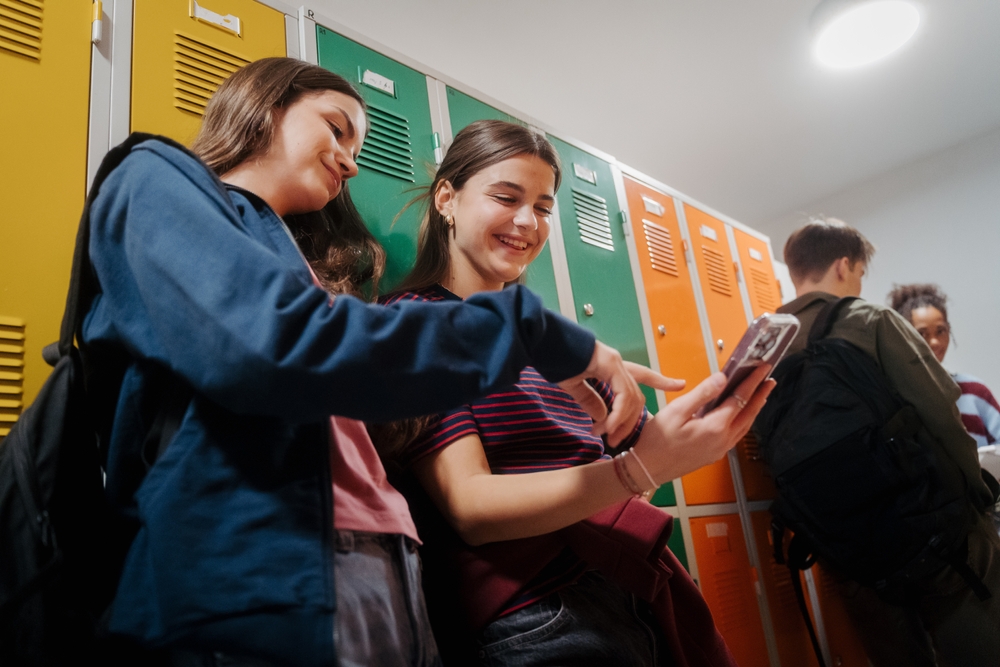
From Fayetteville, Georgia, to major districts across Florida, the traditional metal locker is being phased out. In its place are “Intelligent Storage Solutions”—high-tech bays featuring biometric scanners, RFID access, and integrated charging ports. Administrators sell these to parents as a way to prevent theft and “phone-free” distractions. However, they are quietly becoming a new frontier for student surveillance.

The “Consent” Loophole
The real danger isn’t the locker door; it’s the charging cable. In 2026, many districts (including those in the Fayette County area) have ended “Bring Your Own Device” (BYOD) policies in favor of district-managed Chromebooks and tablets. When a student plugs their device into a “Smart Locker” charging port, they are often inadvertently agreeing to the school’s Acceptable Use Policy (AUP). This policy gives the school the legal right to monitor any data passing through their network or hardware—including the locker’s internal data-syncing hub.
AI-Driven “Vape and Vibe” Detection
It’s not just about data. The latest generation of sensors—like the HALO Smart Sensor 3C now common in Florida schools—are being integrated into locker banks. These devices are equipped with:
- Chemical Signatures: They don’t just “smell” smoke; they use AI to detect the specific chemical footprint of THC and nicotine vapes.
- Aggression Analytics: Using “keyword” sensors, these lockers can flag “stress-inducing” language or loud shouting in what students think are private hallways, triggering a silent alert to the principal’s office.
Why Your “Expectation of Privacy” Just Vanished
For decades, the Supreme Court ruling in New Jersey v. T.L.O. protected students from “unreasonable” searches. However, the court also ruled that schools only need “reasonable suspicion” to search a student’s belongings.
In 2026, schools are arguing that an AI “flag”—whether from a chemical sensor or a digital keyword detected during a locker-charge audit—constitutes that suspicion. This effectively replaces a human teacher’s judgment with an algorithm’s “hit.” This allows the school to open the locker and search personal bags without a parent ever being called.
The Hidden Cost of “Safety”
We are told these measures are for safety, yet they represent a massive shift in the parent-school relationship. If a “Smart Locker” can audit a child’s digital journal or detect a private conversation, the locker is no longer a storage space. Instead, it’s an informant.
Would you let your child use these high-tech bays? Or is it time for parents to demand a return to old-school padlocks? Share your thoughts below.
You May Also Like…
Cops Confirm: The New “Smart” School Lockers That Are Secretly Scanning Your Child’s Belongings
Why Are Some Schools Replacing Lunch With Vending Machines?
7 Ways Schools Fail to Hold Bullies Accountable
Parenting Hacks for College Students: 8 Tips to Juggle Studies and Kids
8 Budget Cuts in Education That Directly Impact Your Kids
The post The “Smart Locker” Trap: Why Schools Are Quietly Auditing Your Child’s Private Devices appeared first on Kids Ain't Cheap.








