Get all your news in one place.
100's of premium titles.
One app.
Start reading
The Economic Times
The Economic Times
Shreya Biswas

The slowest-looking plant on Earth is evolving faster than scientists expected — here’s how

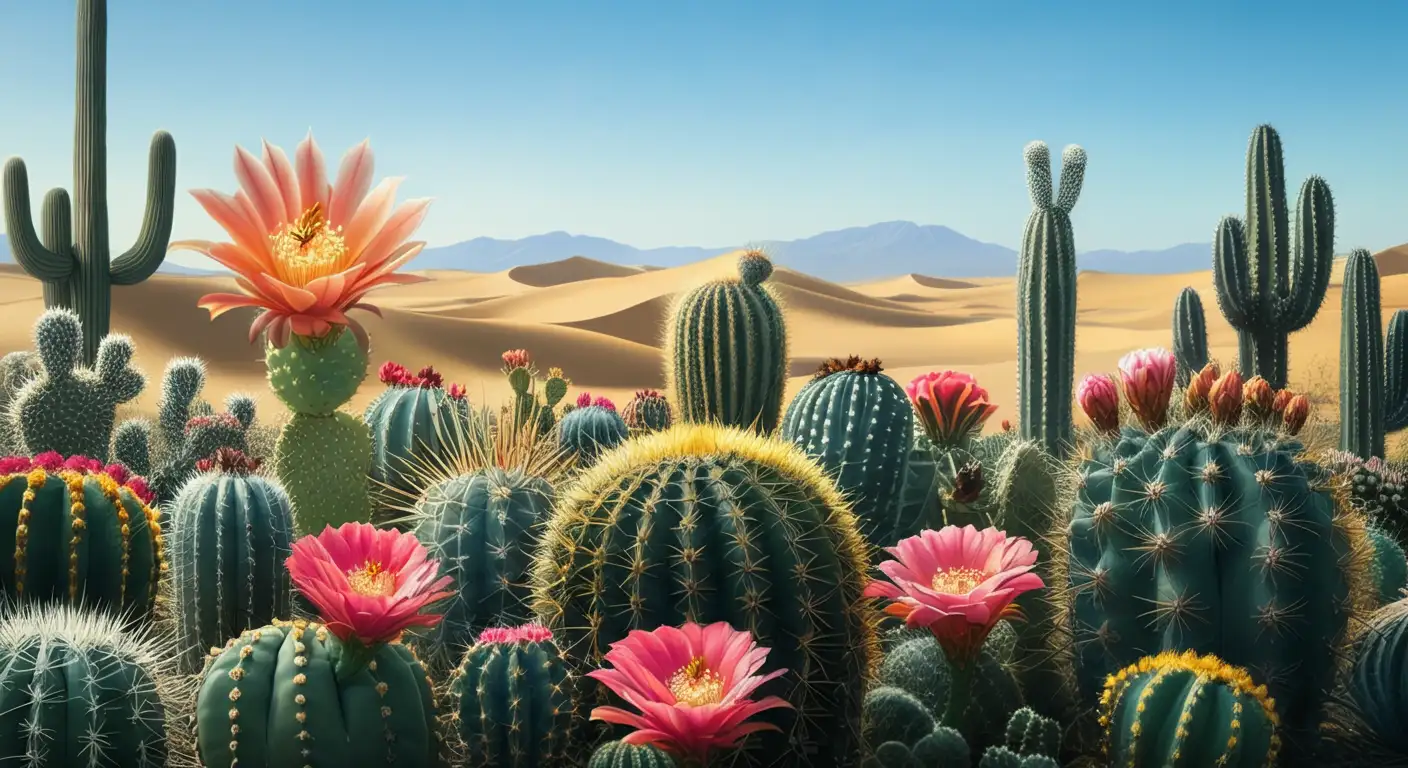
Cactus evolving faster than expected explained: Cacti are usually associated with slow growth, dry deserts, and long lifespans. But new research suggests these plants are far more dynamic than they appear. Scientists have discovered that cacti are evolving and creating new species at a surprisingly fast rate, making them one of the fastest-diversifying plant groups on Earth, as per a report.

Researchers at the University of Reading found that the secret behind this rapid evolution is not flower size, but how quickly cactus flowers change shape over time.

New research challenges long-held ideas about plant evolution

For years, many scientists believed that pollinators and highly specialized flowers were the main reasons new plant species developed, as per a Science Daily report. Ideas connected to Charles Darwin’s work on orchids helped shape that thinking.

However, the new study found that cacti do not follow the same pattern.

Instead of flower size driving diversification, researchers discovered that rapid floral evolution plays a much bigger role in helping cactus species branch into entirely new forms.

READ ALSO: Quote of the day by John Milton: 'He who reigns within himself and rules passions, desires, and fears is...' - motivational lessons on self-control, self-discipline, mental strength and personal growth by polemicist and poet of epic poem Paradise Lost

Scientists studied more than 750 cactus species

The research team analyzed flower length data from over 750 cactus species. The differences in flower size were enormous.

Some cactus flowers measured just 2mm, while others reached 37cm in length, creating a 185-fold difference in size.

Despite this huge variation, flower length showed almost no connection to how quickly new species appeared.

What researchers consistently found was that cactus species with rapidly changing flower shapes were much more likely to evolve into new species across both recent and ancient evolutionary history, as per the Science Daily report.

Fast-changing flowers may explain cactus diversification

Researchers originally expected cacti with larger and more specialized flowers to produce more species. Instead, the study showed that flower size made very little difference.

What mattered most was how quickly flowers evolved over time.

Jamie Thompson, lead author at the University of Reading, pointed out that many people think of cacti as slow-growing and unchanging plants, but the research shows the cactus family is actually one of the fastest-evolving plant groups on Earth, as per the Science Daily report.

The findings also suggest deserts may not be as static as they appear. Scientists say these environments could actually be places of rapid natural change and evolution.

READ ALSO: Quote of the day by William Blake: 'Great things are done when men and...' - inspiring lessons on overcoming challenges and obstacles to achieve success in life by Songs of Innocence and of Experience poet and illuminated printing inventor

The findings could influence future cactus conservation

Researchers say the study may also have important conservation implications.

Since flower evolution helped generate cactus species over millions of years, scientists believe evolutionary pace could become an important part of future conservation efforts.

The researchers noted that rapid evolution does not automatically guarantee survival, especially as climate change continues to accelerate faster than many cacti can adapt.

Instead of focusing on a single trait to predict risk, conservationists may need to study how quickly different cactus species are evolving.

New cactus database aims to support future research

The study also introduced a new Open Access database called CactEcoDB.

Developed over seven years by Jamie Thompson and ten coauthors from three continents, including six researchers from the University of Reading, the database combines information on cactus traits, habitats, and evolutionary relationships, as per the Science Daily report.

The resource was published in Nature Scientific Data and is expected to help researchers better understand cactus biodiversity and future conservation challenges.

Cacti remain one of the fastest-diversifying plant groups

Researchers say there are roughly 1,850 known cactus species. Over the last 20 to 35 million years, cacti have spread widely throughout the Americas.

The new findings suggest that even plants known for slow growth may still be evolving rapidly behind the scenes.

READ ALSO: Cerebras stock (CBRS) surges 90% on Nasdaq debut as AI chip race intensifies with Nvidia, AMD and Intel rivalry - here's everything investors need to know

FAQs

What did the new cactus study discover?

Scientists found that cacti are evolving and forming new species surprisingly quickly.

Who conducted the research?

The study was carried out by researchers at the University of Reading.

Sign up to read this article
Read news from 100's of titles, curated specifically for you.
Already a member? Sign in here
Related Stories
Top stories on inkl right now
One subscription that gives you access to news from hundreds of sites
Already a member? Sign in here
Our Picks
Fourteen days free
Download the app
One app. One membership.
100+ trusted global sources.