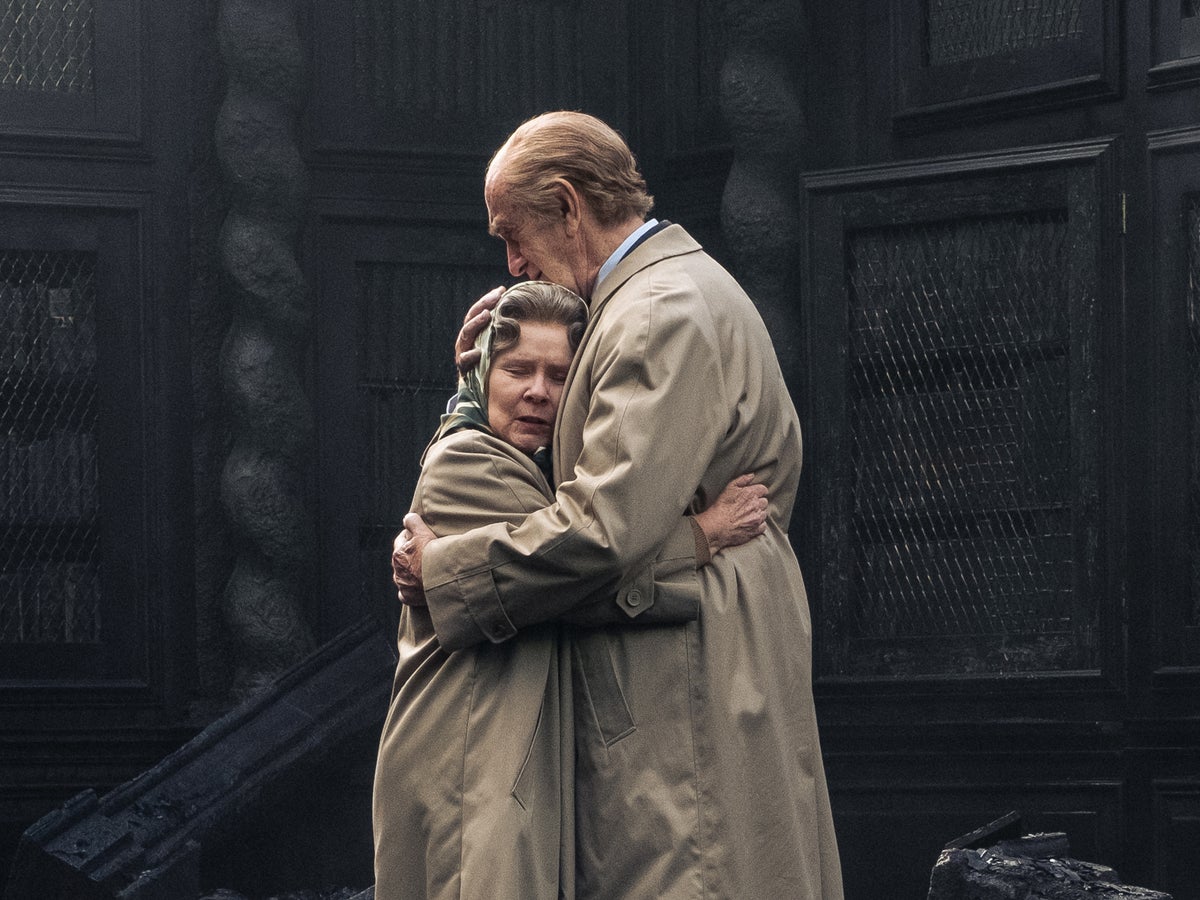
The Crown loves a metaphor. In the latest season, everyone is wondering what to do with the clapped-out royal yacht Britannia. It’s the Nineties, and the monarchy is looking a bit worn out, too. “It shouldn’t come as a surprise she’s falling apart, she’s a creature of another age… in many ways she’s obsolete,” says Prince Philip, definitely talking about a big, expensive boat. “Don’t say that!” the Queen flaps, definitely also talking about a boat. The show is filled with analogies so bold you could spot them from space. In another zinger, Diana’s Panorama interview is compared to Guy Fawkes’s gunpowder plot. And yet people still love to take this show very, very literally. Why, when it’s so clearly on the royals’ side?
The build-up to the fifth season of Peter Morgan’s royal soap opera, which is on Netflix from 9 November, has been particularly pearl-clutching. It arrives at a sensitive time, following the Queen’s death and King Charles’s transition to power, and it covers a particularly tumultuous era, characterised by bickering divorces and growing public disaffection. The show always attracts hysteria – Oliver Dowden suggested it should come with a “health warning” when he was culture secretary – but this time it’s more feverish than ever. A spokesperson for John Major, who is played by Jonny Lee Miller in the series, called it “damaging and malicious fiction”. Dame Judi Dench wrote to The Times to condemn it as an “inaccurate and hurtful account of history”. And a friend of the Queen described it as “vicious” and said it “would have destroyed” her.