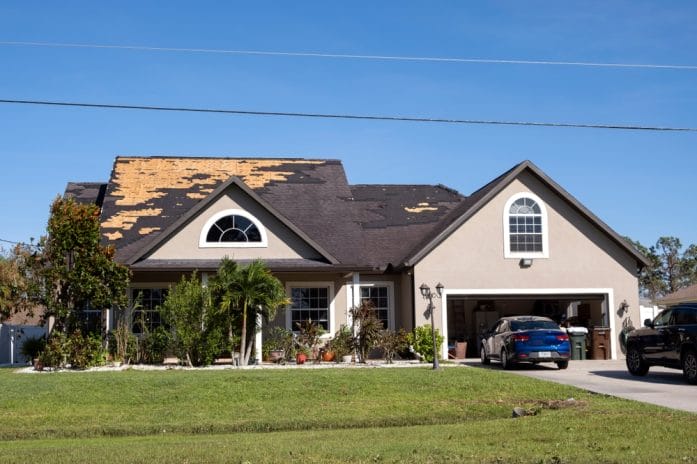
In Florida, your roof isn’t just a roof—it’s basically your insurance passport. You can have the perfect paint job, a gorgeous kitchen remodel, and the best landscaping on the block, but if your roof is “too old,” insurance companies may shut the door on coverage faster than a thunderstorm rolls in off the Gulf.
For thousands of homeowners, this isn’t theoretical—it’s happening in real time, often with shocking denial letters and non-renewal notices that seem to come out of nowhere. Roof age has quietly become one of the most powerful gatekeepers in Florida’s insurance market, and many homeowners don’t realize it until they’re already in trouble.
Why Florida Insurers Obsess Over Roof Age More Than Almost Anything Else
Florida’s insurance market isn’t just strict—it’s uniquely high-risk. Hurricanes, tropical storms, heavy rains, high humidity, and intense sun exposure all shorten the life expectancy of roofing materials compared to other parts of the country. Insurers look at roofs not as cosmetic features, but as frontline defense systems against catastrophic losses.
When a roof fails in a storm, the damage isn’t limited to shingles—it means water intrusion, mold, electrical damage, ruined interiors, and massive claims. That’s why roof age has become one of the easiest risk indicators for insurers to assess. From their perspective, an older roof isn’t just old—it’s statistically more likely to fail when Florida weather shows up uninvited and unannounced.
The “Magic Number” That Gets Homes Disqualified From Coverage
Here’s the truth most homeowners don’t hear clearly enough: many Florida insurance companies will not insure homes with roofs older than 15 years, regardless of visible condition. Some carriers allow up to 20 years, but that’s increasingly rare in today’s market. For tile, metal, and other specialty roofs, the acceptable age range is often longer—sometimes 25 to 40 years—but even those materials can face restrictions depending on inspection reports and underwriting guidelines.
This isn’t a statewide law, and it’s not a government rule—it’s underwriting policy, meaning private insurers set their own limits. But functionally, it acts like a hard stop for many homeowners. Once your roof crosses that age threshold, your options shrink fast, your premiums spike, and in many cases, you’re left scrambling for last-resort coverage or taking the first steps to replacing your roof.
Citizens Insurance and the “Last Resort” Reality
When private insurers say no, many Florida homeowners turn to Citizens Property Insurance Corporation, the state-backed insurer of last resort. But even Citizens has roof-age rules. For asphalt shingle roofs, Citizens generally requires the roof to be 15 years old or newer, unless a certified roof inspection proves it has at least five years of useful life remaining.
That means homeowners often have to pay for professional inspections just to stay insured—and even then, approval isn’t guaranteed. This creates a brutal cycle where homeowners are forced into either replacing a roof earlier than financially planned or risking being uninsured. It’s not about whether your roof looks fine—it’s about whether it fits the insurer’s risk model.
Why “It Looks Fine” Doesn’t Matter to Insurance Companies
A roof can look perfectly functional and still be rejected. Insurance underwriting isn’t based on visual appeal—it’s based on probability. Insurers use actuarial data, storm loss models, and historical claims trends to predict risk, not homeowner opinions or surface-level inspections. A 17-year-old asphalt shingle roof might look decent, but statistically, it’s far more likely to fail under hurricane-force winds than a newer one.
That’s why age becomes the deciding factor instead of condition alone. The system isn’t emotional—it’s mathematical, and Florida’s storm history has made those math models brutally conservative.
What Florida Homeowners Can Do Before Insurance Becomes a Crisis
The smartest move is planning ahead instead of reacting in panic. If your roof is approaching 15 years old, start budgeting and exploring options now—not when your renewal notice arrives. A professional roof inspection can sometimes buy you time, especially if the roof is in strong condition and properly maintained.
Keeping documentation, maintenance records, and inspection reports can also help when negotiating with insurers. If replacement is inevitable, choosing hurricane-rated materials and impact-resistant shingles can improve insurability and sometimes reduce premiums. Most importantly, talk to an independent insurance agent who understands Florida’s market—they often know which carriers are stricter and which ones still allow flexibility.

Why This Problem Isn’t Going Away
Florida’s roof-age insurance issue isn’t a temporary trend—it’s part of a larger structural shift in the state’s insurance market. Rising reinsurance costs, climate risk modeling, litigation expenses, and repeated storm losses have reshaped how insurers operate.
Roof age is one of the easiest risk filters they can enforce without complex inspections or long underwriting processes. That means homeowners will likely see these age limits become more rigid, not more relaxed. For Florida homeowners, roof replacement is no longer just a maintenance decision—it’s an insurance survival strategy. The roof has become the gatekeeper to affordability, coverage access, and long-term financial stability.
The Real Wake-Up Call Florida Homeowners Can’t Ignore
Your roof is protecting your ability to stay insured in Florida’s increasingly unforgiving insurance market. Once it hits certain age thresholds, especially with asphalt shingles, it can quietly disqualify your home from coverage options you didn’t even realize were fragile. This isn’t fear-based hype—it’s the reality thousands of Florida homeowners are navigating every year. The earlier you understand it, the more control you have over your choices, your budget, and your future coverage options. In Florida, roof age isn’t just a number—it’s leverage, power, and access to insurance itself.
What’s the age of your roof right now, and have you had any surprises from your insurance company because of it? Drop your thoughts in the comments—we’d love to hear your story.
You May Also Like…
The Home Insurance Review Clause That’s Triggering Surprise Policy Cancellations in 2026
The Credit Score That Adds $2,000/Year to Florida Homeowner’s Insurance Premiums
The Sunshine State Squeeze: Why Florida Retirees are Seeing Smaller Social Security Checks This Week
The One Household Appliance That Will Spike Your Insurance Premiums if Discovered During Inspection
The post The Roof Age That Automatically Disqualifies Florida Homes From Coverage appeared first on The Free Financial Advisor.