
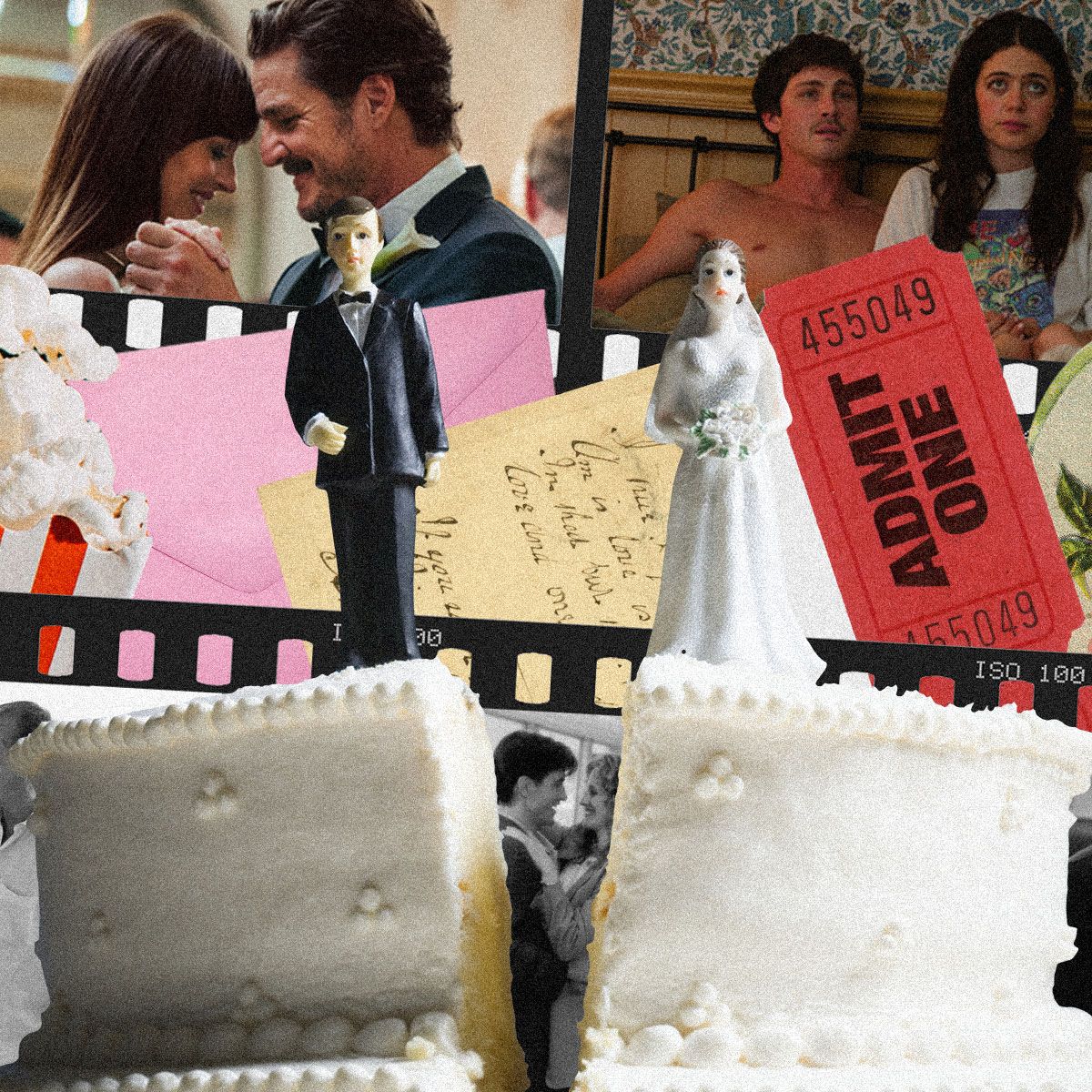
Picture a 1990s or early 2000s film: soft-filtered pastels, jazzy soundtracks, a curly-haired heroine making poor decisions in the name of love. It was a simpler time. Or—it wasn't, actually—but it certainly felt like it, cinematically. Whether the subject matter was fated love (falling for a widow via the radio in Sleepless In Seattle) or star-crossed circumstance (a bookstore owner and a movie star colliding in Notting Hill), the vibes were sweet, and the endings mostly euphoric.
In contrast, the summer of 2025 may as well be dubbed the season of the anti-rom-com. From horror-influenced takes like Together and Oh, Hi!, to dark break-up comedy The Roses and the tonal sterility of Materialists, we are, as one seasoned producer I spoke to put it, in a season of "rom-coms by way of misery.”
So how did Hollywood get from 1997—when My Best Friend's Wedding was considered subversive for its untraditional “happy ending”—to now when nearly every major movie billing itself as a rom-com is dark and twisted from start to finish? Perhaps it’s because Hollywood as a whole is flailing. I've seen it myself, as a screenwriter regularly pitching rom-coms to studios. In 2025, the genre has splintered into something messier and more self-aware, shaped by cultural fatigue, shifting expectations around love and dating, and a growing appetite for stories that reflect just how bleak modern romance can feel. Now, studios are guessing at what people will venture out to theaters to see—and what stories a populace deadened by our current cultural climate can actually relate to. The result is a wave of films that trade twinkle lights for discomfort, and happy endings for something more complicated.














