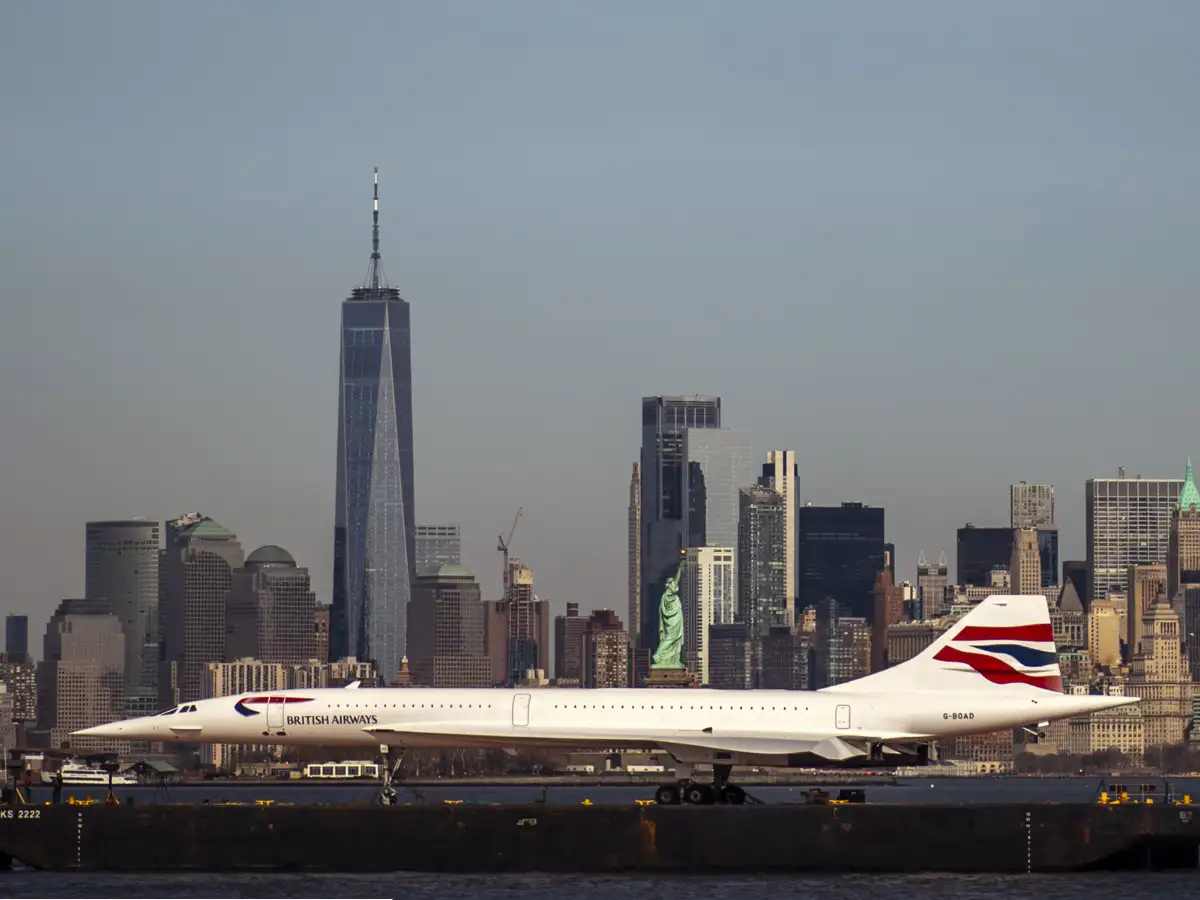
The Federal Aviation Administration is resurrecting the dream of passengers flying faster than the speed of sound after it recently proposed lifting a ban on supersonic flights over land, which has been in place for more than five decades.
The catalyst for the proposed rule change, which is now open for public comment, comes from data collected on flights of NASA’s X-59 aircraft, an experimental supersonic plane built by Lockheed Martin Corp. This long, sleek jet began flying in October to test a design that mitigates the continuous boom that takes place when an aircraft breaks the Mach 1 sound barrier, which is about 678 miles an hour at an altitude of 30,000 feet. The X-59 flies as fast as Mach 1.4 and reduces the boom to a muted thud that shouldn’t disturb people on the ground too much.