
Get all your news in one place.
100's of premium titles.
One app.
Start reading
Golf Monthly
Golf Monthly
Sport
Rob Smith

The Quality Golf Course Architect Who Flew Under The Radar... And Five Of His Enduring Creations

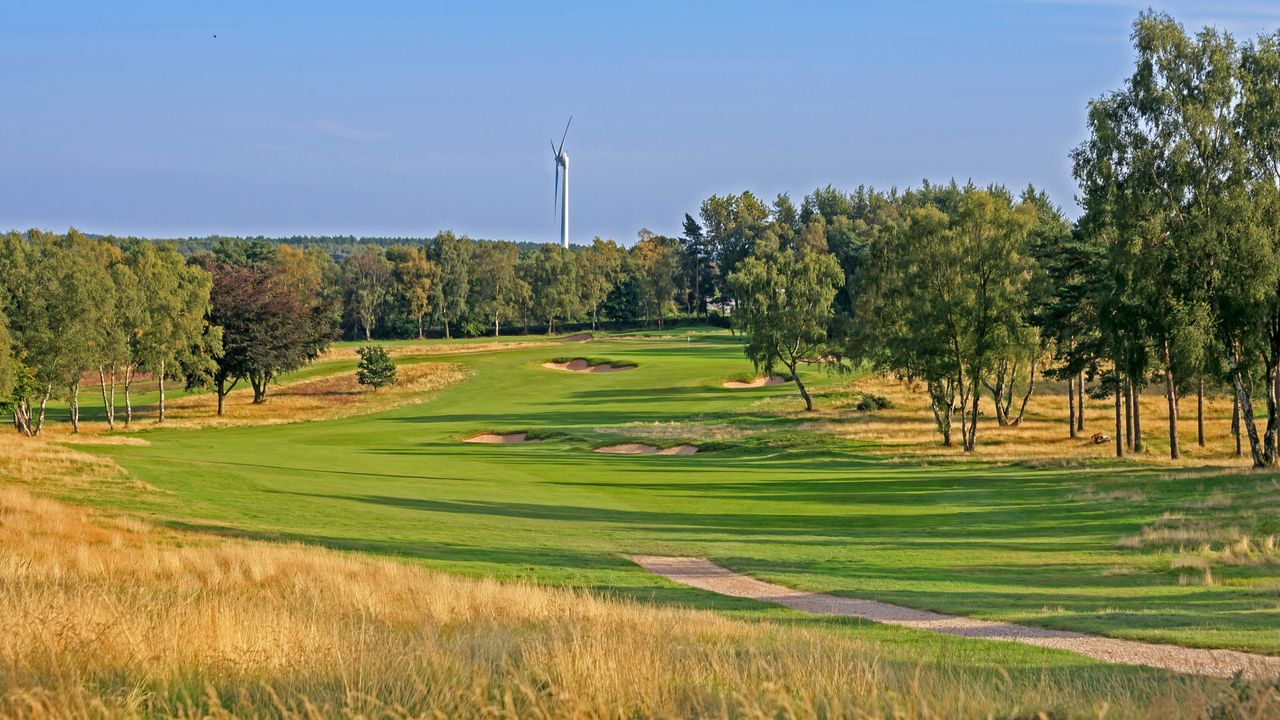
Coxmoor - Hole 1.

While we all know of Harry Colt, James Braid, and in the modern era Ebert and Mackenzie, there are some significant golf course architects whose work is appreciated but whose name is not. Tom Williamson was the head professional at Golf Monthly Top 100 favourite, Hollinwell Golf Club, for more than 50 years. He also designed and contributed to the development of many courses in the region.
Here, we take a glimpse at the portfolio of this lesser-known but surprisingly prolific golf course architect from the East Midlands.

Coxmoor

The 9th hole at Coxmoor is a par 4 that runs through a valley before rising to the green (Image credit: Geoff Ellis - golfworking.co.uk)

A Nottinghamshire near-neighbour of Hollinwell, Coxmoor enjoys a similar, very attractive setting. Founded just before the Great War, today's design was developed in the 1930s by Tom Williamson, assisted by the club's professional, at which point there were no trees on site. Subsequently, birch, beech and pine grew to define the challenge, though much has been done more recently to restore its heathland look and feel.

The 16th is at the start of a 5-3-5 finish at Coxmoor (Image credit: Geoff Ellis - golfworking.co.uk)

Stretching to over 6,800 yards from the very back tees, there are five par 5s to raise the prospect of a birdie or two, although its elevated location means wind can be a feature. A young Matt Fitzpatrick won the Boys' Amateur here in 2012, a year before the club's centenary. Coxmoor is unquestionably one of the best golf courses in the Midlands.

Newark

The 7th at Newark is the second of back-to-back par 5s (Image credit: Newark Golf Club)

Williamson advised on this Nottinghamshire club's initial course when it was founded in 1901, and then again some 30 years later when a move was made to its current site, just east of the A1. His design, with some modifications in the 1970s by Donald Steel and some later bunker remodelling, endures.

The penultimate hole at Newark is the shortest on the course (Image credit: Newark Golf Club)

The level, tree-lined layout has four short holes, which come before and after the three par 5s, themselves all between the 6th and 11th. The new owners since 2024 have invested heavily both on and off the course in the run-up to its 125th celebrations.

Radcliffe-on-Trent

The opening green at Radcliffe-on-Trent (Image credit: Geoff Ellis - golfworking.co.uk)

Originally a nine-hole course but expanded by Williamson to 18 in 1925, this enjoyable parkland course lies just east of Nottingham. Land was lost to road redevelopment in the early 1970s, but the payback for this was a larger acreage, which afforded Frank Pennink the opportunity to carry out a redesign at the same time as introducing some new holes.

The 14th is a medium-length par 4 (Image credit: Geoff Ellis - golfworking.co.uk)

Of particular note are the two back-nine par 3s at 11 and 17, both played, hopefully, over water. Another feature is the par-5 12th that works its way along the edge of the course to a green hiding round to the left.

Wollaton Park

The attractive 8th at Wollaton Park is one of two very short par 3s on the front nine (Image credit: Wollaton Park Golf Club)

A couple of miles from Nottingham Castle, in a central yet very suburban setting, Wollaton Park is an attractive and well-maintained design running through an old but still populated deer park. The gently rolling land offers up delightful views as you play through striking specimen trees, and there are occasional glimpses of Wollaton Hall, a magnificent Elizabethan country house dating back to the 1580s.

The green on the par-3 17th with the Hall in the background (Image credit: Wollaton Park Golf Club)

The early holes are easy-walking before the uphill short 8th leads you to slightly more undulating ground, with a lake coming into view at the far end.

Worksop

Looking back down the par-4 2nd hole at Worksop (Image credit: Geoff Ellis - golfworking.co.uk)

While UK&I Top 200 course Lindrick lies to the north of town, Worksop itself is a very different, tree-lined alternative immediately to the south. Williamson designed a nine-hole layout when the club relocated in 1914. This was expanded in 1925, since when many changes have been made.

An aerial view of the 15th, the final par 5 on the course (Image credit: Geoff Ellis - golfworking.co.uk)

Williamson was granted honorary membership in 1921, and the club's most famous son is Lee Westwood. As at Lindrick, the course finishes with a short hole, but here, a slice may involve a close encounter with the clubhouse!

Sign up to read this article
Read news from 100's of titles, curated specifically for you.
Already a member? Sign in here
Related Stories
Top stories on inkl right now
Our Picks
Fourteen days free
Download the app
One app. One membership.
100+ trusted global sources.