
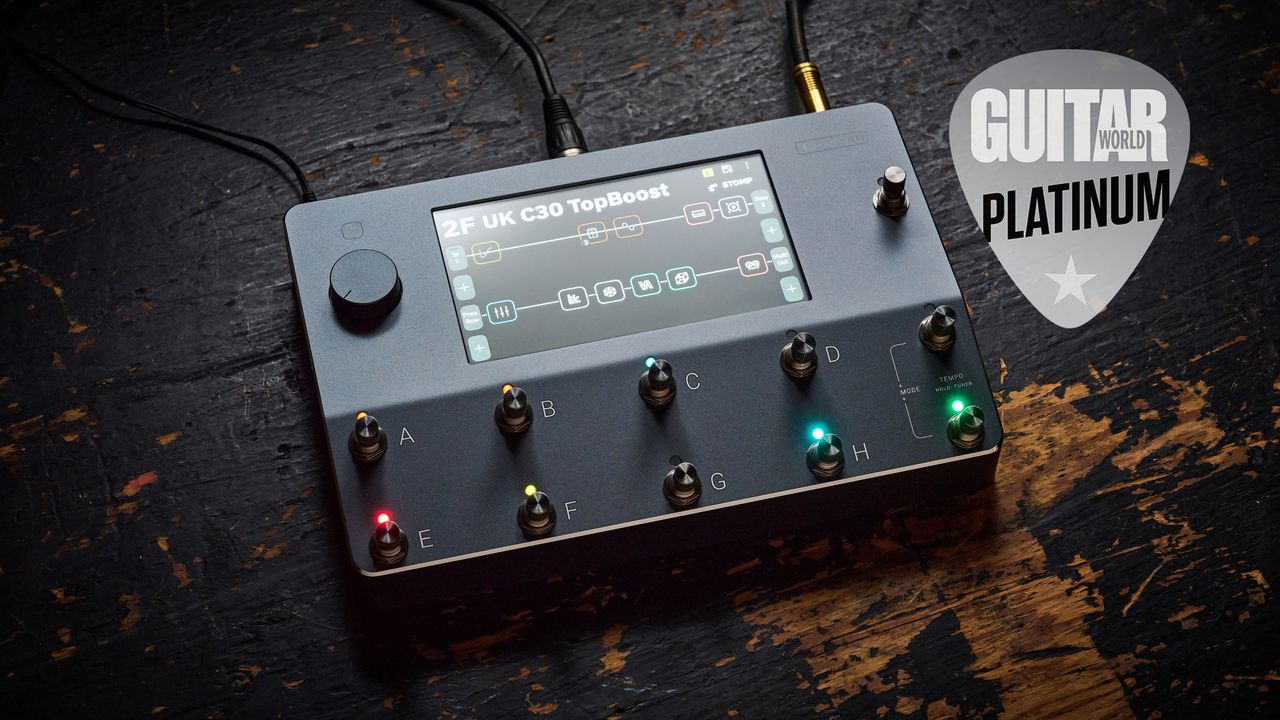
Neural DSP Quad Cortex: CorOS 3.3 update
The Neural DSP Quad Cortex has had regular updates since its release in 2021, but some are bigger than others. The latest CorOS 3.3 update represents a significant leap forward for the power and usability of the Quad Cortex, adding an essentially brand new feature and many additional sounds.
The headline is the inclusion of Neural Capture Version 2, which instead of handling the capture on the Quad Cortex itself, uses Cortex Control and Cortex Cloud to process it with a more powerful algorithm. It takes longer than the V1 method, but Neural themselves state that V2 is designed for 'the most dynamic and expressive devices'.
This does mean you'll need an internet connection to utilize V2 capture, but it's not the end of the world if you prefer to work offline, as you can still select the original V1 when starting a capture. Even more intriguingly, the new capture method allows you to capture overdrives, fuzz pedals, and compressors.
669 new captures have been added via Neural Capture V2 in the update, with a selection of amps, compressors, fuzz pedals, and overdrives available for users to try out. Neural haven't stopped there though, there are also 29 new virtual devices available, amongst the largest number we've seen in any update thus far, including a 1992 Dumble Overdrive Special.
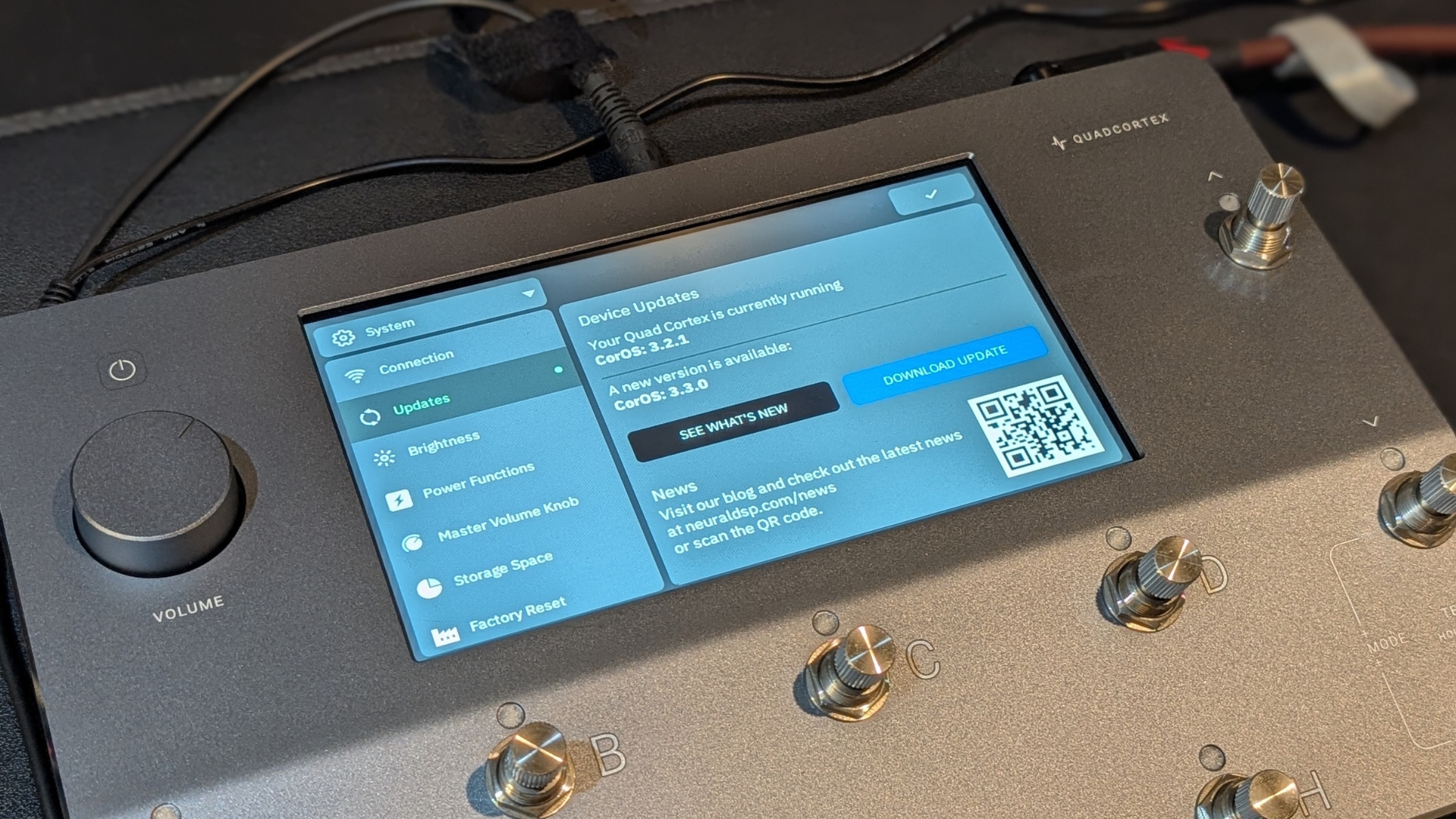
Getting stuck into the update it takes me just shy of half an hour to download and install it onto my Quad Cortex review unit. It guides me through every step of the process and requires a reboot, warning me not to undertake the process before a performance.
It's an absurdly simple process, even if you've never done it before
With the update installed, my first port of call is to try the new V2 capture on my Orange Rocker 32 tube amp. Positioning an SM57 at the seam of the dust cap and the cone on my speaker, I connect the Quad Cortex via USB to my MacBook and follow the guided process of connecting everything up.
It's an absurdly simple process, even if you've never done it before, and all it took me around half an hour, including setting up my mics and plugging everything in. The capture delivers the tone of my amp pretty much exactly how I've heard it before through a '57, now able to be used anytime I want. It's important to take the time to mic the amp properly and experiment to get the best results, because the end result is only as good as what it's captured.
I move on to trying out some of the new devices via Cortex Control, starting with the new Spring Reverb Engine. With four different tank types you've got a lot of flexibility here, and there are plenty of controls to tame it or let it run wild.
Next up I try the brand new Mono Synth, which I've used extensively in the Rabea Massaad plugin previously. It offers all the same features, including the awesomely fun arpeggiator with the ability to set your root, note steps, rate, patterns, and scales.
There are some cool experimental devices like the Micro Processor modulation device, based on the Eventide Micropitch Delay, as well as the Phase-Locked Loop, which gives you the unhinged tones of the Earthquaker Devices Data Corrupter. It's nice to see some more experimental tools here alongside your more traditionally focused pedals like the 1981 Inventions DRV.
There's no doubting that this is a very powerful update to what is arguably already the most powerful floor modeler out there
The commitment to continually updating the device is exactly the type of action that wins you lifelong fans, and as we've seen with Line 6's HX series and more recently with the Fender ToneMaster update, it's pretty much expected from players nowadays.
I don't think there's anything here that's going to convert anyone who isn't already a fan of the Quad Cortex into switching allegiances, but there's no doubting that this is a very powerful update to what is arguably already the most powerful floor modeler out there.
The new capture system sounds incredible, but more importantly, it's an absolute breeze to set up and use. With a huge variety of added sounds, particularly those more experimental tones, and a swathe of fresh amp and effects captures, in my opinion the Quad Cortex has solidified itself as the modeler to beat.
What is it?
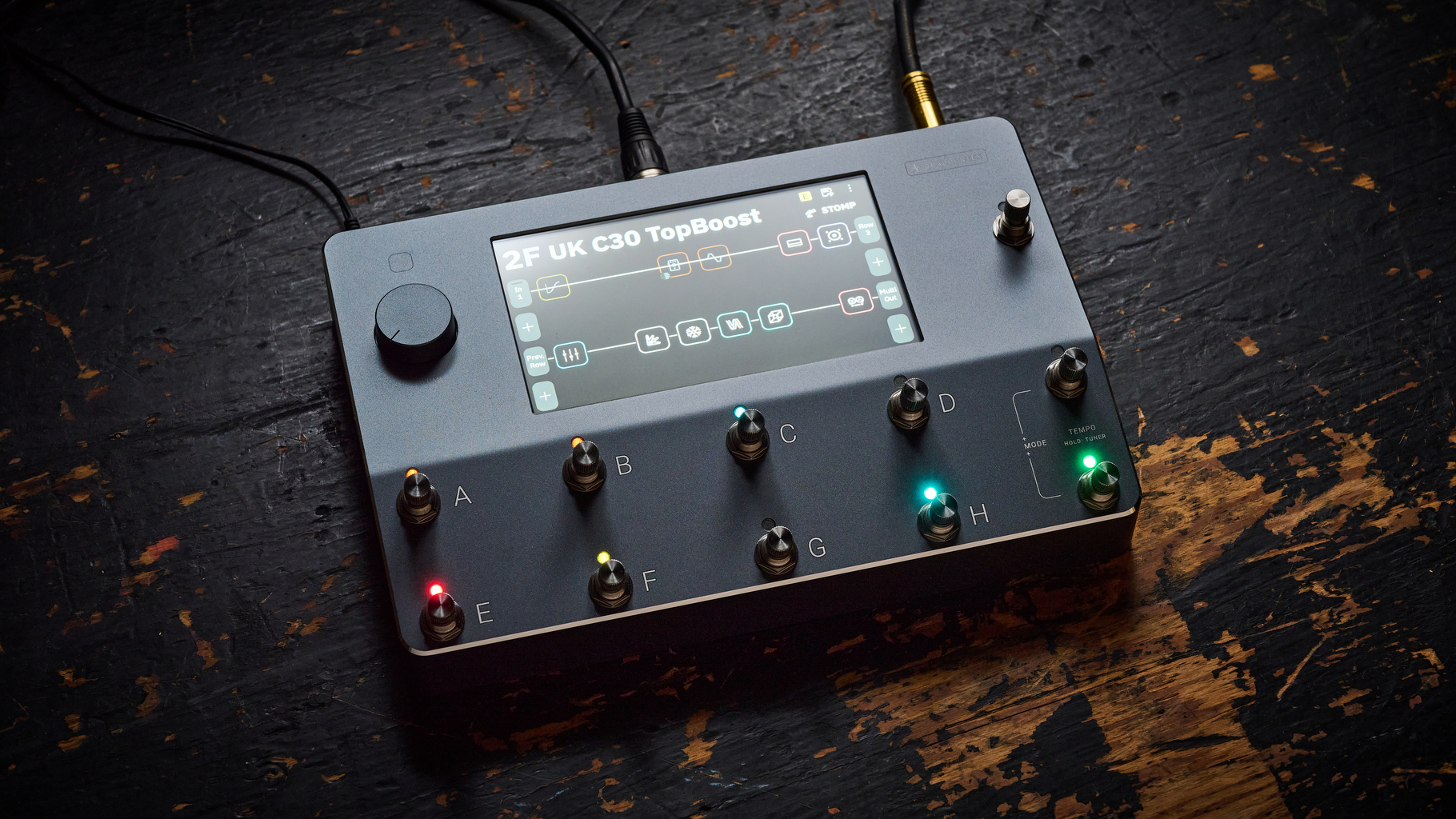
Neural DSP is no stranger to delivering high-quality amp modeling – see its stellar roster of Neural DSP plugins for evidence of that. So when the Helsinki-based firm showed up to NAMM with the Quad Cortex floor modeler, you’ll understand we got pretty excited about it – in fact, the whole guitar-playing world seemed to get positively giddy over the prospect. Not just because a revered software company had released its first hardware product, but what lay within its aluminum unibody.
From the off, the Quad Cortex promises unrivaled power in such a small footprint that Neural DSP calls it “the most powerful floor modeler on the planet”, stuffed with 2GHz of dedicated DSP power straight out of its Quad-Core SHARC processor. They weren't kidding around either, this thing can do pretty much anything you can think of.
Specs
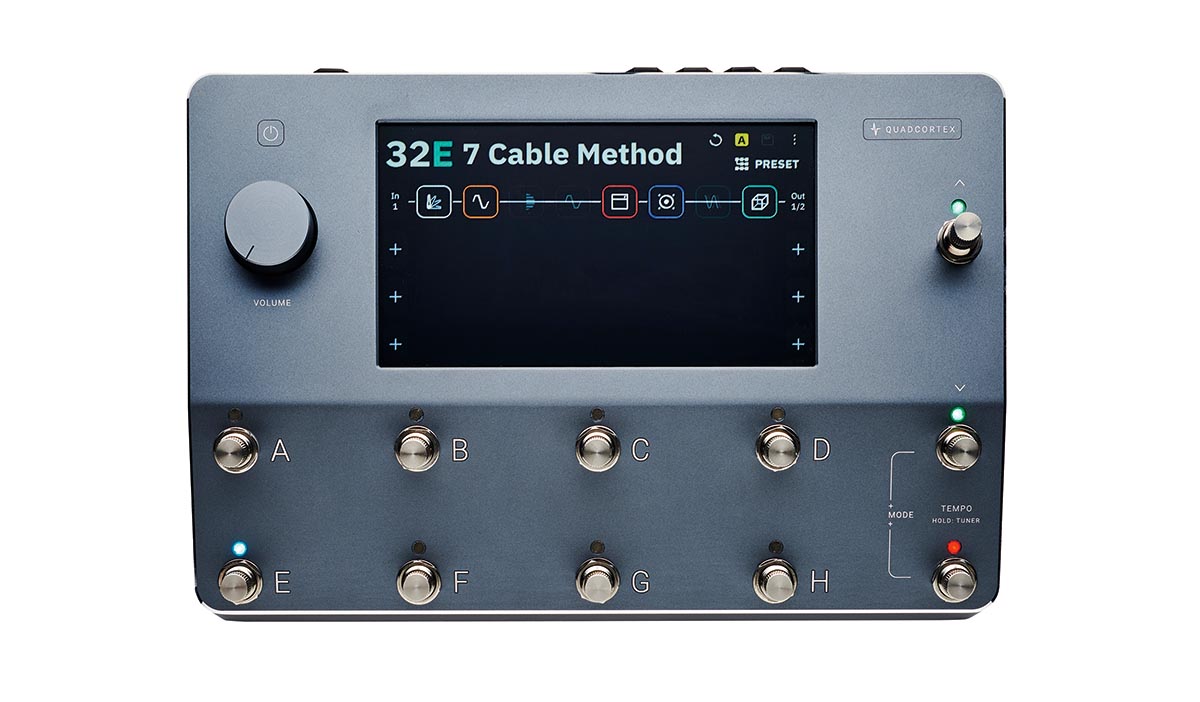
- Launch price: $1,849 / £1,449 / €1,585
- Type: Amp modeler/profiler and multi-effects
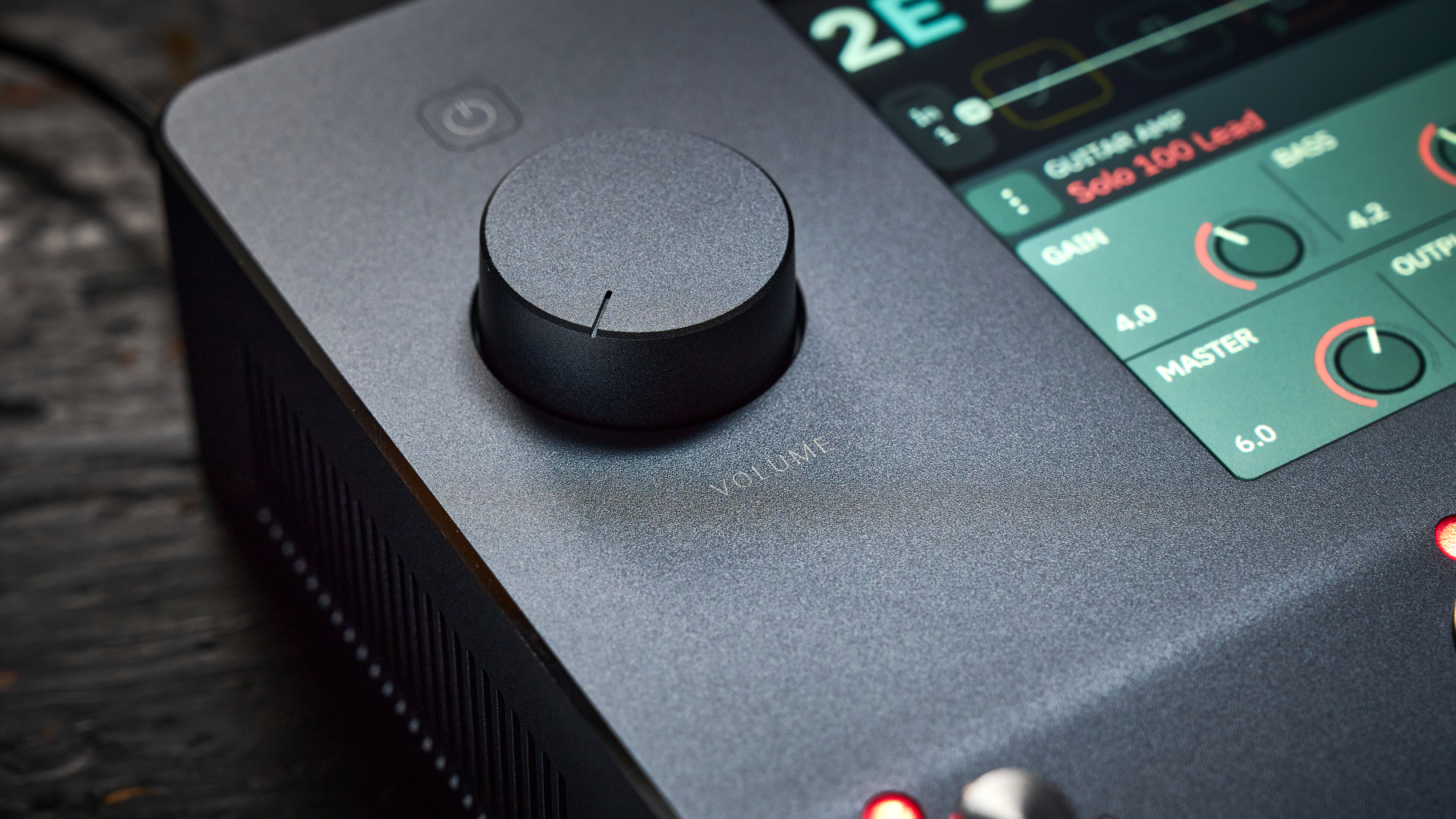
- Controls: Master volume, bank up, bank down, tap tempo, 8x rotary footswitches
- Features: 50+ amp models, 70+ effects, 1000+ Impulse Responses, 7” display with multi-touch sensors, AI-powered Neural Capture, Proprietary stainless steel stomp+rotary actuators, 2GHz Quad-Core SHARC architecture, Anodized aluminum unibody, WIFI for wireless preset sharing, cloud backups and firmware updates
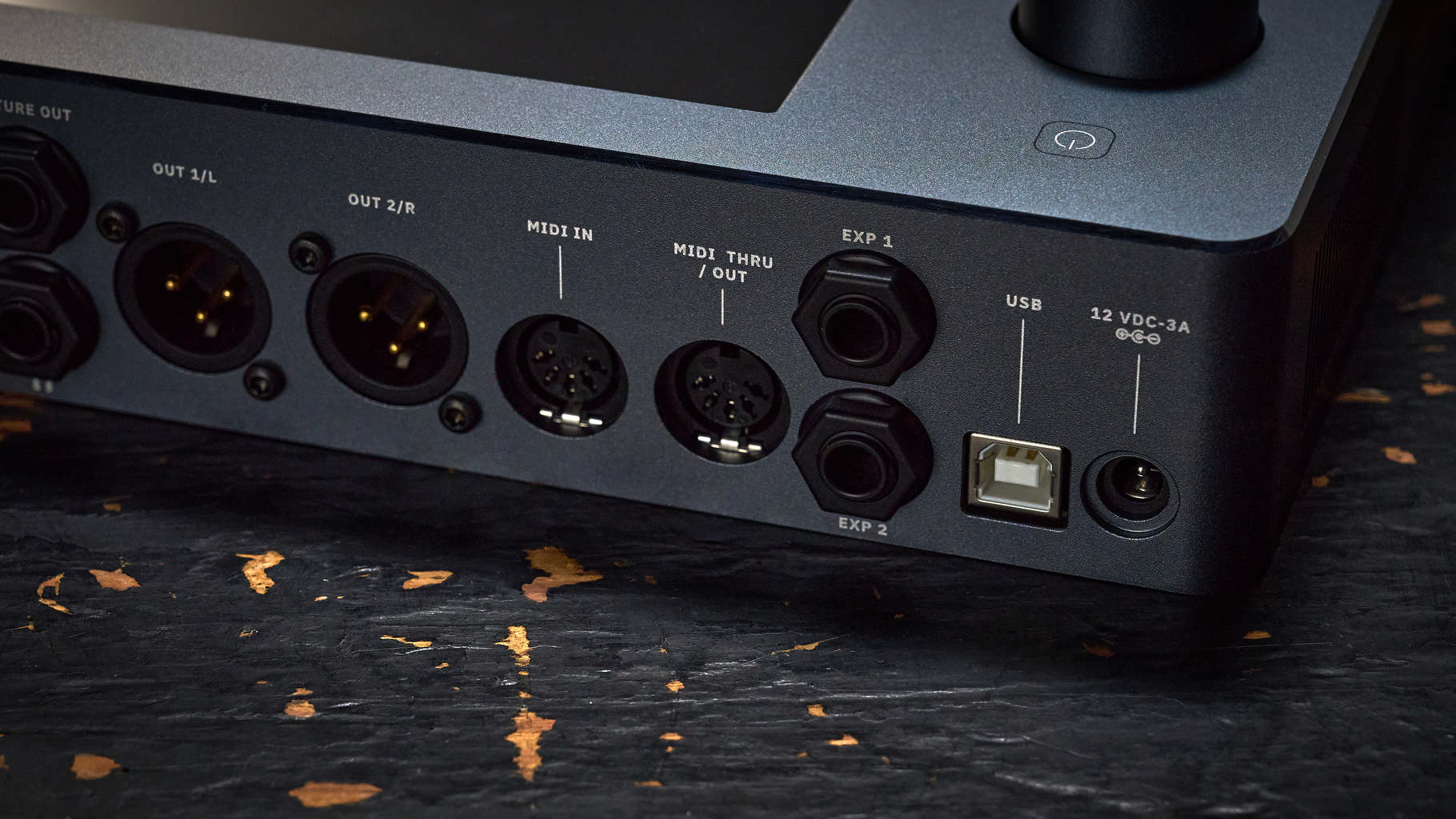
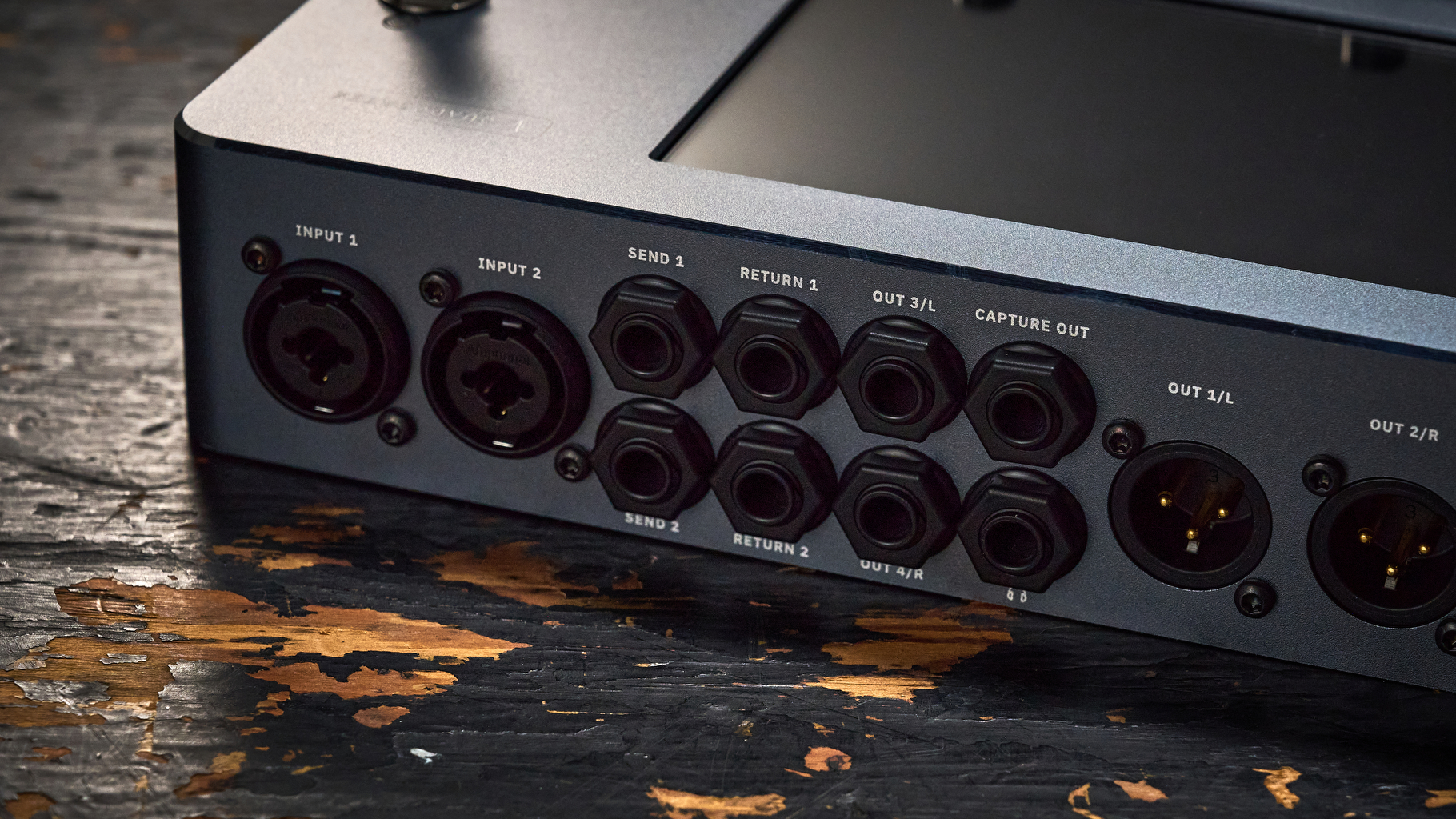
- Connectivity: Inputs - 2 x XLR-1/4" combo (instrument/mic), 2 x 1/4" (return 1/2), outputs - 2 x XLR, 2 x 1/4" TRS, 2 x 1/4" (send 1/2), headphones - 1 x 1/4", MIDI - In, Out/Thru, USB, other - 2 x 1/4" (expression 1/2), 1 x 1/4" (capture signal out), USB - 1 x Type B
- Bypass: Digital
- Power: 12V DC power supply (included)
- Dimensions: 29 x 19 x 4.9cm
- Weight: 1.95kg (4.2lbs)
- Options: N/A
- Contact: Neural DSP
Build quality
Build quality rating: ★★★★★
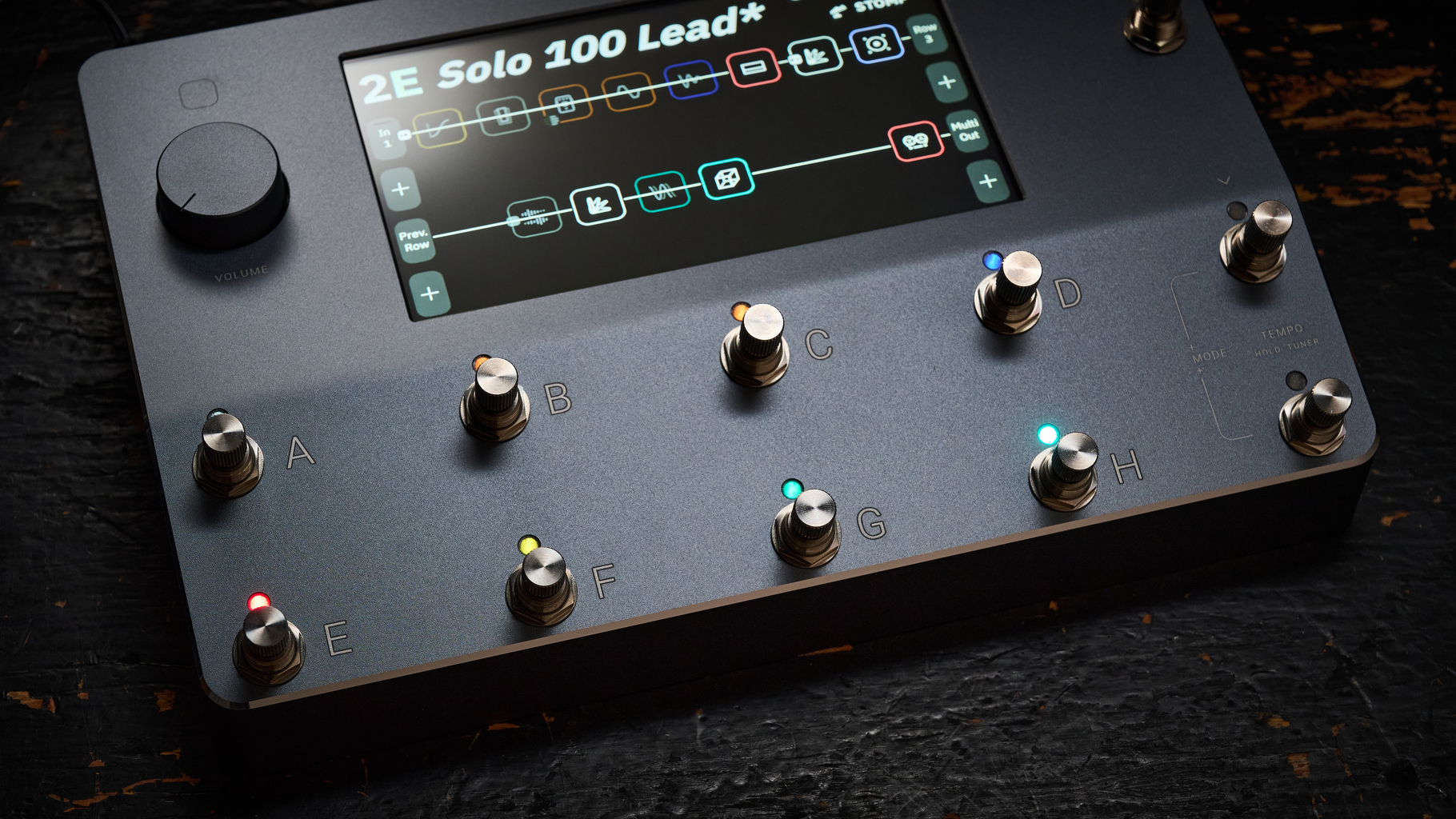
It's a robustly built unit overall, and as has been proven by numerous professional touring bands, plenty durable enough to be taken out on tour. The CNC-machined aluminum unibody feels ready for roughhousing in your hands, but it's not particularly heavy.
Coupled with the overall fairly compact size in comparison to some other floor modelers out there, the Quad Cortex can easily be chucked into a backpack and taken to rehearsal or a local venue, and you won't feel bad about doing it.
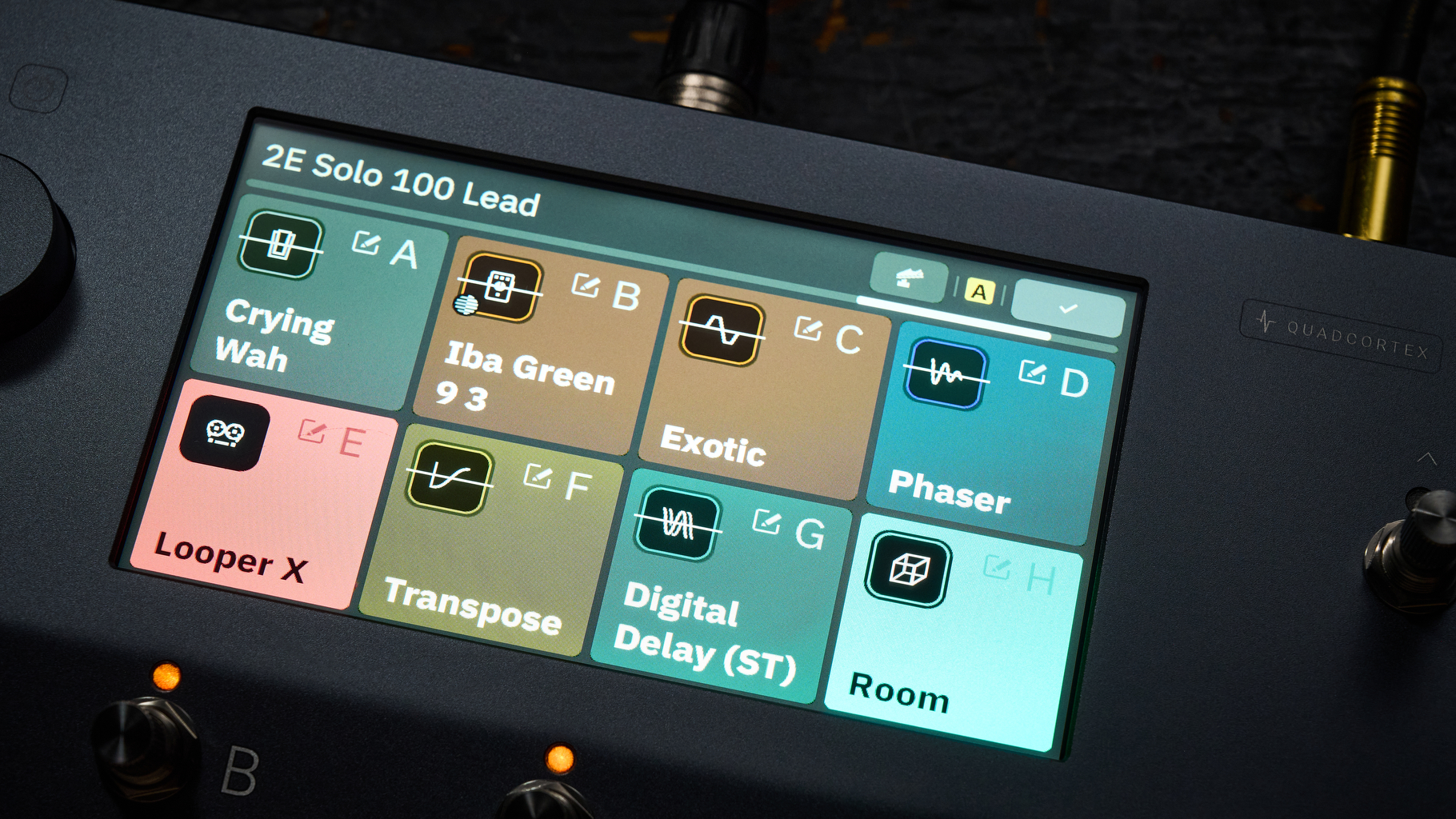
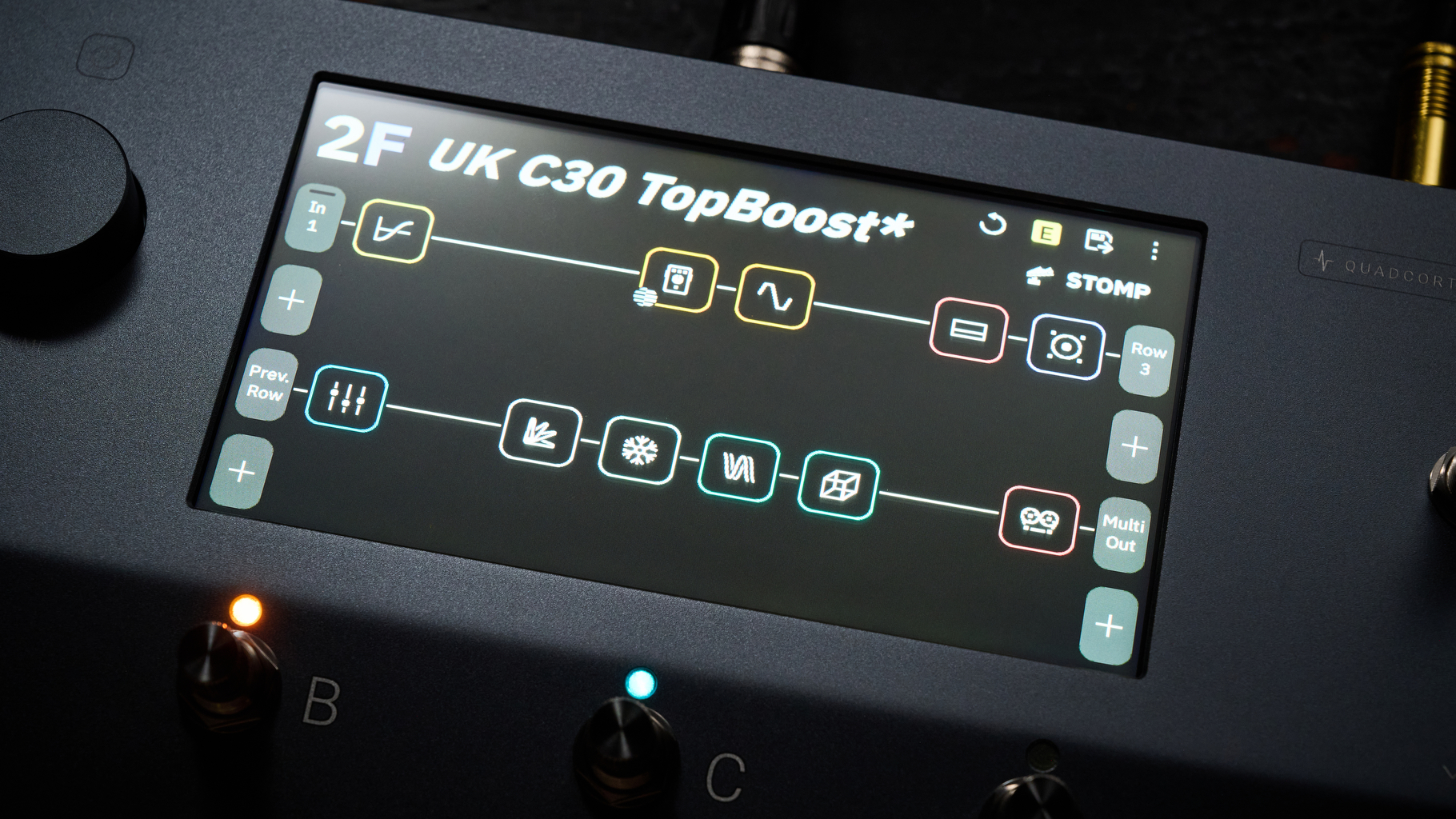
With the 7” screen, there's plenty of screen real estate to fit in whole signal chains, without the need for different menus dedicated to just effects or amp models. It's protected by a 1.8 mm-thick glass shield, so even if you do happen to waywardly stomp on it, you're very unlikely to break it.
Usability
Usability rating: ★★★★★
All that power doesn’t mean a thing if it can’t deliver sonically, but you can rest assured that it does, in spades. And that’s not all: one of the biggest surprises when using the Quad Cortex for the first time is how intuitive the interface layout is. As soon as we’d plugged in, we were instantly surfing the huge number of presets, cycling through and adding various effects as if we’d been using it for years.
For live performance, meanwhile, there are three main operation modes: Preset, Stomp, or Scene.
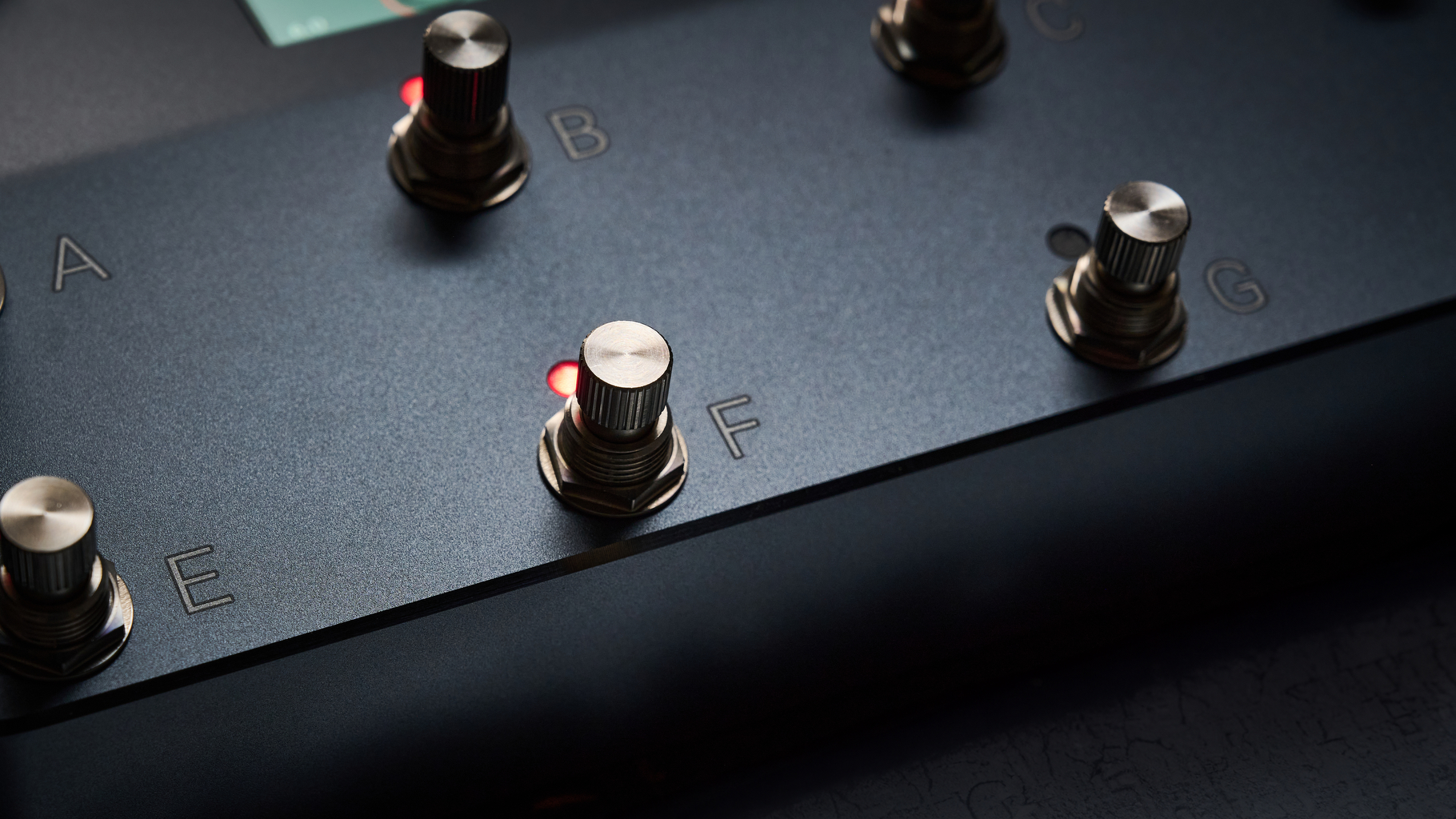
Preset mode allows you to use the eight stomp buttons to select one of eight presets per Bank, and with the up and down stomp buttons, cycle through those Banks. A total of 32 are available, meaning you have 256 presets to play with before you even need to start creating your own.
Scene mode allows for eight snapshots of one preset, so you can bypass effects and tweak settings for eight different versions of the same preset, which effectively gives you over 2000 factory presets alone.
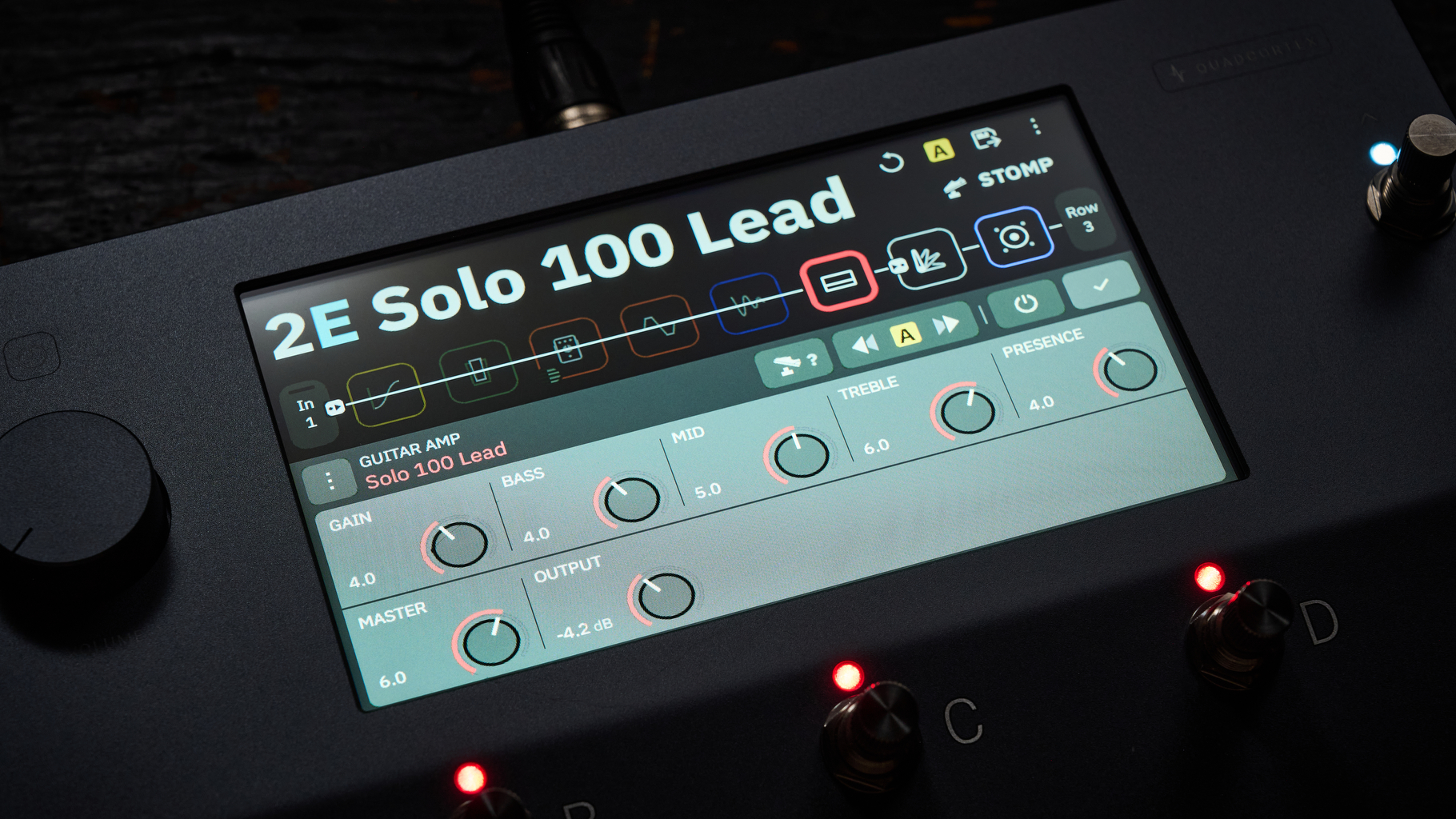
Stomp mode drills down into a preset even further by allowing you to assign individual effects, amp models, Neural Captures and IRs to one of the eight stomp buttons. Once the individual module is selected, the eight stomp buttons can be used as rotary encoders for settings within that effect – genius!
The architecture for each preset is as flexible as it comes and allows you to experiment to your heart’s content. The individual models within a preset are laid out in a grid, and when building your own, you can build up to four individual signal routings with an amp model, plus effects on each one, routed to one of the four individual outputs. The signal path isn’t linear, either, with the option to split/mix the signal at any point.
Quad Cortex’s biggest USP has to be the Neural Capture feature. Powered by AI, capturing your own amps and pedals is blindingly fast, remarkably simple and above all else, delivers great accuracy. The Quad Cortex guides you through the process on screen every step of the way, ensuring the correct connections are made and appropriate levels are set.
Similar to Kemper’s profiling, Neural Capture sends and receives a test tone through the target amp or overdrive pedal. We tested it on the Orange Dark Terror and were stunned by the speed and accuracy with which the Neural Capture was created.
For those still baulking at the price, it is worth considering that this device is being continually updated over time, which further adds to the value.
Sounds
Sounds rating: ★★★★★
The sound of the Quad Cortex is uncannily good. Having tried many modeling units out over the years there's no question that it's up there with the best of the best when it comes to realism. With headphones on it's very easy to forget that you're playing with a modeler and get sucked into just enjoying your instrument and the dynamic playing feel of some of the world's greatest amplifiers at your fingertips.
The selection on offer is basically a who's who of guitar amps, and with 90+ different models, it's pretty unlikely you won't find something to love here. With some incredibly accurate models of the JCM 800, Dual Rectifier, Twin Reverb, AC30, and many, many more, everyone from progressive metal heads to old school blues-men will find 'their' sound in this unit. Add in the ability to quickly and easily capture your own amplifiers and there's seemingly no limit to what you can do with it.
The selection of effects is fantastic too, with 70+ different options that are continually growing with each update. It's not as complete as something like the Helix series of modelers, but for most players it covers the bases with some quality drive pedals and plenty of time based and modulation effects.
Verdict
Our initial thoughts were that the unit would be best suited for studio use, but are now convinced this is the One Pedal To Rule Them All. It’s portable, lightweight, rugged enough and perfectly adept for gigging. With an ever-growing collection of user Neural Captures at your disposal, the Quad Cortex experience can only get better.
You’re unable to use presets from every desktop Neural DSP plugin
There are a couple of gripes, though. At the time of writing, you’re unable to use presets from every desktop Neural DSP plugin, but some have already been implemented since release, and we live in hope that more of our favorites will be added. Any Neural DSP plugins you currently own that aren't already supported should, in theory, be available for the Quad Cortex at no extra cost.
Guitar World verdict: There is so much to like about the Quad Cortex, and despite the lofty price, it has us looking around at all the now-superfluous gear we could put up on eBay to make way for what could be the last all-in-one digital rig we’ll ever need – but not before we’ve captured everything first.
Test |
Results |
Score |
|---|---|---|
Build quality |
Robust enough for touring bands |
★★★★★ |
Usability |
Despite the huge depth it's super easy to use |
★★★★★ |
Sounds |
As close as I've ever heard to the real thing |
★★★★★ |
Overall |
Simply the best floor modeler on the planet right now |
★★★★★ |