Get all your news in one place.
100’s of premium titles.
One app.
Start reading
Euronews
Euronews
Weronika Wakulska

The price of gold and silver has fallen sharply. Where did this plunge come from?

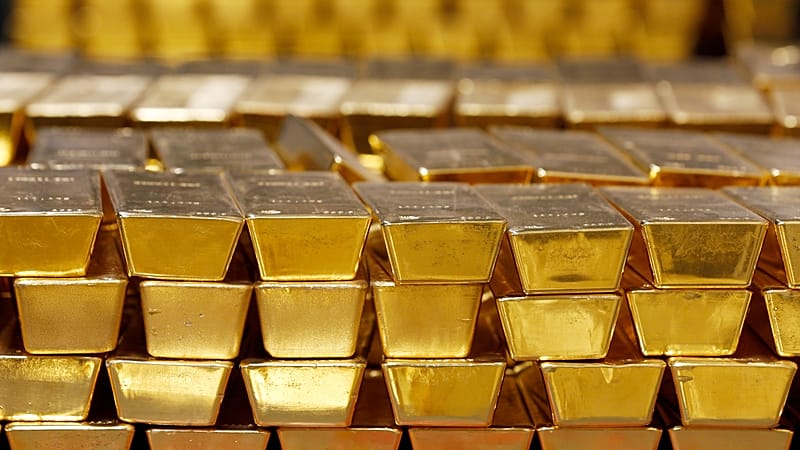
In a volatile week for precious metals, gold hit a new record high on Thursday at $5,600 per ounce, while silver traded at $120 per ounce — only to suddenly dip, with gold down to $4,770 per ounce by Friday evening.

Gold fever reached a new high at the beginning of 2026, with prices hitting a record earlier this week. All over the world, people queued up to sell bullion they already owned or to buy it.
Consumers went to local retailers to cash in their gold jewellery. Some are buying gold coins or bars for the first time. Others are investing in exchange-traded funds, trading on their value in a way similar to trading shares.

On Wednesday, the price of gold on the spot market in New York reached a record high of more than $5,418 per troy ounce, the standard by which precious metals are measured. Since then, prices have declined, with futures falling below $5,000 on Friday afternoon, a move that may signal a broader correction.

Fluctuations in value have also become more pronounced after news leaked that US President Donald Trump would appoint former Federal Reserve official Kevin Warsh as US central bank governor.

Gold can be volatile and unpredictable. Nevertheless, prices are much higher than a year ago, when the spot price in New York was less than $2,795 per troy ounce.

What is causing silver and gold prices to jump?

A lot comes down to uncertainty. Interest in buying gold - and other precious metals such as silver - is rising in turbulent times.

Gold prices spiked worldwide at the height of the COVID-19 pandemic and amid ongoing wars and turmoil caused by President Trump's tariffs.

The latest records coincided with escalating geopolitical tensions in Venezuela and Iran, Trump's repeated calls for a US takeover of Greenland and his increasingly aggressive stance towards America's allies.

There has been "a real breakdown in the way we think about how the world order works, if we want to call it that," Daniel McDowell, professor of political science at Syracuse University, told the Associated Press. He explains that in moments of instability, buying gold has historically been a kind of "psychological reaction" for some people seeking a safe place for their money.

Archive photo: Kevin Warsh, speaking to the media about his report on transparency at the Bank of England, London, 11 December 2014. (Archive photo: Kevin Warsh, speaking to the media about his report on transparency at the Bank of England, London, 11 December 2014.)

The latest demand for gold and its recent decline in value have also coincided with the weakening of the US dollar and questions about the Fed's future independence.

Trump has nominated former Fed official Kevin Warsh to run the central bank, which could signal a shift towards greater White House influence on monetary policy and also reduce the Fed's historic independence from politics.

Warsh would replace current chairman Jerome Powell in May when his term expires. Trump selected Powell to head the Fed in 2017. He has consistently criticised himfor not cutting interest rates fast enough. Warsh has long been a 'hawk' in Fed jargon, someone who advocates higher interest rates to control inflation.

Trump has announced that he will nominate a new Fed chairman to lower interest rates, which he says will reduce the cost of borrowing for the federal government's massive $38 trillion debt.

The nomination requires Senate confirmation.

Sign up to read this article
Read news from 100’s of titles, curated specifically for you.
Already a member? Sign in here
Related Stories
Top stories on inkl right now
One subscription that gives you access to news from hundreds of sites
Already a member? Sign in here
Our Picks
Fourteen days free
Download the app
One app. One membership.
100+ trusted global sources.