You've backed up your drives. You've printed your favorites. You've told yourself: "One day, I'll organize it all properly." But Don Bronstein didn't get that chance. The photographer died in 1968, aged 41, on assignment for Playboy in Mexico. And everything he'd made disappeared into the attic of his family home in Chicago, where it sat untouched for the best part of four decades.
This is all the more shocking, considering that Bronstein was one of the most productive photographers in postwar America. As art director and photographer for Chess Records, the label that launched Muddy Waters, Chuck Berry, Bo Diddley, Howlin' Wolf and Etta James, he shot and designed more than 500 album covers for labels including Atlantic, Verve and Impulse!.

He shot Louis Armstrong, Miles Davis, Ella Fitzgerald, Duke Ellington, Count Basie, Bob Dylan. He became Playboy's first staff photographer. He won a Grammy for the cover of Barbra Streisand's album People. The man was everywhere. But then, suddenly, he wasn't. And neither, for a very long time, was his work.
Found in the attic
It was Bronstein's daughter, the interior designer Julie Hillman, who eventually began digging through her father's archive. What she found was extraordinary. Not just prints, but negatives, contact sheets, letters, collages, burlesque photographs, architectural studies of Chicago, and Playboy shoots.


This was, in short, a working life, exactly as he'd left it. A time capsule from a moment when American visual culture was being invented in real time, in jazz clubs and recording studios on the city's South Side. Now, finally, the archive is being brought into the light for the first time.
The Rhythm of the Eye: Don Bronstein and the Jazz Scene in Chicago 1953–1968 opens on April 3 at Triennale Milano in Italy. It's the first European exhibition of Bronstein's work, and will be accompanied this fall by a book expanding on his wider practice.
What the pictures show
These images are striking for one quality above all: they don't feel taken. Bronstein shot the musicians he worked with from the inside, as someone already in the room: already trusted, already part of the furniture. There's no visible distance between photographer and subject.
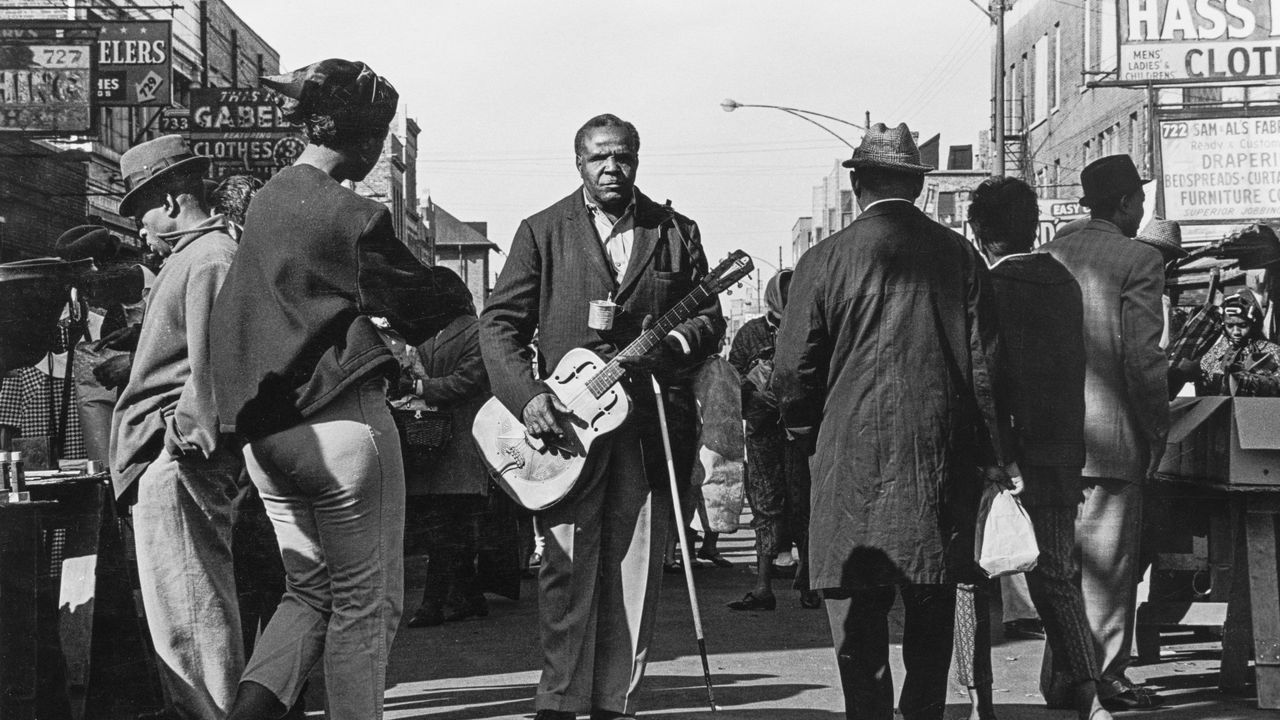
A blind blues guitarist holds his white electric on a busy street, as pedestrians stream past, oblivious. A young woman stands at the ocean's edge, mid-movement, caught between poses. A musician performs with eyes closed and jaw tilted skyward, the frame so close it's almost uncomfortable.
These are not the pictures of someone who showed up and pointed a camera at strangers. They are the pictures of someone who belonged there.


And to my mind, that's the thing worth dwelling on. Bronstein wasn't parachuting in with a press pass. He built real, lasting relationships with his subjects, and those relationships produced a quality of access that simply can't be manufactured.
The result was photographic improvisation: images crafted out of attention and patience, in which the subject never needs to perform for the lens.
The key question
The story behind the after-life of these images, though, is more unsettling. Bronstein was prolific, connected and decorated. Yet still, his archive nearly vanished. It only survived because a family home happened not to flood, a daughter happened to look, and a box happened not to be thrown out during a clear-out. Most photographers' archives aren't so lucky.
The real question this story poses, then, isn't about jazz photography, Chuck Berry or Chess Records. It's the one we keep putting off asking ourselves, seriously. What happens to your work when you're gone?
The Rhythm of the Eye: Don Bronstein and the Jazz Scene in Chicago 1953–1968 opens at Triennale Milano, Italy on April 3and runs until May 18. Entry is free.