Get all your news in one place.
100's of premium titles.
One app.
Start reading
The Conversation
The Conversation
Politics
Ralph Hertwig, Director, Center for Adaptive Rationality, Max Planck Institute for Human Development

The paradox of democracy’s success: behavioural science helps explain why we miss autocratic red flags

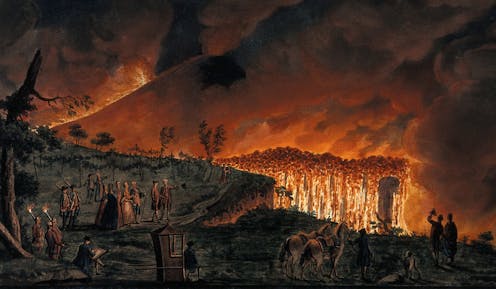
An etching by Pietro Fabris of the eruption of Mount Vesuvius, where thousands of people continue to live, despite the risk. Wellcome Collection

The fall of the Berlin Wall in 1989 paved the way for the democratisation of many eastern European countries and triumphantly ushered in the era of global liberal democracy that some scholars celebrated as “the end of history”. The idea was that human political history followed a steady path and that western liberal democracy was the end point of the evolution of human government. Unfortunately, events unfolded a little differently.

The last 20 years did not follow a linear arc of progress, let alone marked the end of history. The growing electoral success of extreme rightwing parties in many western countries, from France to Finland and from the Netherlands to Germany, has turned the end of history into the possible end of democracy.

Sign up to read this article
Read news from 100's of titles, curated specifically for you.
Already a member? Sign in here
Related Stories
Top stories on inkl right now
One subscription that gives you access to news from hundreds of sites
Already a member? Sign in here
Our Picks
Fourteen days free
Download the app
One app. One membership.
100+ trusted global sources.