
Get all your news in one place.
100's of premium titles.
One app.
Start reading
Space
Space
Science
Joe Rao

The Orionid meteor shower peaks under dark, moonless skies next week. Here's how to see it

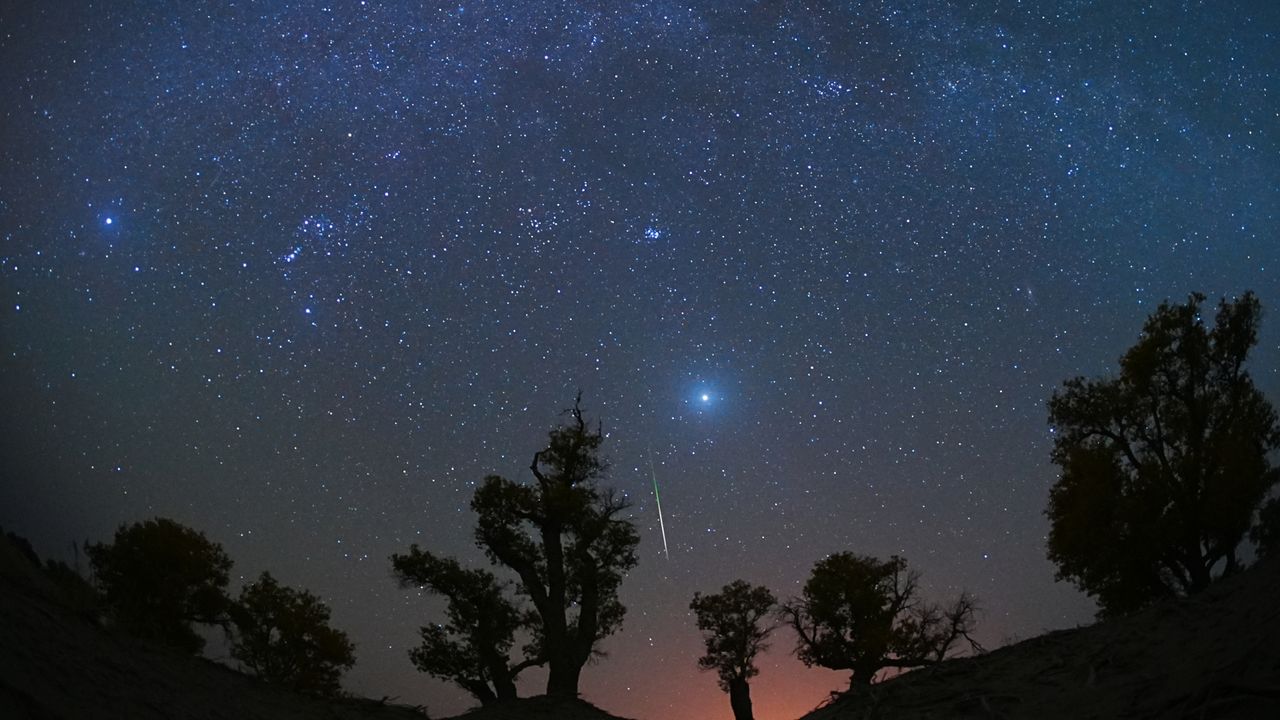
A meteor streaks across a starry blue night sky with silhouettes of trees in the foreground.

If you happen to glimpse a "shooting star" before dawn during the next several days, there's a good chance that what you saw was a fragment left behind in space by the famous Halley's Comet. For it is during the third week of October that a meteor display spawned by the debris shed by Halley reaches its peak: the Orionid meteor shower.

The Orionids aren't one of the year's richest meteor displays. If the August Perseids and December Geminids can be considered the "first string" among the annual meteor showers in terms of brightness and reliability, then the Orionids are on the junior varsity team.

Sign up to read this article
Read news from 100's of titles, curated specifically for you.
Already a member? Sign in here
Related Stories
Top stories on inkl right now
One subscription that gives you access to news from hundreds of sites
Already a member? Sign in here
Our Picks
Fourteen days free
Download the app
One app. One membership.
100+ trusted global sources.