
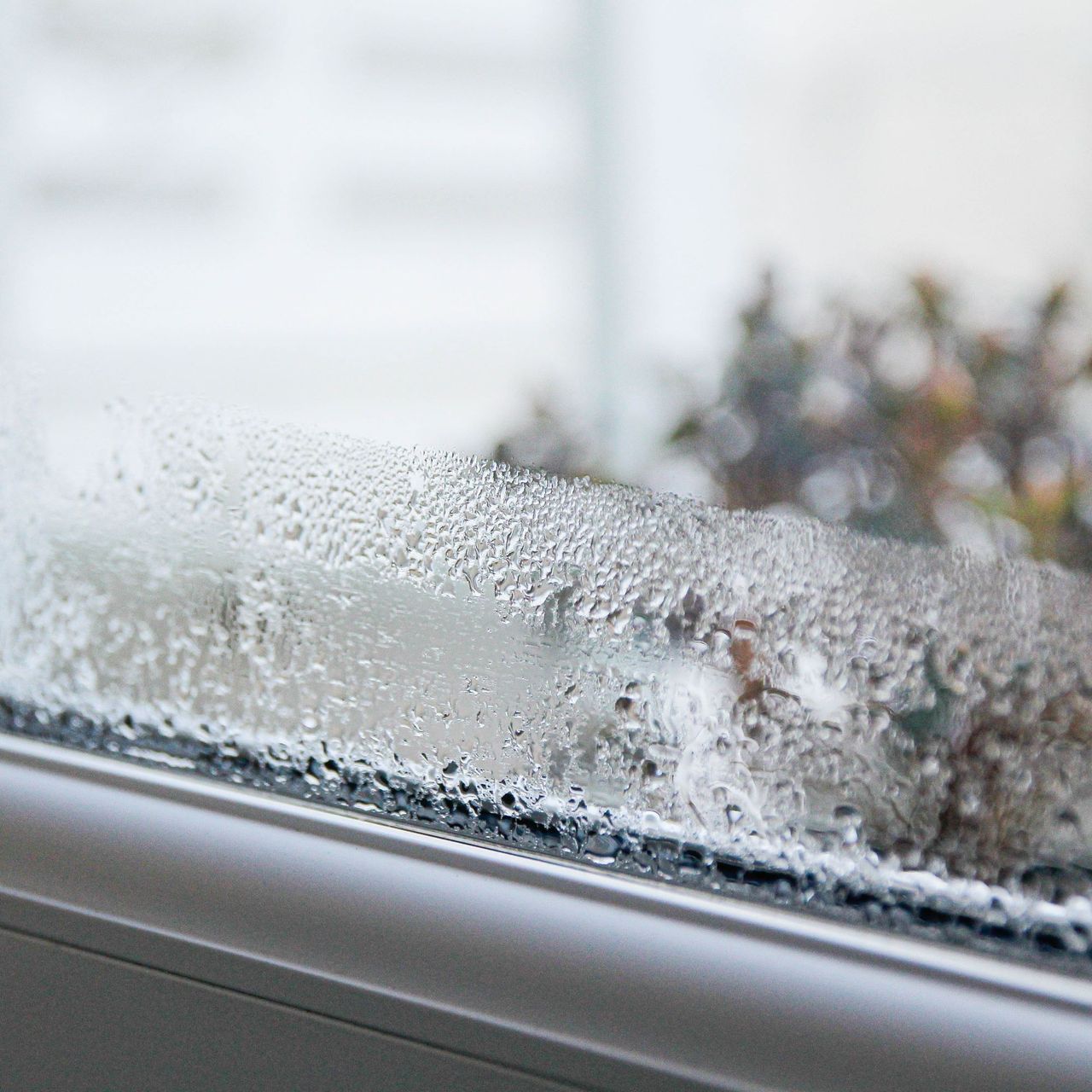
If, like me, you're fed up wiping down wet windows every single morning, thankfully, there are quite a few ways to combat it.
Window condensation is one of the most common signs of excess moisture in UK homes, and especially during winter months when our heating goes on, windows stay shut and warm air hits cold glass. While opening windows every day is important in winter, it's not pleasant to have a cold draught whistling through your home long enough to reduce the humidity.

One of the most effective tools to tackle this problem is choosing one of the best dehumidifiers for your home and, more crucially, placing it correctly for optimum efficiency.
Yep, poor placement is often why people think their dehumidifier isn't actually doing anything. So, I consulted the experts once and for all to find out how to position a dehumidifier properly so it tackles condensation at the source.

1. Start near the worst affected windows
It's tempting to place a dehumidifier directly under a dripping window, but pushing it right up near one window or wall can restrict airflow and reduce efficiency.
Instead, 'allow for 20-30cm of free space around the dehumidifier to allow for even air circulation around the appliance,' explains Katie Lilywhite, dehumidifier expert at AO.com, ideally in the same room where condensation is forming. Be sure to keep both the door and window closed, too, adds Ebac Director, Pamela Petty.
'That being said, be sure not to block radiators underneath windows as the warm air helps to reduce condensation,' adds Olivia Xu, Chief Marketing Officer of DREO.
If condensation forms on multiple windows in one room, focus on a central position rather than chasing each window individually.
2. Use a hallway or landing strategically for whole-house condensation
If you're dealing with condensation on windows across several rooms, placing a dehumidifier in a hallway or landing can be surprisingly effective, especially in a typical three-bedroom home. However, it must be a dehumidifier with a good capacity, like the dehumidifier we rated best overall, the MeacoDry Arete Two 20L, £299 at Currys.
'If you choose a model with the capacity to protect the whole of your home, it will work most effectively when placed in a central location such as a main hallway or upper landing,' explains Pamela.
To make this work, you should keep all internal doors open where possible, place the unit centrally and not up against a wall (again at least 50cm away) and choose a continuous or smart humidity mode rather than short bursts.
3. Always keep your dehumidifier on the floor
Unlike air purifiers, dehumidifiers don't need to be elevated. Chris Michael, Meaco's CEO, explains that it's best to keep the unit firmly on the floor for stability and optimal airflow. It also makes emptying the tank easier!
The best dehumidifiers we've tested
Meaco's Arete Two comes in different sizes, from 10L to suit small rooms to a 25L model that'll tackle condensation in a typical UK three-bedroom house.
If you have a targeted room where condensation builds up most, this 12L dehumidifier is perfect for smaller rooms, and it's also affordable, quiet, portable, and has a built-in carbon filter to remove odours.
If you have a large home and need whole-home condensation-busting, this ProBreeze is the best high-capacity dehumidifier in our guide. It can extract up to 30L of moisture from the air per day.
So, to stop window condensation, a dehumidifier needs to be placed where moist air builds up, not just where water appears. Position it near affected windows, give it plenty of space for airflow and move it around as seasons and usage change.
When placed correctly, it won't just dry windows but tackle the underlying problem, keeping rooms moisture-controlled and more comfortable in the dampest months.
However, just make sure you have the right size for your condensation problem, as every expert agrees that this is a crucial first step in choosing the right dehumidifier for your home.