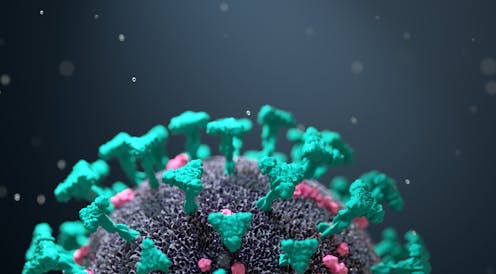
Biology is rich in patterns. You’ll find them everywhere – from the number of petals on a flower (which generally correspond to a number in the Fibonacci sequence), to the number of vertebrae in mammals (giraffes, humans and quokkas all have seven neck vertebrae). Even many viruses follow patterns and have symmetry in their shells.
Mathematics is, at its core, the science of patterns. Patterns can be subtle. So without using maths to formally describe and understand them, we could miss them completely.