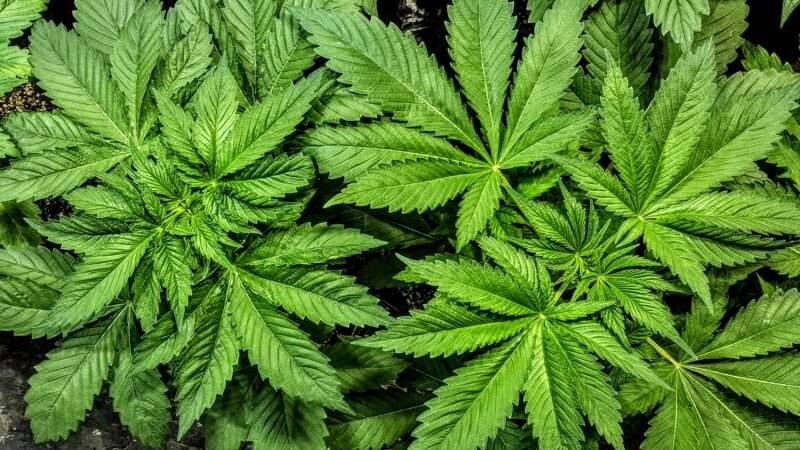
Last week, in response to a Freedom of Information Act request by Houston lawyer Matthew Zorn, the Department of Health and Human Services (HHS) revealed the rationale for its August 2023 recommendation that the Drug Enforcement Administration (DEA) move marijuana from Schedule I to Schedule III of the Controlled Substances Act. The document not only contradicts the position that the DEA has long taken on this issue; it contradicts the position that HHS itself took in 2016, when the DEA rejected a 2011 rescheduling petition. The reversal shows that marijuana's classification has always been a political question rather than a legal or scientific matter.
On October 7, 2022, the same day he announced a mass pardon for people convicted of simple marijuana possession under federal law, President Joe Biden instructed HHS and Attorney General Merrick Garland to "initiate the administrative process to review expeditiously how marijuana is scheduled under federal law." Biden noted that Schedule I, which includes "heroin and LSD," is "the classification meant for the most dangerous substances" and is "even higher than the classification of fentanyl and methamphetamine—the drugs that are driving our overdose epidemic." On Twitter, he reiterated that "we classify marijuana at the same level as heroin" and treat it as "more serious than fentanyl," which he said "makes no sense."