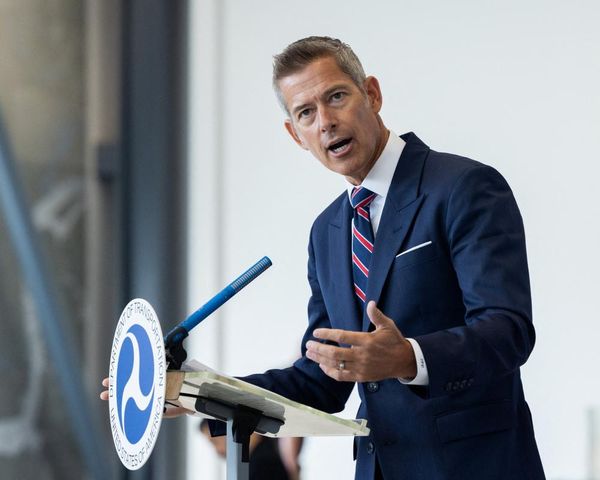
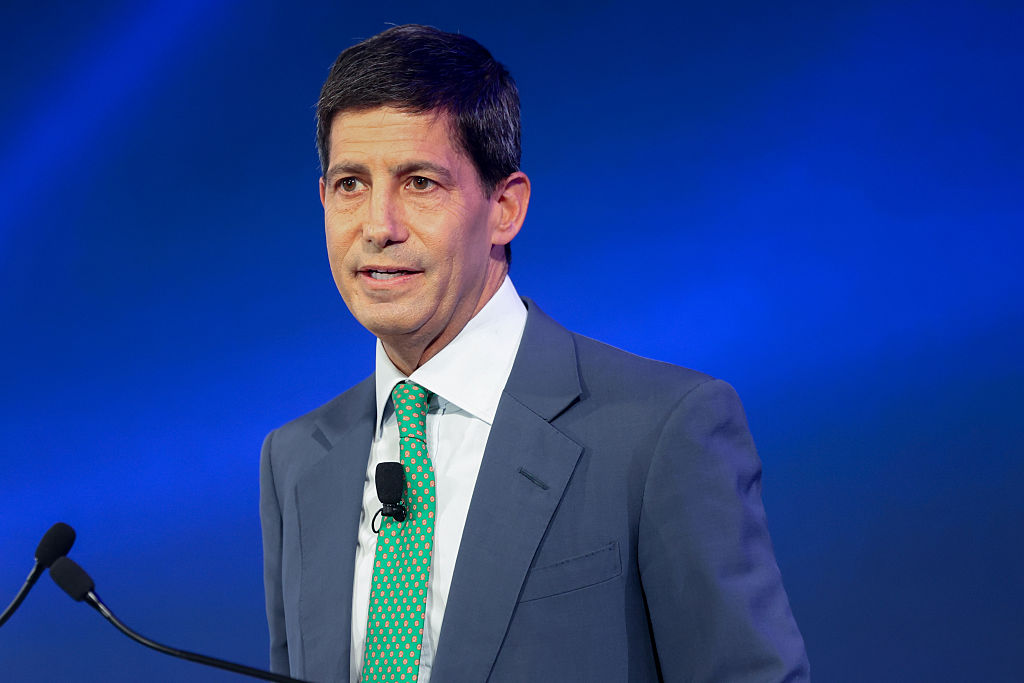
After months of speculation — and years of criticizing his last pick — President Donald Trump announced his selection for the next chair of the Federal Reserve.
The president announced on Friday, January 30, that Kevin Warsh will be the next Fed chair. If approved by the Senate, he will take over when Jerome Powell's term ends in May 2026. Trump had been reviewing several candidates for some time now.
"I am pleased to announce that I am nominating Kevin Warsh to be the CHAIRMAN OF THE BOARD OF GOVERNORS OF THE FEDERAL RESERVE SYSTEM," Trump wrote on Truth Social. "I have known Kevin for a long period of time, and have no doubt that he will go down as one of the GREAT Fed Chairmen, maybe the best. On top of everything else, he is 'central casting,' and he will never let you down."
In December, the president said his nomination will be "someone who believes in lower interest rates by a lot."
So, who is Kevin Warsh, and how could he impact your life and your money?
What to know about Kevin Warsh
Kevin Warsh was Fed Chair Ben Bernanke's right-hand man during the 2008-09 global financial crisis and was his primary liaison to Wall Street, which earned him credibility he still retains.
Markets see Warsh as a source of stability should Trump continue to pressure the central bank. He served on the Federal Reserve Board from February 2006 through March 2011.
He was special assistant to the president for economic policy and executive secretary of the White House National Economic Council from 2002 through 2006, during the George W. Bush administration. From 1995 to 2002, Warsh worked for Morgan Stanley.
He's currently a visiting fellow in economics at Stanford University's Hoover Institution, a lecturer at the Stanford Graduate School of Business and a member of the Panel of Economic Advisers of the Congressional Budget Office.
Warsh is widely viewed as a "hawk" on monetary policy who generally favors higher interest rates rather than the risk of inflation.
At the same time, Warsh, who was said to be a candidate for Treasury secretary before Trump picked Scott Bessent, was on the short list because he has a great relationship with the president.
Warsh said in mid-2025 that "the independent operations in the conduct of monetary policy is essential," adding "that doesn't mean the Fed is independent in everything else it does."
Though he consistently took the hawkish line on inflation during his time inside the central bank, Warsh has more recently advocated for lower interest rates.
Powell's legacy

Current Fed Chair Powell's term comes to an end on May 15, 2026. He has served in this role since he was appointed by Trump in 2018 as the 16th chair of the Federal Reserve.
Powell navigated the economy through the economic trip-up of the COVID-19 pandemic and the inflationary period that followed.
Asked about his legacy in the December Fed meeting, Powell said: "My thought is that I really want to turn this job over to whoever replaces me with the economy in really good shape. That's what I want to do. I want inflation to be under control, coming back down to 2%, and I want the labor market to be strong. That's what I want. And all of my efforts are to get to that place. They have been all along. But, ultimately, that's what I want."
And in the January Fed meeting, Powell offered his successor some words of advice. In addition to staying out of politics, he reminded the next Fed chair that their accountability is to Congress and maintaining this accountability will keep them legitimate to the American people.
He also said that the Fed staff is excellent.