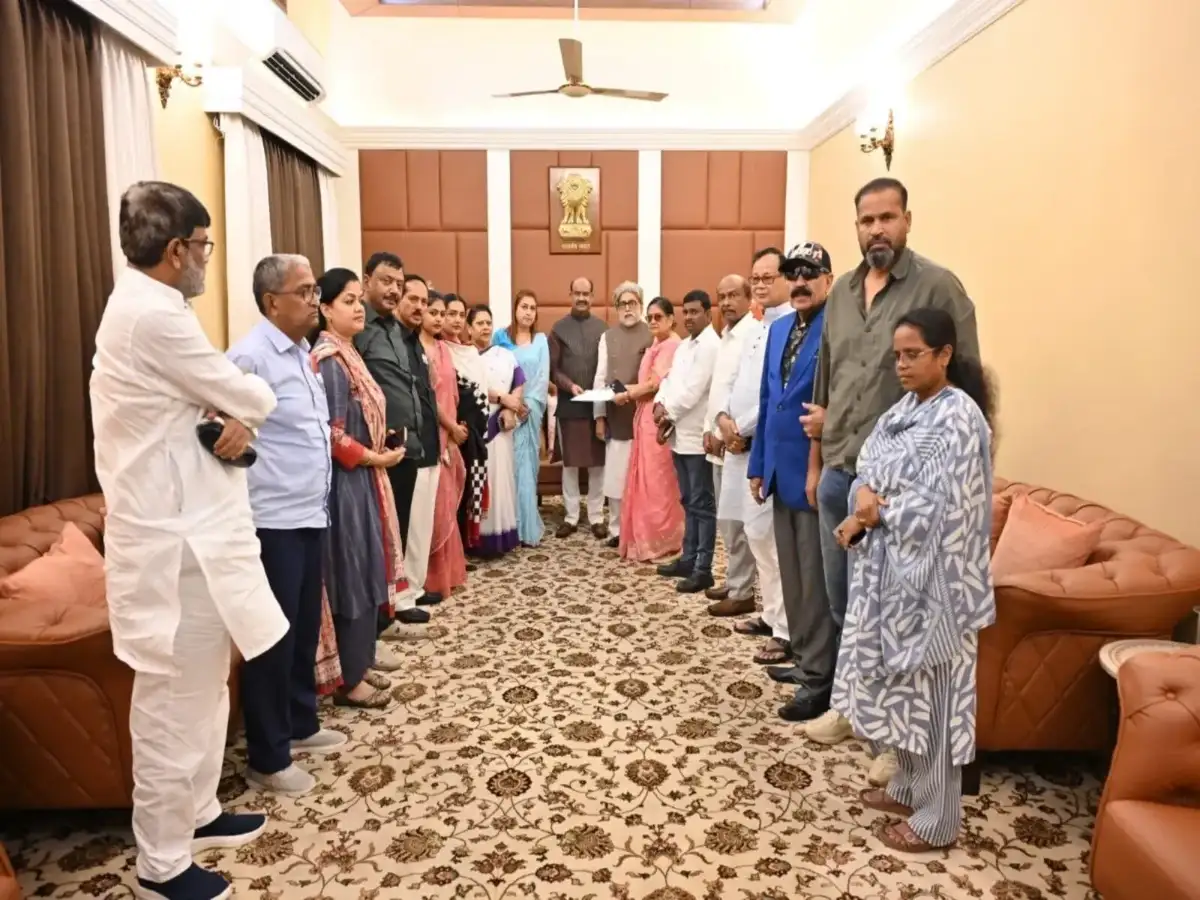
When 20 rebel Trinamool Congress Lok Sabha MPs decided to walk out of Mamata Banerjee's parliamentary fold, the obvious destination appeared to be the BJP.
After all, that has been the familiar trajectory of defectors from rival parties across India over the past decade.
Instead, the dissidents took a far less conspicuous route.
On Sunday, they merged with the Nationalist Citizens Party of India (NCPI), an obscure Tripura-based registered unrecognised political party with virtually no political footprint of its own. In the high-stakes arithmetic of Parliament and anti-defection laws, however, that very obscurity may have been its greatest strength.
What initially appeared puzzling has since come to be viewed by political observers as a carefully calibrated move — one designed to navigate legal constraints while maximising political advantage, triggering what could be the most serious crisis to confront the Trinamool Congress since its formation in 1998.
For the rebels, obscurity was not a liability. It was the strategy.
The NCPI offered something the BJP could not: a potentially defensible legal pathway out of the TMC while allowing the dissident MPs to preserve their collective identity in Parliament.
According to sources close to PTI, the rebels' original plan had been more straightforward. They intended to break away from the TMC parliamentary party with the support of two-thirds of its MPs, form a separate bloc in the Lok Sabha and extend support to the BJP-led NDA.
Parliamentary rules, however, left little room for such an arrangement.
Also Read: Rebel TMC MPs explore merger with NDA ally, seek separate seating
Faced with that hurdle, they turned to the NCPI, which offered what an independent rebel group could not — legitimacy under a recognised organisational umbrella.
A senior rebel MP said the decision was guided by pragmatism rather than ideology.
"We wanted to move collectively and create a political space outside Mamata Banerjee's control without triggering unnecessary procedural hurdles. The NCPI route offered a workable parliamentary solution," he said.
CPI(M) leader Sujan Chakraborty believes the development is less about politics and more about procedure.
"This is less of a political merger than a legal device," he said, arguing that the Lok Sabha rebels appear keen to avoid the complications that followed the split within the Trinamool Congress in the West Bengal Assembly.
The contrast is notable.
In the Assembly, dissident legislators sought to project themselves as the authentic voice of the TMC. They elected their own leader and challenged the authority of the party's official leadership, triggering litigation and competing claims over legitimacy.
The Lok Sabha rebels have consciously avoided that battlefield.
They are not claiming to be the "real" TMC, nor are they seeking control over the party's organisation, election symbol or institutional structure.
Instead, they appear to have accepted that the organisational apparatus of the TMC will remain firmly with Mamata Banerjee, while attempting to detach its parliamentary wing from her influence.
Senior TMC leader Sougata Roy sought to downplay the significance of the rebellion.
"Some MPs may leave, but the Trinamool Congress belongs to Mamata Banerjee. The organisation, workers and people remain with her. Those who think they can weaken the party by changing labels are mistaken," Roy told PTI.
That distinction between parliamentary numbers and organisational control may ultimately prove decisive.
Unlike many regional parties, the TMC operates through a highly centralised structure. Control over the party machinery, committees, symbol and finances remains deeply embedded within the leadership architecture built around Mamata Banerjee.
For the rebels, capturing the party may have been an unattainable objective. Securing the allegiance of a substantial bloc of MPs was not.
The BJP's role in the unfolding drama is equally instructive.
The dissidents' consultations have reportedly centred on senior BJP leaders, with several key meetings taking place at the residence of Union minister Bhupender Yadav. Yet the BJP has shown little appetite for an immediate mass induction.
That restraint reflects the realities of West Bengal politics.
Many of the rebel MPs spent years attacking the BJP and contesting elections against it. While their support would bolster the NDA's legislative strength in Parliament, absorbing them wholesale could unsettle the BJP's state unit, where local leaders have built their political careers opposing them.
Congress leader Adhir Ranjan Chowdhury described the development as an exercise in political pragmatism.
"The BJP's immediate interest is numbers in Parliament, not necessarily expanding its organisational family in West Bengal overnight," he said.
Political analysts argue that the NCPI route solved two problems at once. It provided the rebels with a vehicle to move together without immediately confronting legal complications, while allowing the BJP to secure parliamentary support without forcing an awkward political merger in West Bengal.
"It is easier for the BJP to work with them as allies for now than absorb them immediately into the organisation," political analyst Biswanath Chakraborty said.
Unlike the individual exits of Mukul Roy and Suvendu Adhikari, which reshaped West Bengal politics one leader at a time, this rebellion involves a sizeable bloc of Trinamool MPs acting in concert, directly testing Mamata Banerjee's grip over the party's parliamentary ranks.
Senior advocate and TMC MP Kalyan Banerjee underlined the limits of such a revolt.
"Elected representatives may leave, but control over the party organisation, symbol and funds remains elsewhere. That makes any attempt to capture the party structure extraordinarily difficult."
Whether this arrangement evolves into something more durable beyond Parliament remains uncertain.
For now, the NCPI's appeal had little to do with electoral strength, ideological influence or organisational reach.
Its value lay precisely in what it lacked.
In a political season shaped by calculations of legality, recognition and survival, obscurity itself became a form of utility