When Alice first discovers the mushroom in Alice’s Adventures in Wonderland, it looks perfectly ordinary—until she sees what’s sitting on it: a large blue caterpillar smoking a hookah. The caterpillar, an impatient sort, grills a confused Alice on who she is and what she’s doing before telling her that eating from one side of his mushroom will cause her to grow and eating from the other will cause her to shrink (he refrains from clarifying which side is which). Alice grabs a handful of both, and her first bite diminishes her down toward the ground. The corrective bite sends her head soaring above the treetops, her neck so long that a nearby pigeon mistakes her for a serpent.
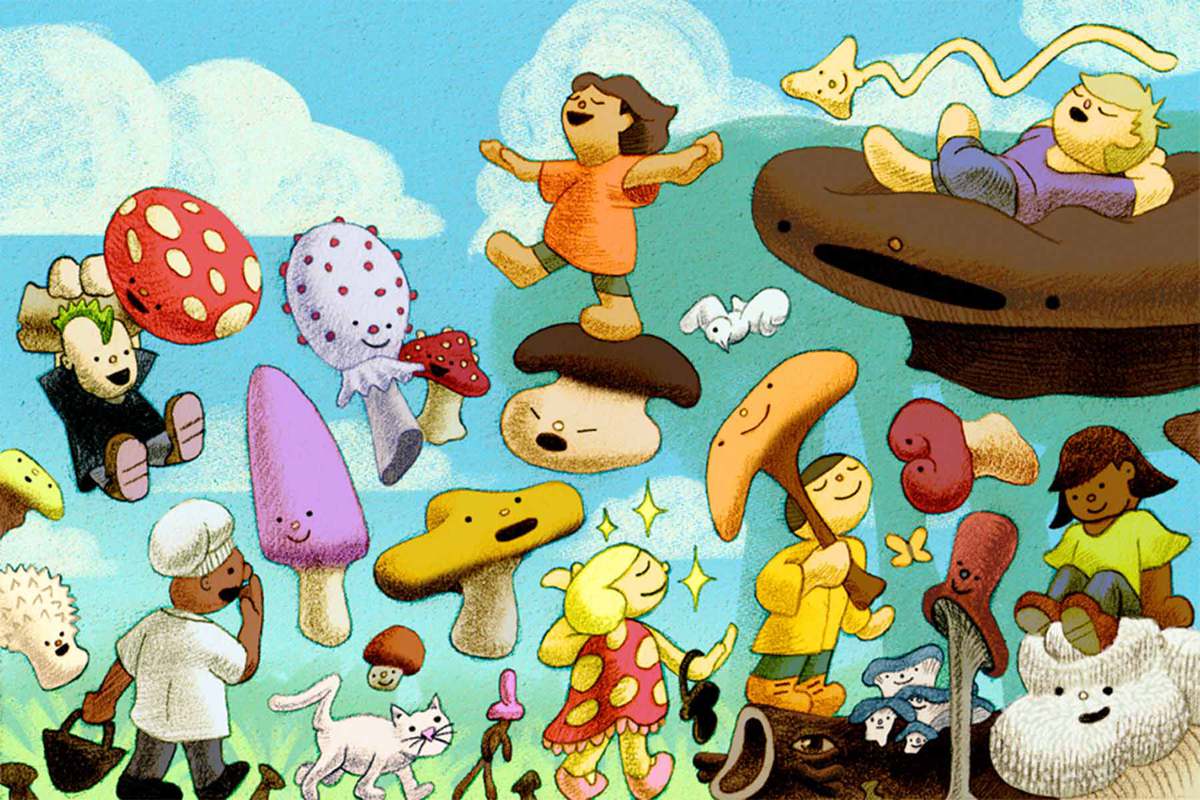
Alice’s experience encapsulates the weird position that mushrooms take up in our psyche: the way they occupy some borderland between the prosaic and the uncanny. They can be found in the aisles of any grocery store—rubbery white buttons tamed by plastic wrap. They’re ubiquitous in children’s books, especially fairy tales—which might be where they start to spill over into the otherworldly, since many of those illustrations depict the Amanita muscaria, a red mushroom with white spots, prized by Siberian shamans for its powerful hallucinogenic properties (it’s also highly toxic). Things only get wilder from there.