
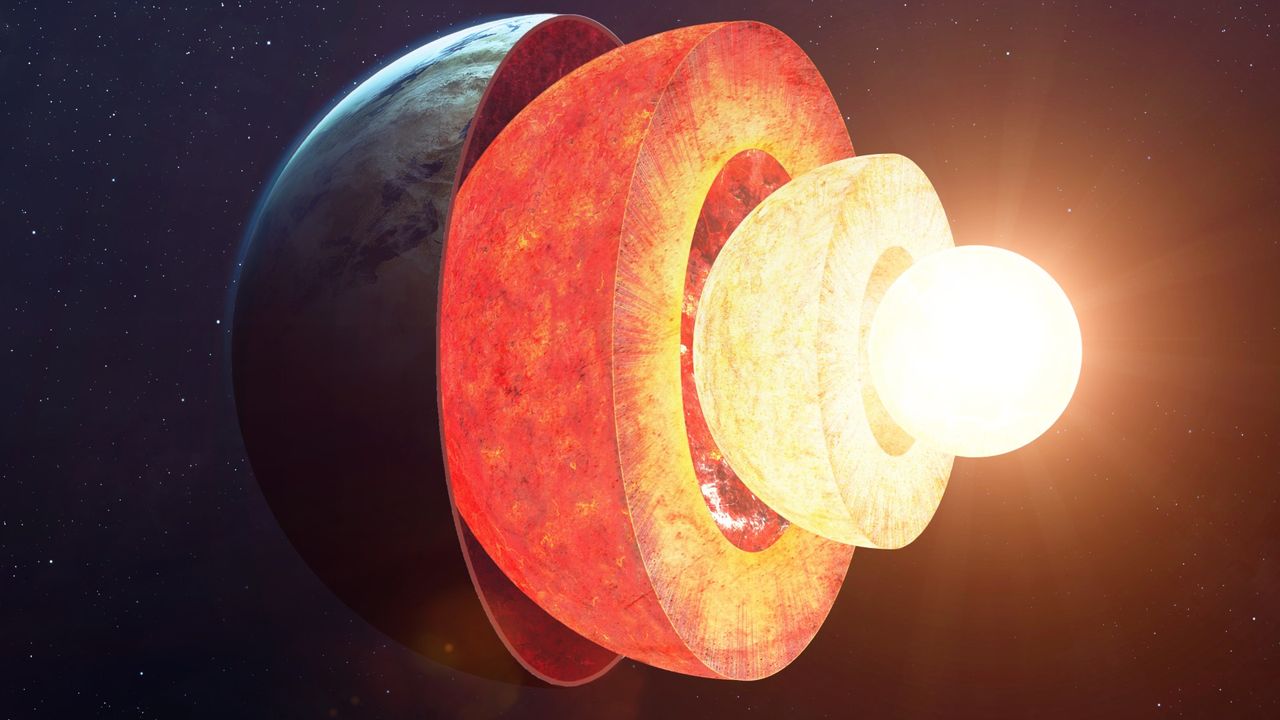
We have learned a lot about the planets in our own backyard, and for a long time we assumed the rest of the galaxy looked roughly the same. A rocky planet meant a clear-cut structure: a dense metallic core, a silicate mantle, and a thin atmosphere on top. That picture works fine for Earth.
But according to a new paper submitted to the Astrophysical Journal, it might not work for most of the rocky planets in the universe. By far the most common type of planet we have found around other stars is about a class of worlds called sub-Neptunes: planets larger than Earth but smaller than Neptune. Their close cousins, the super-Earths, are slightly smaller and likely lost most of their hydrogen long ago. The textbook story has these planets forming in essentially the same way Earth did, just with different amounts of leftover gas piled on top. Iron sinks to the middle, silicate rock floats above it, hydrogen sits on top of that.