
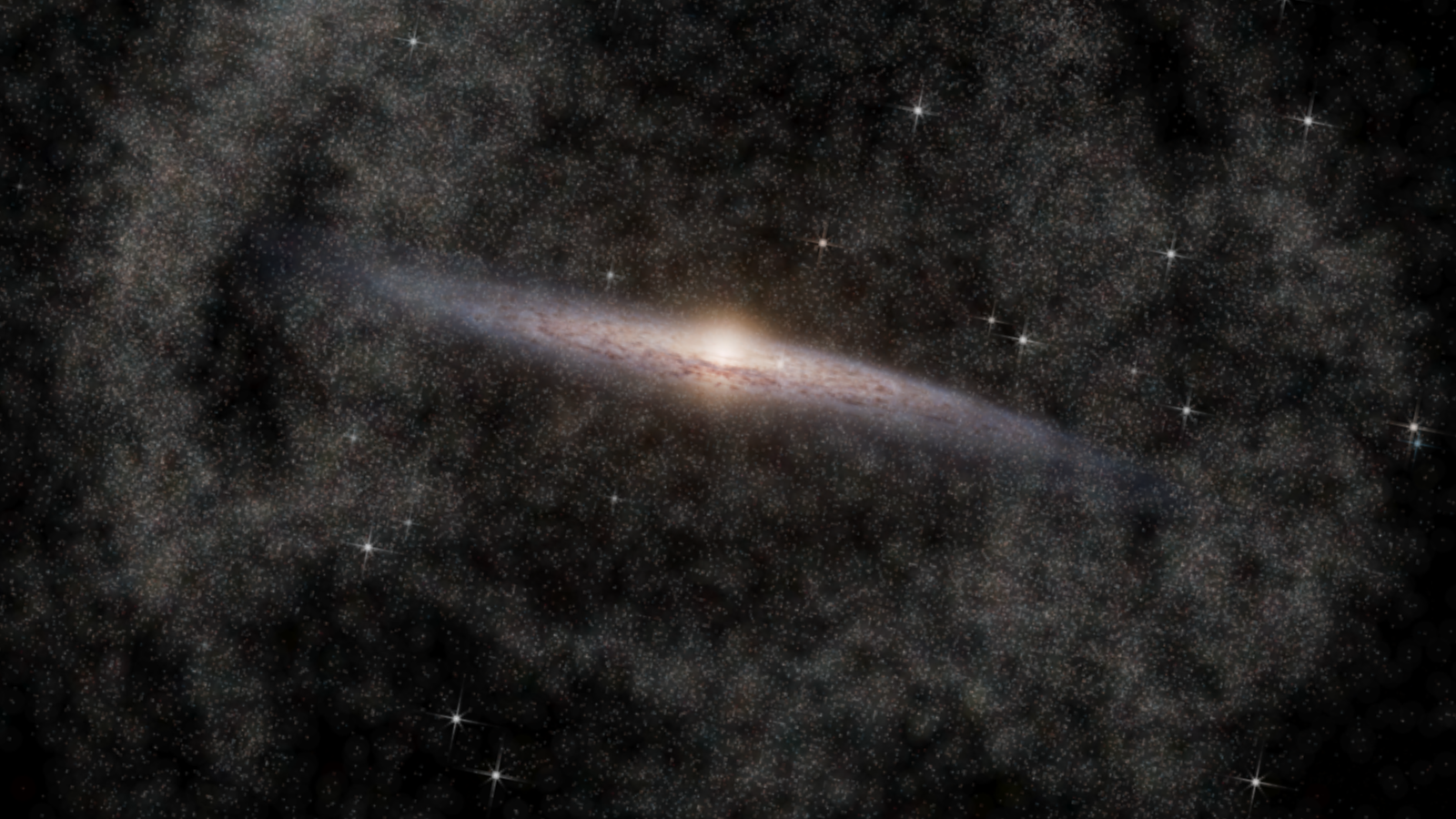
New findings from the Gaia space telescope indicate the Milky Way may have cannibalized a small galaxy not too long ago, cosmically speaking. In fact, the last major collision between our galaxy and another seems to have occurred billions of years later than previously suspected.
The Milky Way has been long understood to have grown via a series of violent collisions, which see smaller galaxies ripped apart by the immense gravitational influence of our solar system's spiral home. These collisions distribute stars from the devoured galaxy across the halo that surrounds the main disk of the Milky Way and its distinctive spiral arms. These bouts of galactic cannibalism also send "wrinkles" rippling through the Milky Way that affect different "families" of stars, with different origins, in different ways.