
Get all your news in one place.
100's of premium titles.
One app.
Start reading
Space
Space
Science
Samantha Mathewson

The Milky Way's faintest satellite may not be what astronomers thought. 'These results solve a major mystery in astrophysics'

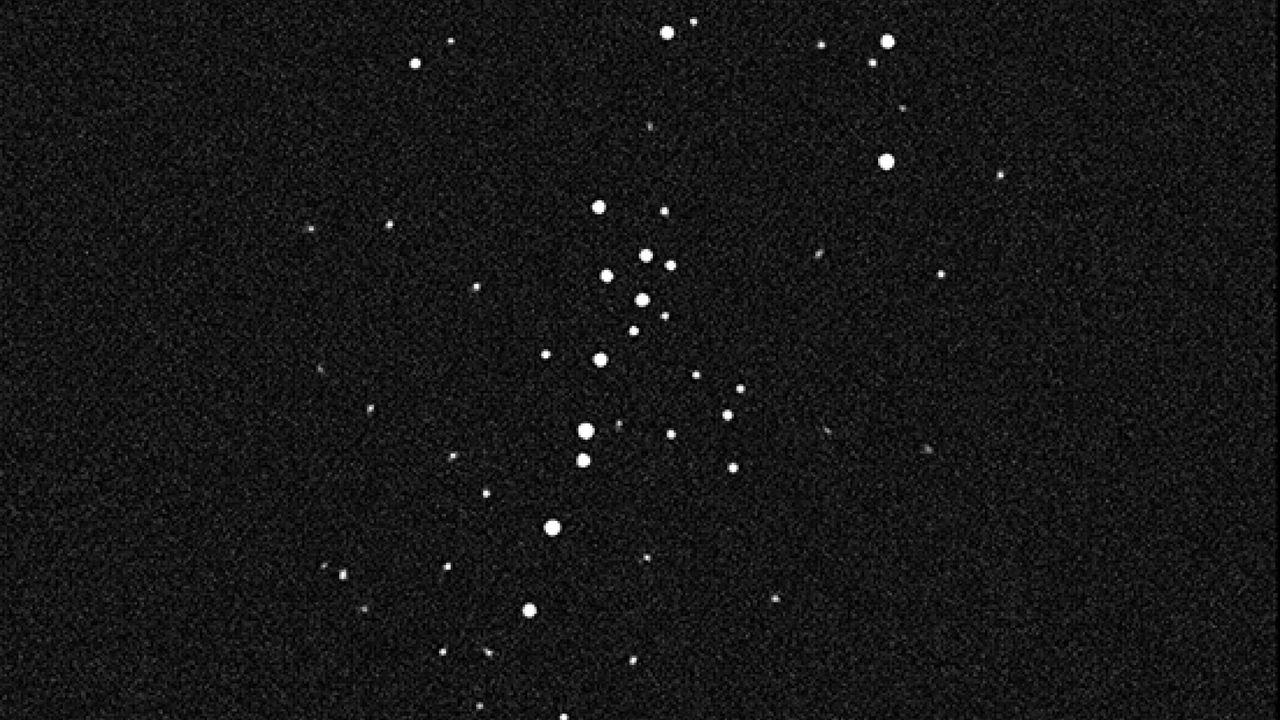
Ursa Major III, a faint star cluster over 30,000 light-years away, may be bound by hidden black holes instead of dark matter.

A ghostly object orbiting the Milky Way has left astronomers questioning its composition: Is it a dark-matter-dominated dwarf galaxy or a star cluster bound by a hidden swarm of black holes?

Ursa Major III/Unions 1 (UMa3/U1), the faintest known satellite of our galaxy, orbits the Milky Way at a distance of more than 30,000 light-years. It is a compact stellar system that contains only 60 visible stars.

Sign up to read this article
Read news from 100's of titles, curated specifically for you.
Already a member? Sign in here
Related Stories
Top stories on inkl right now
One subscription that gives you access to news from hundreds of sites
Already a member? Sign in here
Our Picks
Fourteen days free
Download the app
One app. One membership.
100+ trusted global sources.