Get all your news in one place.
100's of premium titles.
One app.
Start reading
International Business Times
Business
Callum Turner

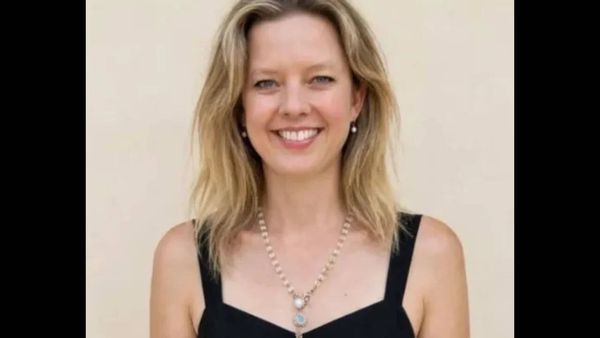
The Literacy Equation: How Ellen Wiss Is Rewiring Education to Influence Economies, Health Systems, and Social Outcomes

Across the US, more than 60% of fourth-graders are not proficient readers, a figure tied directly to broader societal strain. This literacy crisis isn't necessarily confined to classrooms. It can often spill outward, into emergency rooms, into labor markets, into court systems, shaping the trajectory of entire economies.

Ellen Wiss, founder of READ USA, has built her work around that reality, positioning reading as an infrastructure for a refined society. "All of that correlates to the social ills and the costs we take care of on the back end. These costs are far greater than fixing it up front and empowering children to be successful contributors to society," Wiss explains. Low literacy costs the US at least $2.2 trillion annually.

Wiss arrived at this theory after spending time volunteering in under-resourced classrooms. That experience, she recalls, revealed an obvious yet overlooked cause. She witnessed how literacy sat at the root of nearly every barrier those students faced. "The fastest and most effective way to address poverty is through education, and more simply, through empowering children with the ability to read," she says.

Read USA's response resulted in a model that trains high school students as paid literacy tutors for younger children, supported by educators and guided by literacy expert Dr. Robert Kelly, the CEO of READ USA, Inc. Wiss highlights that the structure is grounded in research showing that peer-assisted learning, especially among students closer in age, can significantly improve engagement and comprehension.

Wiss explains, "There's a comfort level when someone closer to your age is helping you. Your guard is down. You're more receptive." Furthermore, by leveraging trained teen tutors, READ USA aims to expand instructional capacity at a lower marginal cost while simultaneously developing the future workforce.

According to her, early pilots validated the approach, with measurable gains in reading proficiency for both the young student and teen tutor. Furthermore, she notes that attendance, often tied to academic struggle, improves when students feel supported instead of targeted and overwhelmed.

According to Wiss, a model around providing paid roles for teenagers can create economic opportunity and reduce idle time, a factor she links to reduced juvenile crime rates. Now that model, which operates throughout the school year, offers a multi-layered, one to one reading intervention, where education, workforce development, and community stabilization function in tandem.

Oversight remains rigorous. Dr. Kelly, whose expertise spans elementary literacy, district leadership, and higher education, leads program design and instructional integrity. According to Wiss, his experience enables a rare continuity between theory and application. "We need those who understand how to instruct properly, that's how you unlock the power for children to read on grade level," Wiss says.

Wiss also points to declining global rankings in reading, math, and science as indicators of a broader shift. "Our global positioning correlates with those standings. We were once at the top. Now we're much further down." Workforce readiness suffers as a result.

Wiss points to the problem of limited literacy in healthcare systems, as well as the criminal justice system. The US Healthcare system estimates up to $238 billion annually stemming from higher rates of hospitalisation, emergency visits and medication errors. In the justice system, approximately 70% of incarcerated individuals struggle with low literacy, reinforcing a cycle that begins long before adulthood.

Artificial intelligence, often cited as a future workaround, does not alter Wiss's stance. If anything, it sharpens it. "You have to know how to read to utilize AI responsibly," she explains. "You have to discern what's accurate, what's credible. That doesn't go away."

Despite evidence and outcomes, Wiss acknowledges that scaling solutions remain complex. Education systems operate within layers of policy, funding pressures, and competing interests. "There's a lot of gray," she says. "And within that, there are incentives that don't always align with solving the core issue."

In her view, misclassification of programs and fragmented approaches further dilute impact. "The data does not lie. The best evidence of what works lies in the reading outcomes," she states.

The data emerging from READ USA's work, including a randomized control study, continues to build a case that is difficult to ignore. Furthermore the data is validated by major universities including The Ohio State University and John Hopkins. According to Wiss, the model is allowing reading gaps to narrow as attendance improves, creating a space where both tutors and learners gain measurable skills. "Why wouldn't we try this?" Wiss asks. "If we know something works, why not implement it at scale before addressing the consequences later?"

The question lands with weight. Reading proficiency, in her framing, is about capacity. Capacity for individuals to navigate systems, for economies to sustain growth, and for societies to function with greater equity. The solution, as Wiss sees it, begins with something fundamental: teaching every child to read, and doing it well.

Sign up to read this article
Read news from 100's of titles, curated specifically for you.
Already a member? Sign in here
Related Stories
Top stories on inkl right now
One subscription that gives you access to news from hundreds of sites
Already a member? Sign in here
Our Picks
Fourteen days free
Download the app
One app. One membership.
100+ trusted global sources.