
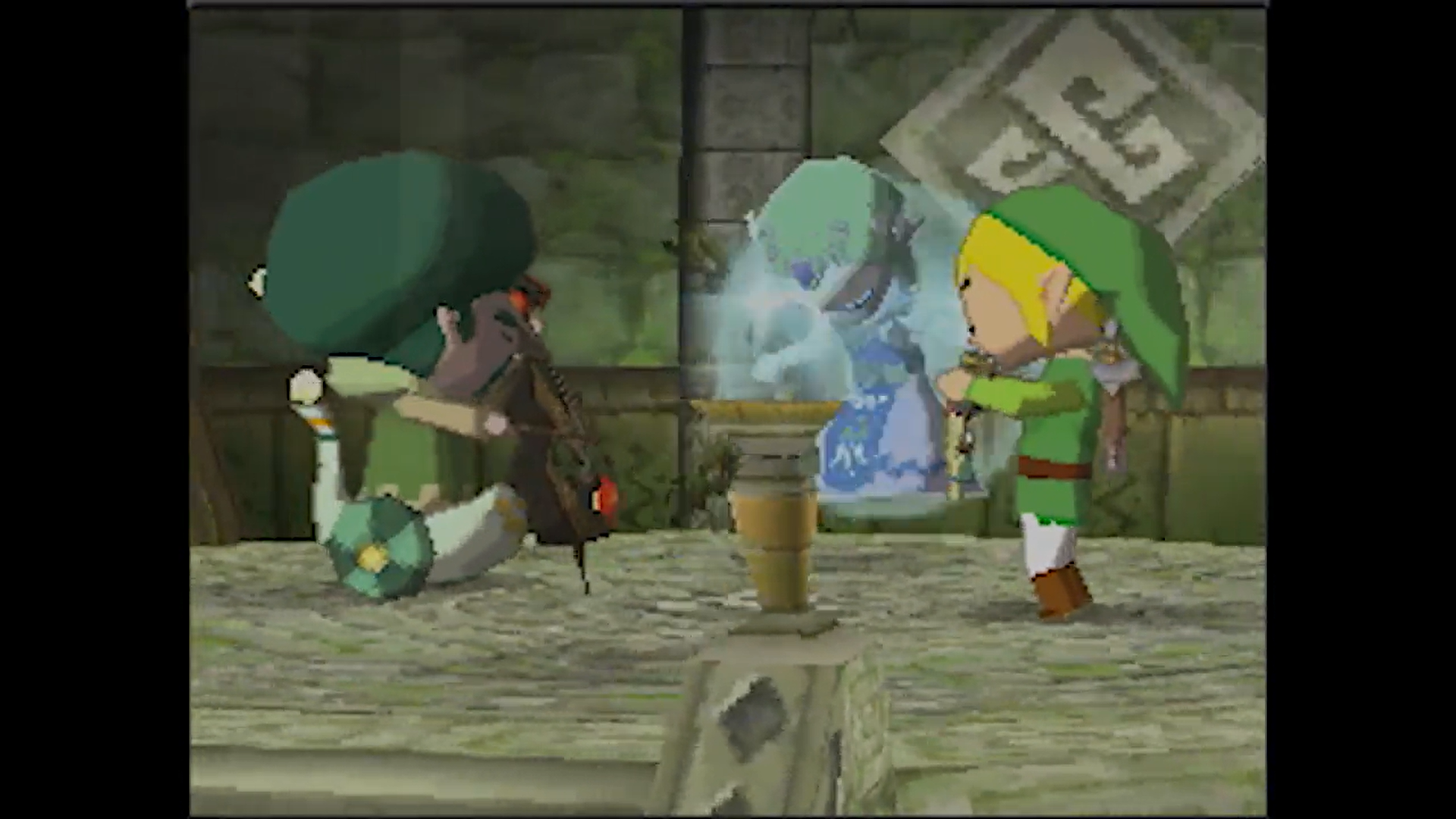
Trains often get a bad rep thanks to price hikes, loose timekeeping and all‑too‑frequent breakdowns, but it's not their fault they're overseen by clown‑shoed governments and corporations. Hark back to the time of steam power and it's easy to see locomotives in a better light: as the charmingly rickety coal‑hungry monsters that gently wound their way across the country. It's this nostalgic, bygone feeling that Spirit Tracks captures perfectly. While its predecessor, Phantom Hourglass, was concerned with the joys of sailing, this loose follow-up turns its steamy gaze to the glory days of public transport. Along the way, it isn't afraid to cast off traditional Zelda notions or reinterpret them in an engaging way.
Bolstered by the success of Phantom Hourglass, Nintendo was keen to create another touchscreen adventure for the Nintendo DS in rapid time. Thinking back to the short development time between Ocarina Of Time and Majora's Mask, Nintendo wanted to replicate the Nintendo 64 duo's success on its hugely popular handheld.
-copy-dd1f2bf0.jpeg?w=600)













