
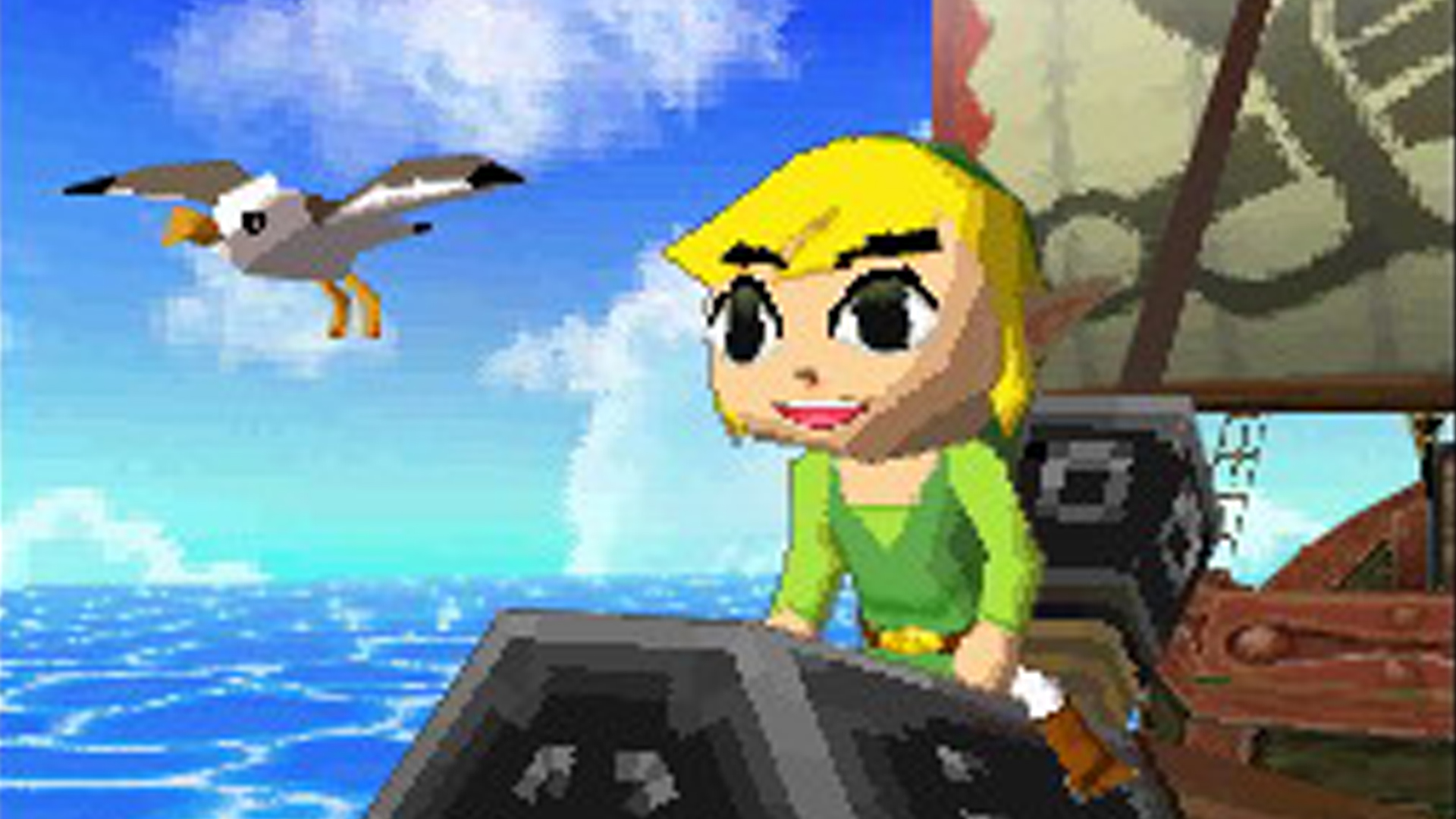
If you were to ever hear a criticism directed at The Legend Of Zelda series, it's likely an argument that they are 'all the same'. There's always a Link, there's always a Princess Zelda, and there are always puzzles, sword-swinging and nonsense involving the Triforce. But you only need to look at Majora's Mask, The Wind Waker and its sequel Phantom Hourglass to know that's a load of old crap. Wind Waker, in particular, ditches the art style of the N64 games, most of Hyrule's landmass and even poor old Epona.
Phantom Hourglass boldly continues this trend while adding new flourishes, making it one of the most innovative titles in the series. The most immediate reinvention is of the traditional control scheme that had served Link so well for many years. Whether this was an attempt to make Zelda more accessible, or an effort to justify Nintendo's new-fangled touch-screened console, the Nintendo DS, then it's a triumph on both counts. But this fancy new control method has an invigorating effect on the game design, too.