
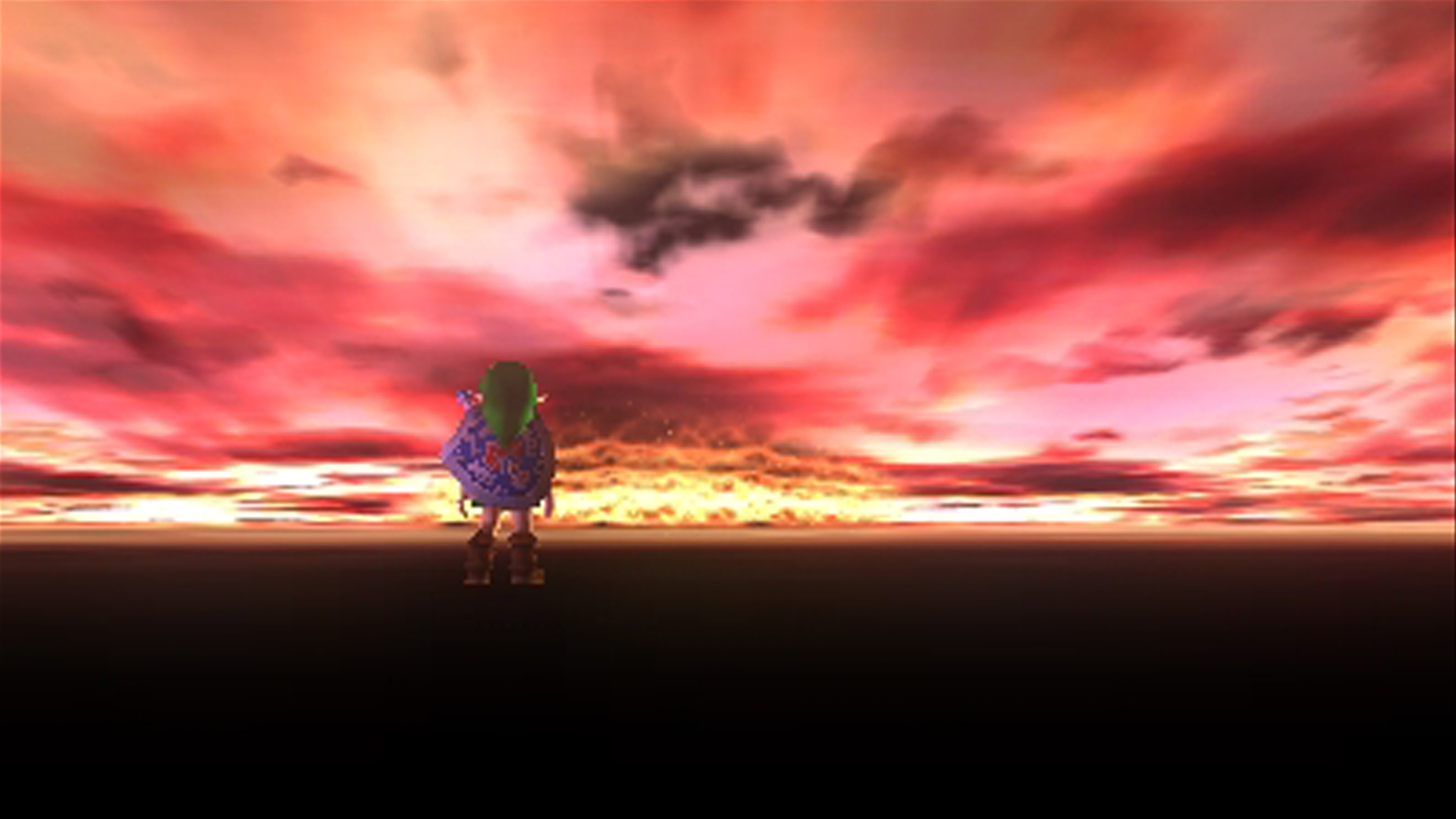
The strict time constraints and constant pressure of Majora's Mask mirror perfectly the creation and development of the game itself, completed in just one year. After 1998's Ocarina Of Time became an instant hit and redefined 3D gaming, series producer Shigeru Miyamoto wanted to both capitalise on its success and further utilise the game's engine; the iconic title originally used the same engine as Super Mario 64, but so many modifications were made during Ocarina's three-year development that it became its own beast.
The spawning of a sequel ties in heavily with the failure of the 64DD, a Japan-only peripheral designed to expand the limitations of the Nintendo 64. Ocarina Of Time was intended to be a flagship title for this new device, but Link's expansive range of motion was stunted when the game was read from a disc, thus the code found its home on a 32-megabyte cartridge instead. However, this halved the available space, meaning many concepts, enemies and locations went unused in the final release.
-copy-dd1f2bf0.jpeg?w=600)













