Get all your news in one place.
100's of premium titles.
One app.
Start reading
The Times of India
The Times of India
World
TOI World Desk

The largest national forest in the US spans 17 million acres and hides the world's biggest temperate rainforest

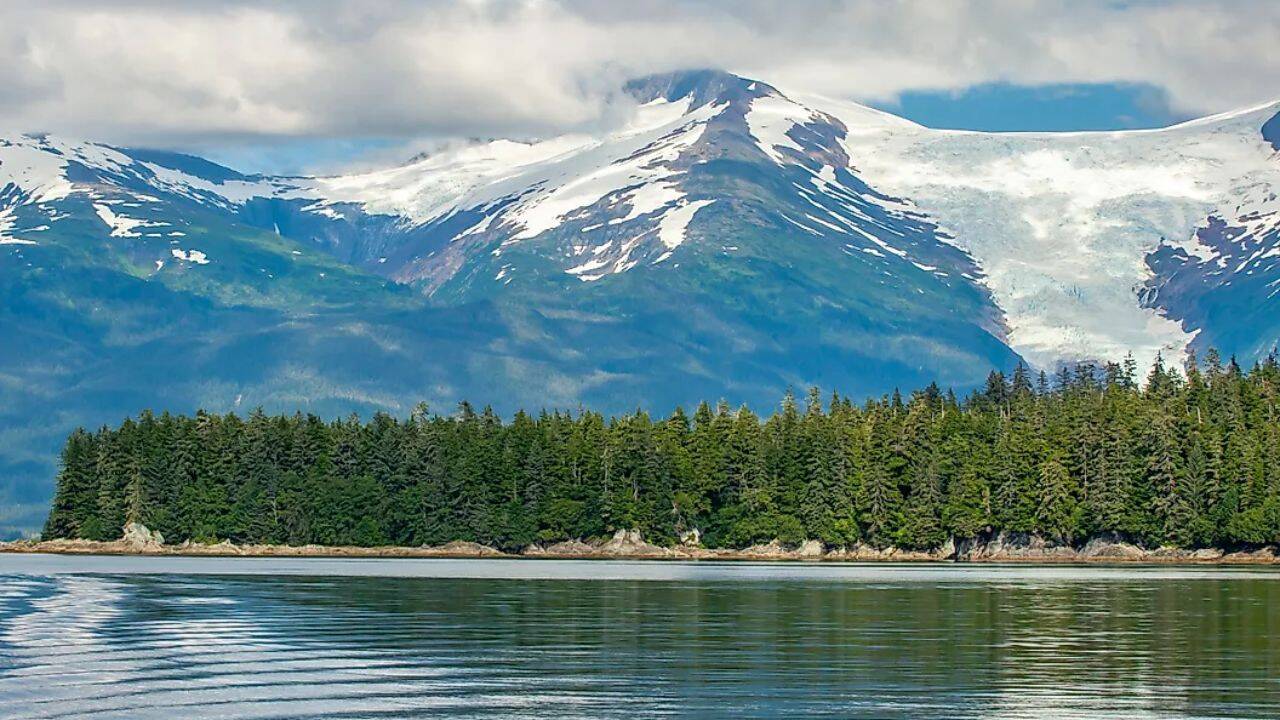
The biggest national forest in the United States is not defined by endless inland woodland but by a remarkable mix of rainforest, glaciers, islands and ocean channels. Spread across Southeast Alaska, Tongass National Forest covers around 17 million acres, making it larger than the state of West Virginia. It also contains the world's largest remaining intact temperate rainforest, where towering conifers, wetlands and salmon-filled rivers exist alongside remote coastal communities. Rather than being a single block of forest, Tongass is a landscape shaped by water as much as trees, with thousands of islands and deep fjords forming one of North America's most distinctive ecosystems. Its size alone is impressive, yet the way its forests, wildlife and coastline function together makes it unlike anywhere else in the US.

Get breaking news anytime, anywhere. Download the TOI app now!

Where is Tongass national forest located in Alaska

Tongass extends for roughly 500 miles across Alaska's southeastern panhandle, covering close to 80% of the region between Ketchikan and Yakutat. Much of the forest lies within the Alexander Archipelago, a chain of around 1,100 islands separated by winding marine passages and backed by rugged mountains on the mainland.

The landscape owes much of its appearance to the last Ice Age. Vast glaciers carved steep valleys that later filled with seawater, creating long fjords bordered by dense rainforest. The result is more than 11,000 miles of shoreline, giving Tongass one of the most extensive coastlines of any national forest in the United States. Tidewater glaciers still descend directly into the sea in several parts of the forest, while sheltered bays and narrow channels continue to shape travel across the region.

Climate, ancient trees and carbon storage in Tongass National Forest

Rain falls frequently across Tongass, although the amount varies considerably from place to place. According to the Alaska Wilderness League, annual precipitation ranges from about 38 inches in the driest areas to well over 220 inches in the wettest. These conditions allow giant Sitka spruce, western hemlock and Alaska yellow-cedar to dominate much of the forest, with some individual trees surviving for more than 800 years.

The forest is also recognised for its importance in storing carbon. According to the National Audubon Society, Tongass contains about one-fifth of all the carbon held within the entire US National Forest System, giving it an unusually significant role in long-term carbon storage.

Not every part of the landscape resembles towering woodland. Large areas consist of muskeg, where saturated soils support sphagnum moss, sedges and small, slow-growing shore pine trees. Beneath parts of Prince of Wales Island, limestone has gradually dissolved under thousands of years of heavy rainfall, creating an extensive network of caves and sinkholes that researchers continue to explore. According to WorldAtlas, more than 17,000 miles of lakes, rivers and streams also flow through the forest, while restoration projects have reopened hundreds of miles of salmon habitat by improving fish passage.

Wildlife in Tongass national forest: Bears, salmon, eagles and whales

Every year, five species of Pacific salmon return to Tongass rivers to spawn, providing the foundation for much of the forest's wildlife. Fish carried from streams into surrounding woodland by bears and scavengers leave behind nutrients that enrich the soil and help sustain the forest itself.

As per WorldAtlas, Admiralty Island supports around 1,500 brown bears, making it one of the highest-density bear populations on the continent. The neighbouring Kuiu Island is also known for exceptionally dense populations of black bears. Bald eagles gather in large numbers during salmon runs, with the Alaska Wilderness League estimating that flocks can reach around 2,000 birds and that the forest contains roughly 7,000 nesting individuals.

Wildlife extends beyond the trees and rivers. Humpback whales return to nearby coastal waters each summer, where groups sometimes use bubble-net feeding to trap schools of fish. According to the Forest Service's species assessments cited in the WorldAtlas, federally protected marine animals including western Steller sea lions, fin whales and sperm whales also depend on waters surrounding Tongass.

Communities and visitor attractions in Tongass national forest

Although much of Tongass remains undeveloped, people have lived within this landscape for generations. The forest forms the traditional homelands of the Tlingit, Haida and Tsimshian peoples, while several modern communities remain scattered across its islands.

According to WorldAtlas, places such as Tenakee Springs have no road network, with residents relying on bicycles and all-terrain vehicles for local transport. Other settlements, including Elfin Cove and Pelican, are accessible only by boat or floatplane. The Forest Service maintains more than 140 public recreation cabins throughout Tongass, with about 40 reachable only by seaplane.

Visitors looking for wilderness can explore areas including Misty Fjords National Monument, where towering granite cliffs rise directly from the sea. Tongass contains 19 designated wilderness areas, more than 700 miles of hiking trails, and approximately 93% of its 900 watersheds remain in near-natural condition. Together, these landscapes protect one of the largest and least fragmented temperate rainforest ecosystems left anywhere on Earth.

Sign up to read this article
Read news from 100's of titles, curated specifically for you.
Already a member? Sign in here
Related Stories
Top stories on inkl right now
One subscription that gives you access to news from hundreds of sites
Already a member? Sign in here
Our Picks
Fourteen days free
Download the app
One app. One membership.
100+ trusted global sources.