“Never waste a good crisis.”
This was me on Q+A in June 2022, a few weeks after the federal election and amid the war in Ukraine, which was escalating the cost of energy, triggering a conversation about the cost of living and how to pay for a faster rollout of household solar and renewables.
“The elephant in the room seems to be – why are we not getting a bigger return on our assets when it comes to the export of gas?”
Four years later, new war, same conversation.
But are our leaders finally getting with the program?
In that exchange, I suggested an “equalisation levy” on windfall profits, tax being the dirty word that it is.
And lo and behold, the government is finally (reportedly) considering it.
“Energy producers should not benefit from high international prices at the expense of domestic customers,” the prime minister’s department wrote in a document obtained by the ABC ahead of the May budget.
Well, duh, says every Australian who has been paying the price for years.
The document also references further reforms to the petroleum resource rent tax (PRRT), which was damply tweaked by Labor in the last parliament, yielding a measly $2.4bn over the four-year forward estimates.
A flat 25% tax on export gas, for example, could yield up to $17bn annually.
With inflation once again a major political and economic problem, amid predictions the Australian economy could be scarred for years by a new war that looks like dragging on, fossil fuel companies are already reaping a windfall while households struggle.
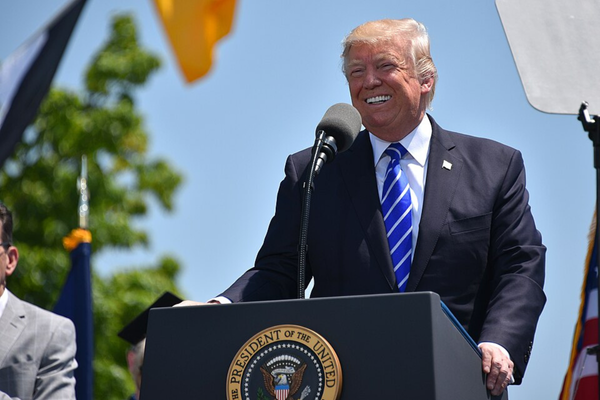
Having closely observed Donald Trump getting himself in and out of lesser scrapes before, I wouldn’t put it past him to have something up his sleeve, but even he seems worried.
Now he’s yelling at his Israeli partners in the conflict, as well as everyone he failed to consult before he pressed launch, for not helping him out of his self-imposed cul-de-sac.
But the president’s own words, “We’ve won, but we haven’t won enough,” resurface the question: when, and how will this end?
A reported $200bn dollar request to Congress from the Pentagon will cement concern that this is far from “won”, not even “mission accomplished”.
Especially when it’s clear that Iran is actively using its most powerful weapon, constraining the global economy by blocking the strait of Hormuz. There will be no incentive to lift such a blockade while the Israeli-United States alliance keeps killing Iranian leaders either.
And that’s a domestic political and economic problem for us, as well as an existential threat to the globe.
As Hastie also said, quoting Mike Tyson: “Everyone has a plan until they get punched in the face.”
And the punch is hitting those who can least take it – everyday Australians who now can’t afford fuel, and farmers who are struggling to find and buy supplies, with the associated inflation pressure affecting just about everyone else.
The prime minister, though characteristically diplomatic, finally acknowledged the global shift, while convening national cabinet on fuel.
He did so amid a breathtakingly disingenuous narrative from the opposition, which has been ranting over supply pressure, and in doing so, irresponsibly provoking panic buying.
That is even though both Coalition and Labor governments presided over the closure of refineries despite being well aware for years that onshore supply was way too low to meet just the kind of shock we are now enduring.
In fact, as Tony Wood from Grattan Institute points out, after the Ukraine war started, minimum stock levels were imposed on fuel companies, so 36 days of petrol and 32 days of diesel stored onshore is an improvement.
Meanwhile, decades of culture wars have slowed down the take-up of electric vehicles, which Scott Morrison cynically claimed would “end the weekend”.
With prices up, the government now appears unlikely to wind down the $10bn-a-year diesel fuel rebate in the forthcoming federal budget, despite the fact it has entrenched the use of artificially cheap fossil fuel.
It could surely equally be argued that any steps to remove or reduce the fringe benefits tax exemption on EVs would be counterproductive at a time when buyer inquiries have surged, and every electric vehicle is one less car at the petrol pump.
A windfall fossil fuel tax would more than pay for it, while reducing carbon emissions.
Companies exporting LNG from Australia generated an estimated $100bn in windfall profits between 2022 and 2024, as export prices doubled during the Ukraine conflict.
Yet Australians got minimal benefit from the largely multinational companies that pay little or no PRRT.
The prime minister has rightly stated, it’s a “different world” now. If so, it’s the responsibility of the government to position us for it, and to enable Australians to thrive within it.
As economist Alison Pennington has noted, interest rates are not the only way to manage inflation. Targeted price relief, on things such as fuel, energy and childcare, would reduce both costs to families and inflation pressure.
How to pay for it? The answer is in the billions.
Zoe Daniel is a three-time ABC foreign correspondent and the former independent member for Goldstein