For years, the modern endurance athlete has been taught to interpret struggle as virtue. Fatigue is a badge of honor. Injury is an inconvenience to work around. Illness is bad luck. If performance dips, the answer is almost always the same: train smarter, rest harder, tough it out.
Dr. Kate Mihevc Edwards, founder of Precision Performance and Physical Therapy and RunSource, has spent her career gently but persistently questioning that narrative.

A physical therapist, researcher, and longtime runner herself, Edwards works at the intersection of medicine, performance, and identity. In recent years, her work has gained quite momentum not because it promises a new optimization shortcut, but because it helps surface problems many athletes do not realize they are facing. One of those is low energy availability, a core factor within the broader condition known as Relative Energy Deficiency in Sport (REDS). While REDS is primarily diagnosed and treated by physicians and registered dietitians, Edwards plays a critical role in identifying early warning signs, educating athletes and providers, and guiding runners back to sport when low energy availability may have contributed to injury, illness, or stalled performance.
REDS occurs when an athlete's energy intake is insufficient to support both basic physiological function and the demands of training. In simpler terms, the body does not have enough fuel to do everything it is being asked to do. What makes REDS particularly difficult to identify is that its symptoms often masquerade as other issues that athletes and clinicians think they already understand.
The Warning Signs We Keep Missing
An athlete with REDS might present with frequent colds, persistent gastrointestinal issues, low iron levels, unexplained fatigue, brain fog, or a steady decline in performance. They may struggle with recurring injuries, particularly bone stress injuries that seem disproportionate to training load. Women may experience the loss of their menstrual cycle. Men may notice low testosterone, reduced libido, or the absence of morning erections.
Seen in isolation, each of these symptoms has a familiar explanation. Iron deficiency is common. Stress fractures happen. Fatigue comes with hard training. But Edwards emphasizes that REDS is not about any single symptom. It is about the constellation.
"When multiple systems are affected at once, that is when we need to ask a different question," she says. "Not what is broken, but what is missing."
The problem is that many healthcare pathways are not designed to ask that question. Athletes are often routed from specialist to specialist, each treating one symptom at a time. The underlying energy deficit remains untouched, which is why recovery stalls and frustration mounts.
Why So Few Doctors Talk About REDS
Part of the issue is structural. The research underpinning REDS is relatively new, with much of it emerging in the past decade. While awareness is growing within sports medicine and female athlete health circles, it has not yet filtered reliably into general practice, pediatrics, or orthopedics.
This gap is especially consequential for high-risk groups. Adolescents, whose bodies are still developing. Women during pregnancy, postpartum, and menopause when energy needs shift dramatically. Competitive recreational athletes who train seriously but do not see themselves as elite enough to warrant specialized care.
"These are not edge cases," Edwards notes. "They are the people filling waiting rooms every day."
Because REDS is underrecognized, it is often misdiagnosed as overtraining. The prescribed solution is rest, reduced volume, or better recovery habits. While those interventions may provide temporary relief, they do not resolve the core issue if the athlete remains underfueled.
The Solution That Feels Too Simple
The primary treatment for REDS is not a supplement protocol or a novel therapy. It is food.
Specifically, increasing energy intake to adequately support both life and sport.
This is where discomfort often enters the conversation. Fueling more can challenge deeply ingrained beliefs about body image, discipline, and control, particularly in endurance sports where leanness is frequently conflated with fitness. In transitional life phases like postpartum or menopause, the pressure to maintain a pre-change body can further complicate fueling decisions.
Edwards is careful not to frame REDS as a failure of willpower or knowledge. In many cases, athletes do not realize they are underfueling at all. Energy deficits can accumulate quietly over time, especially when training volume increases faster than intake or when life stress reduces appetite.
"The body keeps score," she says. "It will always prioritize survival over performance."
Screening Before Breakdown
One of Edwards' contributions to the field has been her emphasis on earlier recognition rather than direct treatment. In her clinic, this begins not with diagnosis, but with careful subjective evaluation and pattern recognition. Through detailed conversations, training histories, and symptom narratives, her team identifies signals that may suggest low energy availability or broader REDS-related risk, then refers athletes to physicians and registered dietitians for formal screening and medical assessment.
Tools such as the REDS Clinical Assessment Tool 2 are used by medical doctors as part of that diagnostic process. Edwards' role is upstream of that moment, helping athletes understand why further evaluation matters and guiding them toward the appropriate specialists before small imbalances turn into prolonged setbacks. The goal is not labeling, but timely awareness, when intervention is clearer and recovery more achievable.
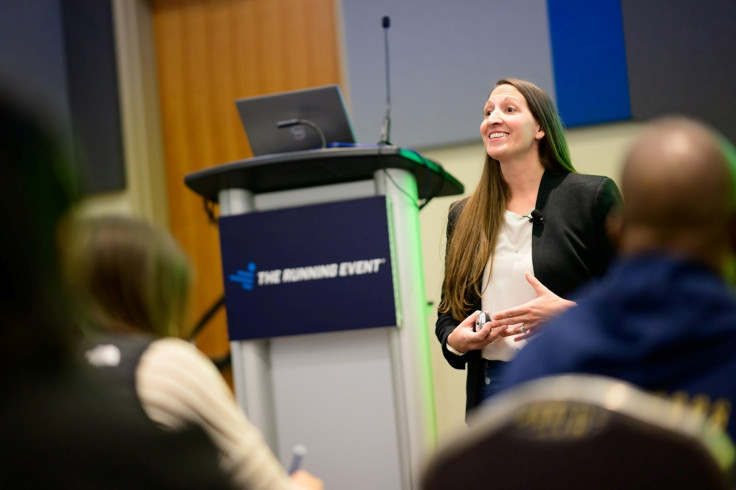
This philosophy underpins the interdisciplinary care model Edwards consistently advocates for: physical therapists, physicians, dietitians, coaches, and mental health professionals working in coordination rather than isolation. She has contributed to education initiatives for coaching networks, particularly those working with female athletes, and has spoken at industry conferences about the importance of shared language and referral pathways.
Her work also extends beyond the clinic. Through digital platforms and emerging technology, Edwards is exploring ways to make research-grounded, nuanced guidance accessible to athletes who may never see a specialist, but still benefit from understanding the patterns that place their health and performance at risk.
A Shift from Endurance to Sustainability
What distinguishes Edwards' thought leadership is not urgency or alarmism; instead, it's clarity. She does not argue that athletes should train less, want less, or push less. She argues that sustainability is a performance strategy.
REDS, in her framing, is not a rare condition afflicting the reckless. It is a predictable outcome of systems that reward output without accounting for input. Addressing it requires more than education. It requires a cultural recalibration of how we define strength, discipline, and health.
As research continues to evolve, Edwards occupies a crucial role as a translator between science and lived experience. She understands the athlete's drive to keep going and the body's quieter insistence on balance. Her work reminds us that progress in sport is not only about doing more, but about noticing sooner when something essential is missing.
In a culture that prizes endurance at all costs, that may be the most radical insight of all.