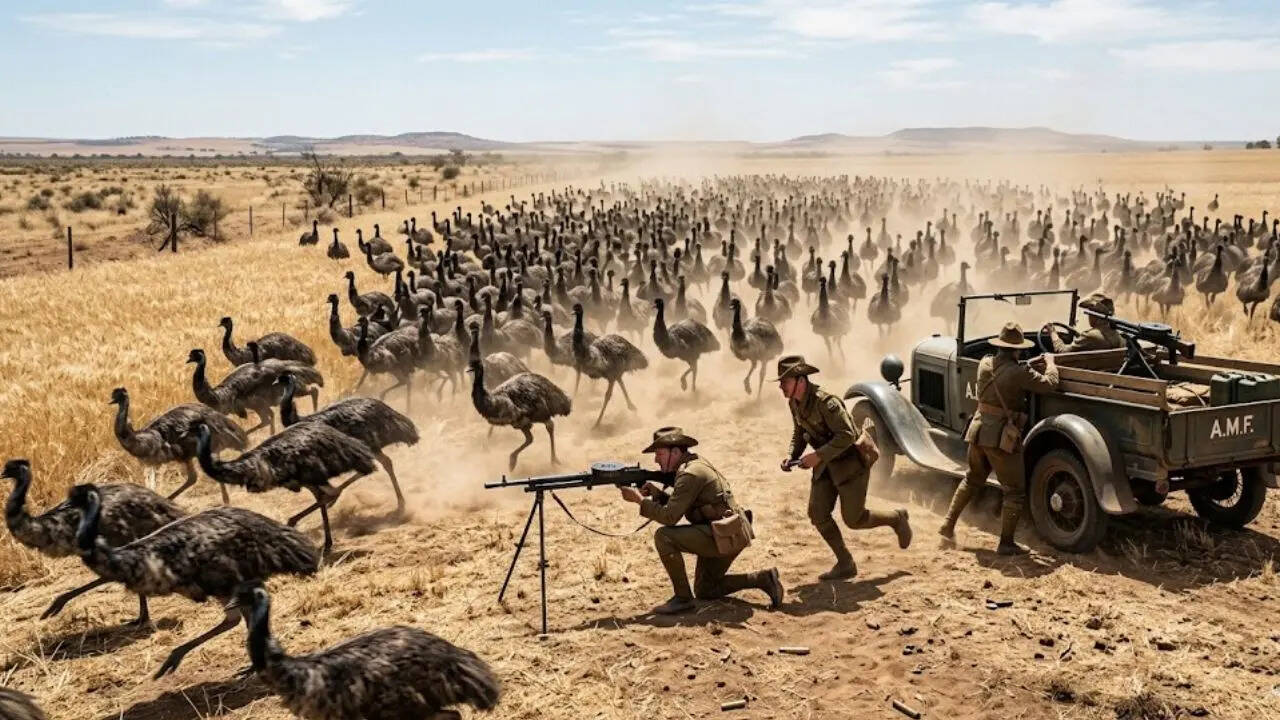
In 1932, the Government of Australia entered into an unconventional 'war' with an unexpected adversary, namely, a large population of approximately 20,000 emus, as reported in Australian Geographic. The emus would migrate from their traditional migratory range to the wheat-growing region of Western Australia after the economic collapse of the Great Depression caused many ex-soldier settlers to lose their homes and means of supporting themselves. In an attempt to rid the settlers of these 'invading' birds, the Government sent in Major Meredith and troops armed with Lewis machine guns in order to cull the birds.
In the end, the emus proved to be far more tactical than anticipated; through speed and split-second movements, the birds were able to evade the heavy fire of the soldiers. This strange, albeit fascinating event in history has become known as the Great Emu War, and serves as a classic example of poor pest control measures and how wildlife has significant resiliency against even the most sophisticated military technology used against them. Ultimately, the conflict remains a humorous yet poignant reminder that human engineering often falters when confronted by the unpredictable, raw adaptability of the natural world.