Get all your news in one place.
100's of premium titles.
One app.
Start reading
The Conversation
The Conversation
Environment
Stephen P. Leatherman, Professor of Coastal Science, Florida International University

The Great Atlantic Sargassum Belt is carrying a massive bloom of brown seaweed toward Florida and the Caribbean

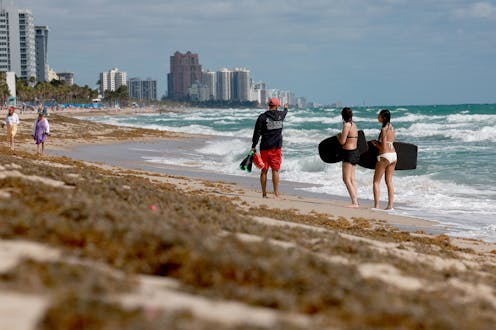
Sargassum seaweed started washing up in Fort Lauderdale, Florida, in mid-March 2023. Joe Raedle/Getty Images

An unwelcome visitor is headed for Florida and the Caribbean: huge floating mats of sargassum, or free-floating brown seaweed. Nearly every year since 2011, sargassum has inundated Caribbean, Gulf of Mexico and Florida coastlines in warm months, peaking in June and July. This brown tide rots on the beach, driving away tourists, harming local fishing industries and requiring costly cleanups.

According to scientists who monitor the formation of sargassum in the Atlantic Ocean, 2023 could produce the largest bloom ever recorded. That’s bad news for destinations like Miami and Fort Lauderdale that will struggle to clean their shorelines. In 2022, Miami-Dade County spent US$6 million to clear sargassum from just four popular beaches.

Sign up to read this article
Read news from 100's of titles, curated specifically for you.
Already a member? Sign in here
Related Stories
Top stories on inkl right now
One subscription that gives you access to news from hundreds of sites
Already a member? Sign in here
Our Picks
Fourteen days free
Download the app
One app. One membership.
100+ trusted global sources.