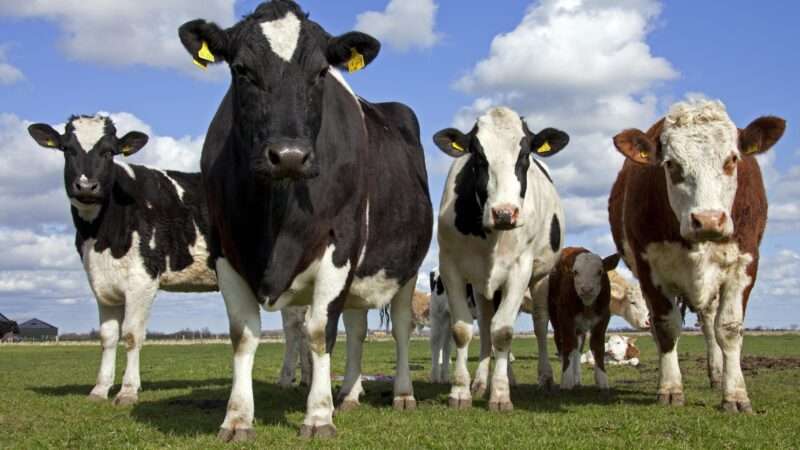
The government has a long history of using tracking technology to ascertain our whereabouts, our habits, and even our preferences. From cellphones and cars to snow plows and garbage trucks, governments seemingly want to track anything that moves—or moos.
The USDA recently finalized a rule—set to go into effect in a few months—that will require all cattle and bison being moved across state lines to be tagged with radio-frequency identification (RFID) ear tags. RFID technology uses radio frequency waves to transmit and collect data by way of a system of electronic tags and scanners. The technology is best viewed as a type of electronic or remote barcode, in which scanners can read an RFID chip anywhere from a few meters away to around 100 meters away. In some ways analogous to a shorter-range GPS system, RFID can track geographic location and also operate as a system of data collection and storage.