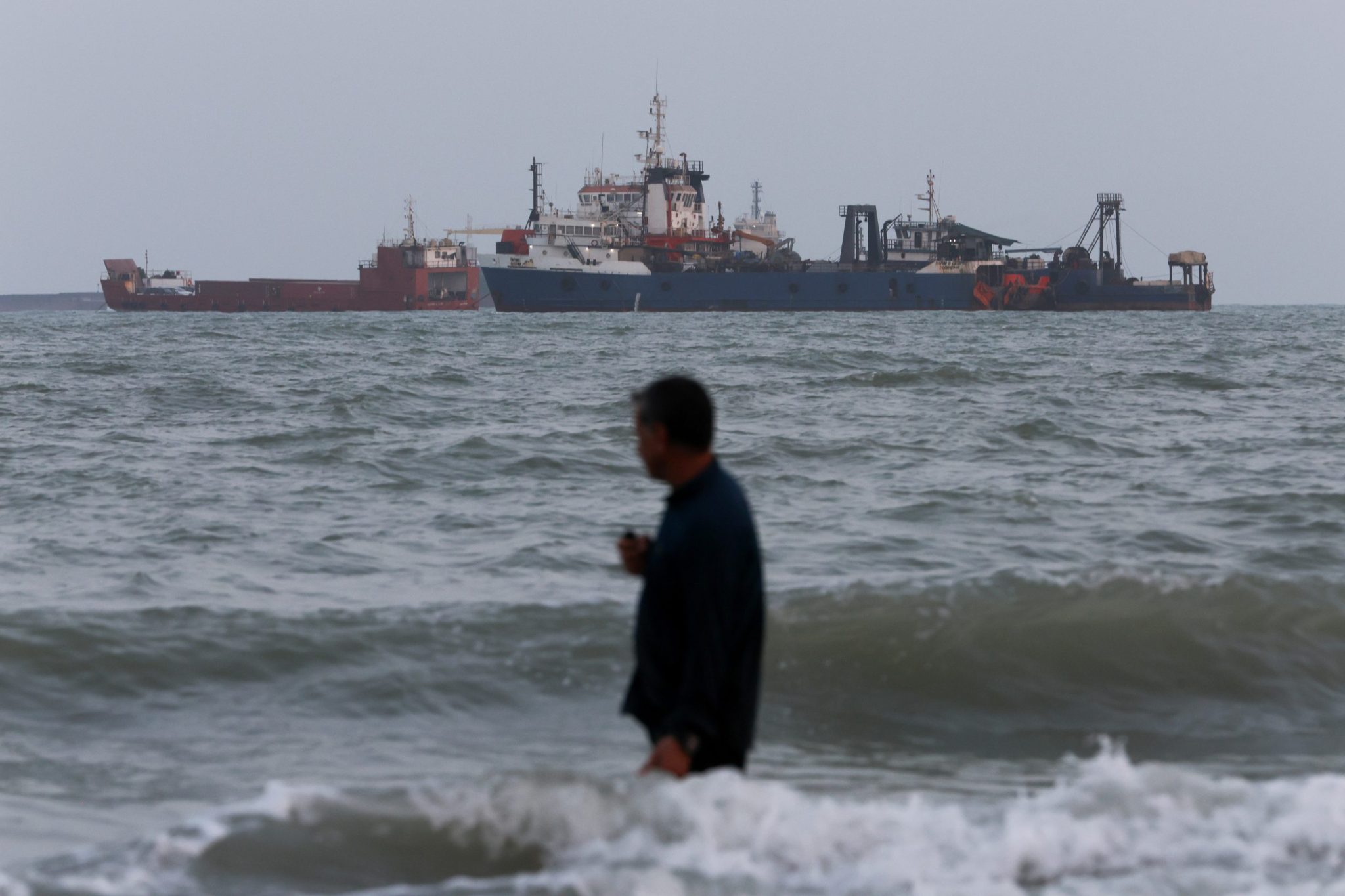
BANDAR ABBAS, IRAN - A person wades in the water as ships are seen anchored in the Strait of Hormuz on Aug. 10, 2026 off the coast of Bandar Abbas, Iran. In a recent statement, Iran's Supreme National Security Council said the vital waterway would not reopen until the United States corrects its behavior, demanding that the U.S. end its war on Iran and compensate the country for war damage, among other conditions. Iran has largely halted vessel traffic through the strait with the threat of strikes; meanwhile, the U.S. has imposed a blockade on Iranian ports. (Credit: (Photo by Ali Saeedi/Getty Images))
Concerns are growing that the de-facto tolling of the Strait of Hormuz could trigger a domino effect for key shipping bottlenecks worldwide, creating more global inflation and effectively killing key components of international maritime law.
As Iran insists on some form of fee structure for traversing the now-infamous strait—and the U.S. increasingly seems unable to prevent it—the rising expectation is that other nations may insist on new fees elsewhere, such as Asia’s Strait of Malacca, Europe’s and Africa’s Strait of Gibraltar, as well as key waterways impacted by Russia’s war in Ukraine.
Sign up to read this article
Read news from 100's of titles, curated specifically for you.