As AI innovation increasingly concentrates in the USA and China, the development of AI blocs around these two nations was always likely. With the launch of the China-led World Artificial Intelligence Cooperation Organization (WAICO), of which 29 nations are already signatories, the emergence of such blocs is now even more plausible. Through this cooperation, China is actively presenting itself not only as an alternative source of frontier technology but also as a contender for global AI leadership. Many developing nations with limited AI capacity may soon flock to China. However, for nations like India, which are yet to develop sovereign AI capabilities and are wary of technological dependency, the situation could soon become a conundrum.
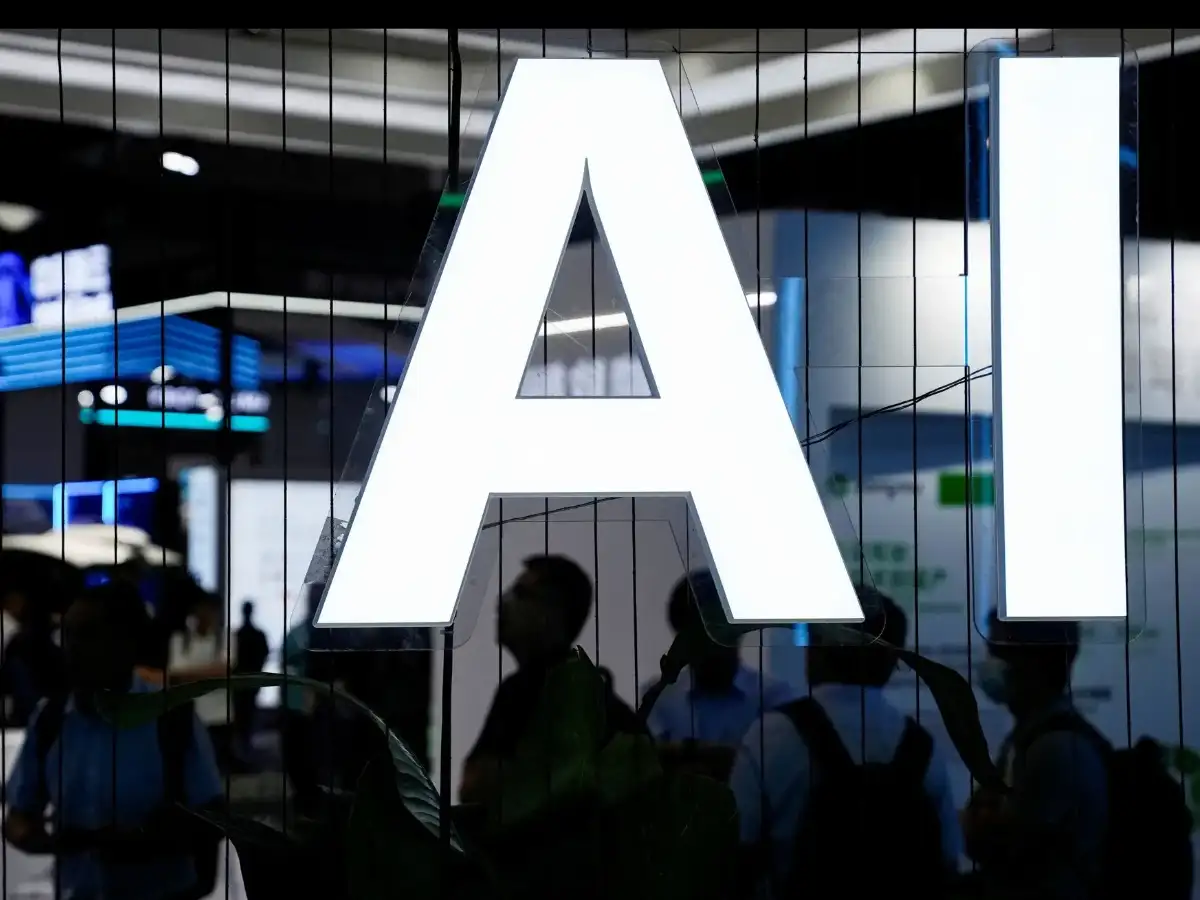
On 17th July, at the World AI Conference in Shanghai, President Xi Jinping urged countries to cooperate on AI while emphasizing that no single country should dominate the technology. He also noted that China has played a key role in ensuring equitable access to AI capacity-building for developing countries through its open-source models. China’s creation of WAICO, with its stated purpose of promoting international cooperation and developing AI regulation, will most likely be leveraged to influence international AI governance.

Also read | Energy shock vs AI boom: How RBI should act, and when
WAICO’s significance goes beyond AI governance, as it allows China not only to influence how AI is regulated but also to expand its technological dominance through technology sharing and capacity building. For nations that are yet to develop sovereign AI systems, are sceptical of dependence on the USA, or lack the capacity to develop AI, Chinese open-source models would be an attractive alternative.
The shift towards Chinese models would be driven by technical and economic factors. Although US continues to lead with more advanced frontier models, many Chinese models deliver performance that is close to leading benchmarks at much cheaper rates. This price advantage arises from the investments Chinese researchers have made in sparse architectures such as Mixture of Experts, wherein only a subset of parameters is activated for each query.
At the same time, domestic competition in China is intense. Companies such as Moonshot, DeepSeek, and Tencent are competing aggressively to capture a larger market, keeping AI prices highly competitive. Additionally, China is known for operating with excess industrial capacity, which keeps the prices of critical inputs, such as electricity for running data centres, lower than those in Western countries. Substantial state support also helps it undercut international competition.
Subsequently, Chinese frontier models are among the cheapest available. As of July 2026, DeepSeek V4 Flash and DeepSeek V4 Pro cost only $0.14 and $0.435 per million input tokens, and $0.28 and $0.87 per million output tokens, respectively. In comparison, GPT-5.6 Sol costs $5 per million input tokens and $30 per million output tokens, while Anthropic's Claude Mythos costs $10 per million input tokens and $50 per million output tokens.
Also read | Don't put a toll on UPI: Why merchant discount rate isn't the answer
For most developing nations, Chinese models could be the most economical choice. Add to that the fact that these models are open source, meaning that countries always have the option either to rent the models or use their weights and fine-tune them to their specific contexts by hosting them locally. Although still expensive, it makes the models more adaptable to local contexts while providing greater control over the entire system.
These dynamics could lead to a situation where countries align themselves with the two AI superpowers according to their respective interests. However, one may argue that it is too early to predict the inevitability of such an outcome, as many countries may seek to maintain strategic autonomy rather than align exclusively with either side, and instead adopt a mix of technologies from different providers. Moreover, AI research remains highly international, with talent, capital, and firms operating across multiple nations, making rigid AI blocs less likely. While these objections are valid, it is the actions of the superpowers themselves that point towards the emergence of such blocs.
Consider, for instance, that in December 2024, the US announced export controls designed to restrict China's ability to produce advanced semiconductors. In May 2026, it also mandated licensing requirements for advanced computing exports destined for Chinese entities outside China. Although China has not responded with sanctions, it has focused aggressively on building domestic capacity, and the WAICO alliance could eventually evolve into an AI ecosystem with China at its epicentre. Third world countries are therefore increasingly being drawn into the AI race. The US has also persuaded allies such as the Netherlands and Japan to restrict exports of advanced chipmaking equipment. Owing to US pressure, NVIDIA is creating a 'whitelist' of Asian customers to prevent the possible diversion of chips to China through intermediary countries. The company is also reportedly conducting stricter due diligence on customers in Singapore, Malaysia, Japan, and elsewhere.
If this geopolitical contest for AI dominance escalates, more nations could be drawn in. For India, which is yet to develop its own sovereign AI capabilities and must ultimately look outward for technological solutions, these dynamics could raise difficult geopolitical questions.
Economically, India has a significant incentive to turn towards China's open-source models. This is not only because they are cheaper and more adaptable, but also because depending on US models is not a particularly secure option. The US is increasingly prioritising its own interests and, to preserve its technological dominance, did not hesitate to restrict access to Mythos for non-American users. However, given its history of geopolitical tensions with China, India is unlikely to embrace Chinese models without hesitation.
Ultimately, the best option for India would be to pursue pragmatism by employing a mix of technologies in the short term while investing in sovereign AI capabilities for the long term. Whether we have that freedom will depend on how the superpowers themselves choose to set the rules of the game. For India, this would mean that sharp diplomacy, regional trade agreements, and technological alliances become critical. This is possible only if AI is viewed not merely as a technology, but as a key geopolitical asset.
Amit Kapoor is chair & Mohammad Saad is researcher at Institute for Competitiveness.