
Get all your news in one place.
100's of premium titles.
One app.
Start reading
LiveScience
LiveScience
Sascha Pare

The geology that holds up the Himalayas is not what we thought, scientists discover

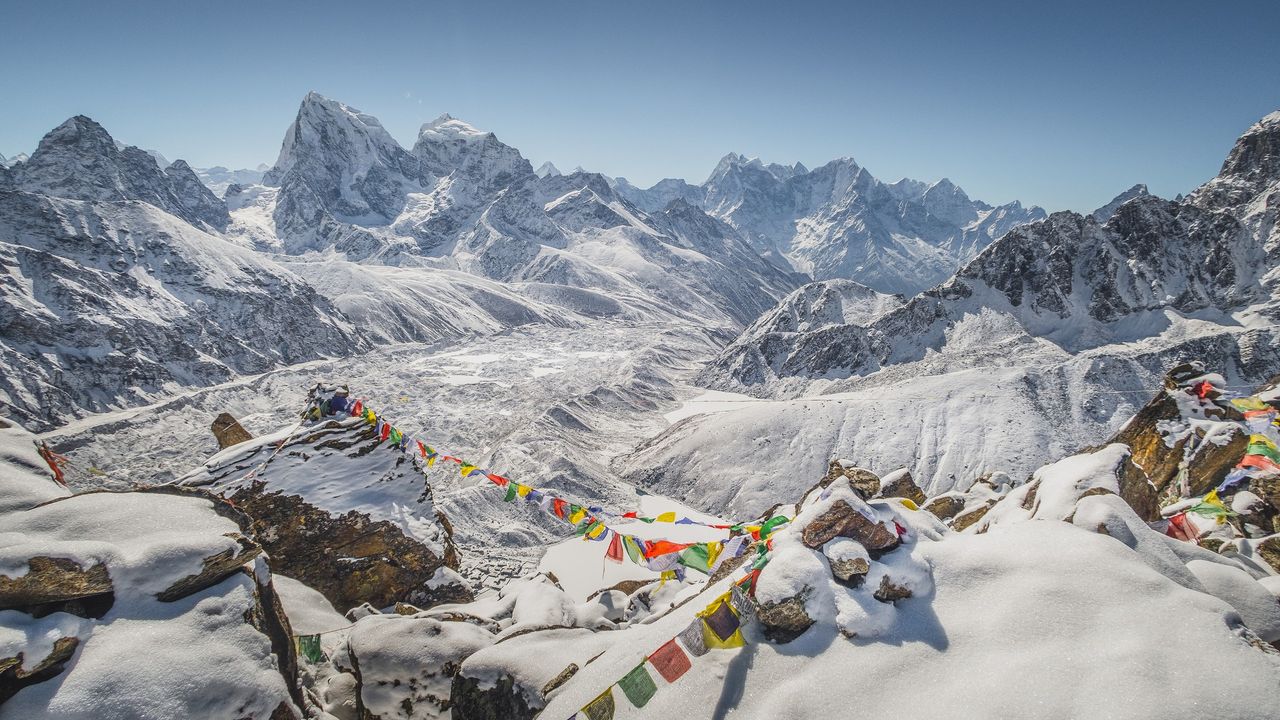
A view of the Himalayan mountains in the Mount Everest region. We see snow-covered peaks and Tibetan garlands.

Scientists may have just toppled a 100-year-old theory about what holds up the highest mountain range on Earth, new research shows.

The Himalayan mountains formed in the collision between the Asian and Indian continents around 50 million years ago, when tectonic forces squeezed Tibet so hard that the region crumpled and its area shrank by almost 620 miles (1,000 kilometers). The Indian tectonic plate eventually slipped under the Eurasian plate, doubling the thickness of Earth's crust beneath the Himalayas and Tibetan Plateau to the north, and contributing to their uplift.

Sign up to read this article
Read news from 100's of titles, curated specifically for you.
Already a member? Sign in here
Related Stories
Top stories on inkl right now
One subscription that gives you access to news from hundreds of sites
Already a member? Sign in here
Our Picks
Fourteen days free
Download the app
One app. One membership.
100+ trusted global sources.