
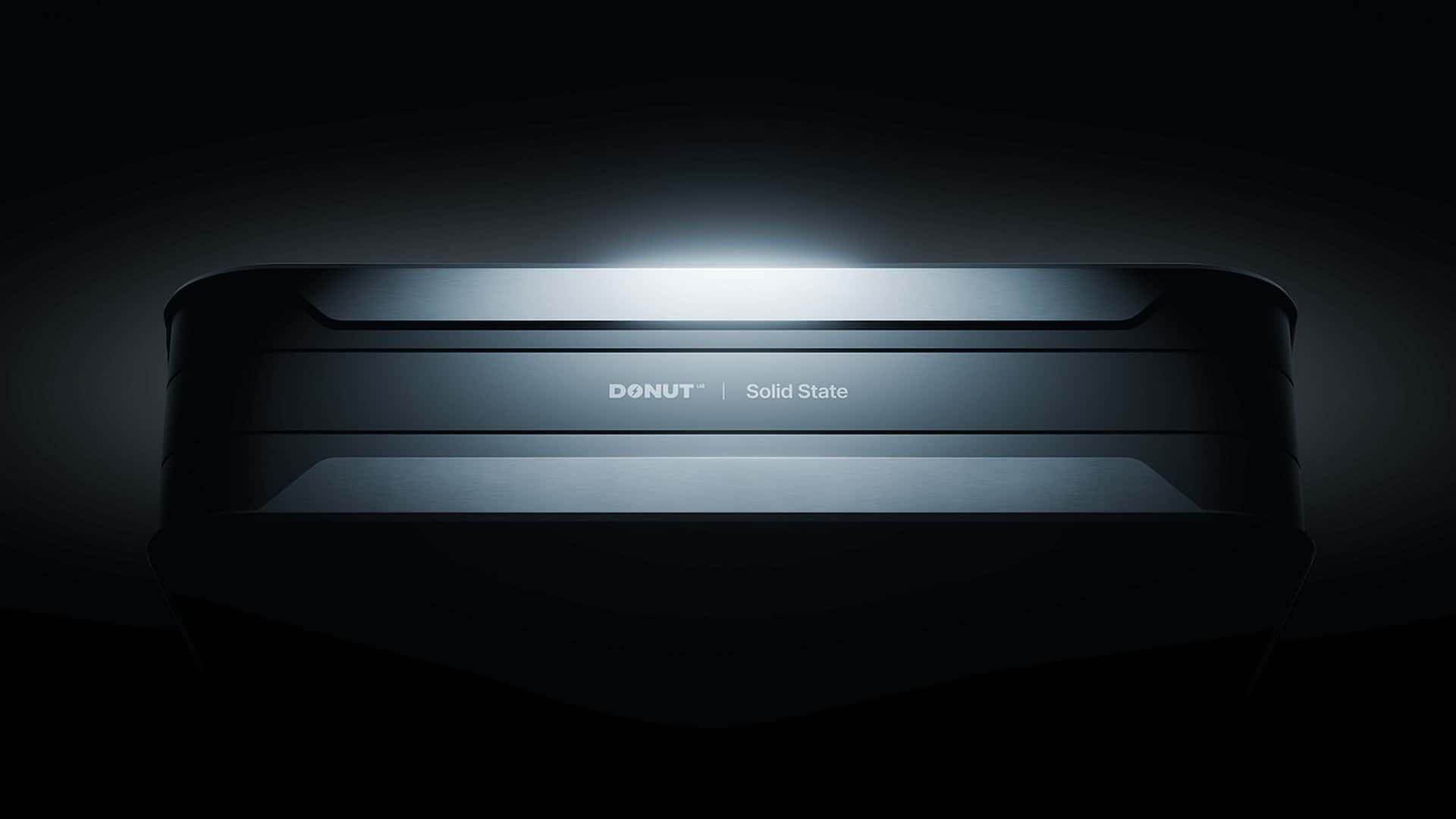
- Donut Lab claims it has created the world’s first production-ready all-solid-state battery.
- The liquid-less cell boasts almost double the energy density of a typical Tesla battery.
- Charging speeds that are on par with gas fillups, extreme safety and unprecedented longevity are also part of the promise.

It’s finally happening, folks. The world’s first commercially available, production-ready all-solid-state battery is here, and it promises to revolutionize the electric vehicle world, from cars and motorcycles to big rigs and construction equipment. At least that’s what Donut Lab, the company that makes the battery, claims.
The startup, which is known for its sci-fi in-wheel electric motor that powers Verge’s electric motorcycles, claims the game-changing liquid-less battery cells and modules are available now at a gigawatt-hour level production capacity to companies worldwide. Verge Motorcycles said that its updated TS Pro two-wheeler will become the world’s first production all-solid-state-powered EV when it reaches customers in the first quarter of this year.
So, what makes this battery special? Well, pretty much everything. It’s lighter, more energy-dense, safer, lighter, faster-charging, more resilient and–most importantly–promises more range than conventional lithium-ion batteries with liquid-based electrolytes.
According to Donut Lab, its production-ready all-solid-state battery has an energy density of 400 watt-hours/kilogram and can be fully charged in as little as five minutes for as many as 100,000 cycles, without having to limit charging to 80%. By comparison, some of the top-tier traditional Li-ion batteries available today have an energy density of around 250-300 Wh/kg and can last for up to 5,000 full cycles, while limiting the maximum state of charge to 80%.
What’s more, extreme temperatures have little to no effect on Donut’s solid-state battery, with the startup claiming its product retained over 99% of its capacity at temperatures as low as -22°F (-30°C) and as high as 212°F (100°C).

Safety-wise, the startup claims the battery will not ignite if it’s damaged, and that it can be built pretty much anywhere in the world because it doesn’t use rare materials. Donut Lab didn’t specify what materials are needed to make the solid-state cells, but it did say that it’s “100% green, made from materials that are found everywhere,” making it immune to geopolitical issues. The startup also claims its solid-state cells are cheaper to build than comparable lithium-ion batteries.
In the real world, we have Verge’s TS Pro motorcycle as a reference for what solid-state batteries can offer. The previous model year was available with a conventional lithium-ion battery that enabled a city driving range of 217 miles, while the charging time was touted as less than 35 minutes. The new model, which is powered by Donut’s solid-state battery, is also capable of 217 miles in standard guise, but a Large Battery option, which fits in the same cradle, can increase the range to 370 miles. But the charging time has been dramatically reduced to less than 10 minutes, with Verge saying that it has deliberately designed the new bike to take longer to charge, so that riders can enjoy a coffee while waiting.

“While the advantages are obvious, the future of solid state batteries has been a moving target constantly delayed when companies working in electrification are asked about when they will become a reality,” said Donut Lab CEO Marko Lehtimäki. “At Donut Lab, our answer on solid-state batteries being ready for use in OEM production vehicles is now, today, not later. Donut Lab has engineered a new high-performance solid-state Donut Battery that can be scaled to major production volumes and is now seen in real-world use in the Verge Motorcycles bikes out on the road in Q1.”
Donut Lab’s all-solid-state battery will be on display at CES 2026 in Las Vegas, which opens its doors on January 6.